Atiku Abubakar Signals Support for Consensus Candidate, Open to Backing Peter Obi
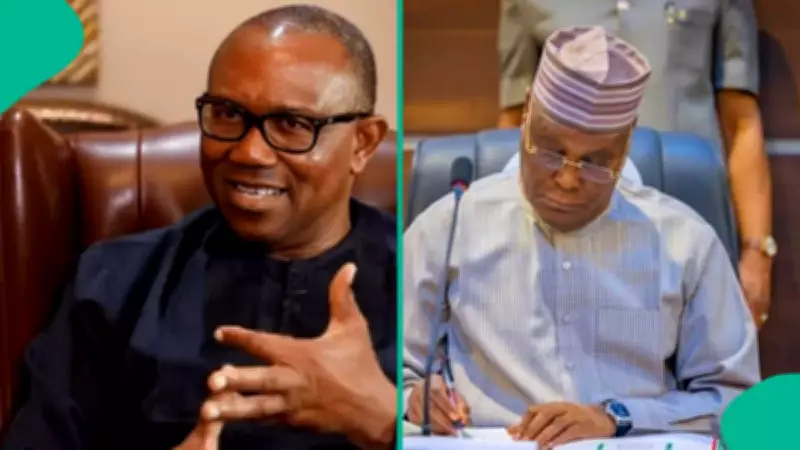
In a significant political development, former Vice-President Atiku Abubakar has publicly signaled his readiness to support any consensus candidate that emerges within the coalition being built around the African Democratic Congress (ADC). This declaration explicitly includes former Anambra State governor, Peter Obi, as a potential beneficiary of his support.
Coalition Unity and Consensus as Priority
Speaking during an exclusive interview on Arise Television's Prime Time program, Atiku emphasized that unity and consensus remain the paramount priorities for the ADC coalition. He addressed questions regarding the selection process for a presidential candidate, highlighting the collaborative approach being adopted by the coalition members.
"It's not the issue of stepping aside, rather would I support? In the coalition, the first option would be to work out a consensus. If that doesn't emerge, then we go for direct primary, and I will support anybody who emerges," Atiku stated clearly during the broadcast.
He further elaborated on the coalition's strategic preference, noting: "Consensus is the first option as far as the party is concerned. We will aim at consensus; if we don't get it, then we go for election." This position underscores the ADC's commitment to internal harmony and collective decision-making processes.
Explicit Position on Peter Obi
When specifically questioned about whether he would step aside for Peter Obi if the former governor is considered more popular among coalition members, Atiku reiterated his fundamental position without hesitation.
"I will step aside for any winner," Atiku affirmed during the interview. Pressed further on whether this commitment would specifically include Peter Obi, the former vice-president responded decisively: "Of course, if he is a contender, why not."
This unambiguous statement represents a significant development in Nigeria's evolving political landscape, particularly as various opposition forces seek to consolidate their positions ahead of the 2027 general elections.
Broader Political Context and Implications
Atiku's remarks highlight his personal commitment to coalition unity and his demonstrated openness to supporting a consensus candidate, thereby reinforcing the ADC's strategic focus on collaboration and collective decision-making. The political veteran's stance comes at a crucial juncture in Nigeria's democratic journey, with the Independent National Electoral Commission (INEC) having released a revised timetable for the upcoming electoral cycle.
The 2027 general elections, scheduled for January 16, 2027, are already generating substantial political discourse around several key issues:
- Consensus candidate selection processes
- Electoral reforms and transparency measures
- Leadership transitions within political coalitions
- Voter engagement strategies
Notably, Atiku Abubakar has previously announced that the 2027 presidential contest will represent his final attempt at Nigeria's highest political office, adding further significance to his current coalition-building efforts and consensus-oriented approach.
Electoral Framework and Reform Context
The Electoral Act 2026 introduces several reforms specifically aimed at improving transparency and accountability within Nigeria's electoral processes. Despite these institutional advancements, political analysts continue to caution that several challenges could impact the 2027 elections:
- Persistent political tensions between various factions
- Potential voter disengagement and apathy
- Risks of electoral malpractice and irregularities
- Unpredictable coalition dynamics and realignments
Civil society organizations and advocacy groups are simultaneously pressing political candidates and parties to adopt Sustainable Development Goals (SDG)-focused manifestos, reflecting growing public demand for substantive policy engagement beyond traditional political rhetoric.
Atiku Abubakar's public commitment to supporting a consensus candidate within the ADC coalition, including his explicit openness to backing Peter Obi, represents a strategic move toward opposition unity as Nigeria approaches another critical electoral milestone. This development could significantly influence coalition dynamics, candidate selection processes, and ultimately the broader political landscape leading up to the 2027 general elections.