Former INEC Official Warns Electoral Act Amendments Threaten 2027 Poll Credibility
Concerns regarding Nigeria's electoral framework have escalated significantly following critical remarks from a former senior election official. Mike Igini, who previously served as a Resident Electoral Commissioner for the Independent National Electoral Commission (INEC), issued a stark warning that recent amendments to the Electoral Act could severely compromise the integrity of future elections, including the crucial 2027 general polls.
A Tragic Regression from Progressive Gains
Speaking at the second annual lecture of the Alumni Association of the National Institute for Security Studies in Abuja, Igini described the 2026 amendment to the Electoral Act as nothing short of a national tragedy. He emphasized that these changes represent a clear regression from the substantial advancements achieved under the 2022 electoral law.
"The current amendment to the Electoral Act is a tragedy to our country... it is a regression," Igini declared forcefully. He elaborated that the 2022 Electoral Act had been widely celebrated as one of Nigeria's most progressive and forward-thinking electoral frameworks. However, he lamented that recent legislative modifications have effectively watered down these hard-won gains, potentially eroding public confidence in the entire electoral system.
The Critical Role of Legal Framework in Election Credibility
Igini stressed the paramount importance of a robust legal framework in determining the credibility of any electoral process, particularly during the critical pre-election phase. He warned that negative perceptions regarding the neutrality of electoral stakeholders could fatally undermine public trust.
"The first thing you must ask if an election will be credible is the legal framework that will govern it. If the perception is wrong, we are in trouble," he cautioned. The former commissioner also expressed deep concern over what he perceives as the increasing judicialization of election outcomes in Nigeria.
He argued passionately that election results should be conclusively determined at polling units through transparent processes, rather than being settled in courtrooms long after votes have been cast. "The winner of the election must be determined finally and conclusively at the polling unit and not in the court of law," Igini asserted, highlighting a fundamental principle of democratic elections.
Context of the Amendment and Institutional Response
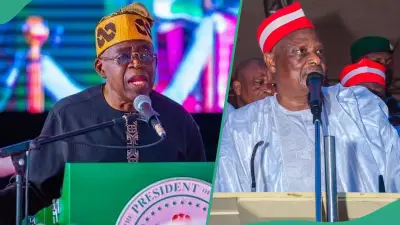
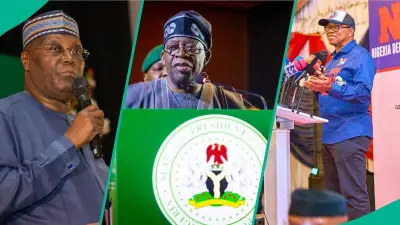
These remarks emerge amidst intensifying national debate following President Bola Tinubu's signing of the amended Electoral Act into law in February 2026. This presidential action has drawn substantial criticism from various opposition figures and civil society organizations across the country.
In response to mounting concerns, INEC Chairman Prof Joseph Amupitan addressed the issue, emphasizing that strict adherence to the Electoral Act remains the commission's primary strategy for preventing post-election disputes and ensuring national stability.
"Strict adherence to the Electoral Act is our strongest shield against post-election unrest," Amupitan stated. He noted that INEC has continued to strengthen technical safeguards, including enhancements to the bimodal voter accreditation system and electronic results management infrastructure.
Additional Democratic and Security Concerns
The INEC chairman also issued a separate warning regarding the troubling trend of declining voter turnout in Nigerian elections. He framed this issue not merely as a civic concern but as a significant security risk that could be exploited by malicious actors.
"Low turnout is not just a civic concern; it is a security risk, as it creates narratives that non-state actors can exploit to delegitimise governance," Amupitan explained, highlighting the interconnected nature of electoral participation and national security.
As Nigeria approaches the 2027 general elections, these contrasting perspectives from electoral authorities—both past and present—underscore the critical importance of maintaining public trust in electoral institutions and processes. The debate over electoral legislation continues to shape the nation's democratic trajectory.