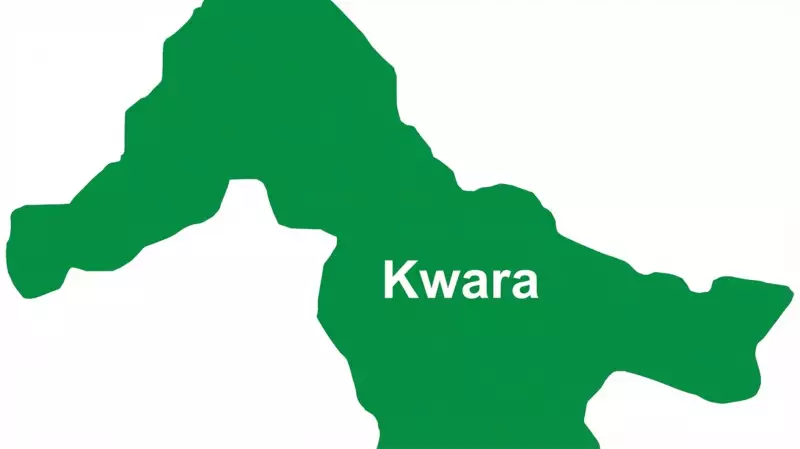
As Nigeria's 2027 general elections draw closer, the political landscape in Kwara State is already witnessing intense manoeuvring and strategic positioning for the governorship seat. The central question dominating discussions is whether the state will finally experience a genuine shift in power or if the established pattern of dominance by one zone will persist.
The Historical Imbalance of Power
Since the return to democratic rule in 1999, gubernatorial contests in Kwara have seen participation from all three senatorial districts: Kwara Central, Kwara South, and Kwara North. However, a closer look reveals a significant disparity in actual governance. Kwara Central has held the governorship for 18 years, while Kwara South has governed for eight years. Kwara North has yet to produce a governor in the Fourth Republic.
Political analysts point to a combination of factors for Central's prolonged hold on power. These include superior voter strength concentrated in the capital city of Ilorin, the advantage of incumbency, and deep-rooted political influence built over decades. This has created a cycle where other zones contest vigorously but often fall short when facing the formidable political machinery of the Central district.
The 2027 Contenders and the "Lokan" Narrative
The race for 2027 is already crowded, particularly within Kwara Central. Several prominent figures have signalled their interest, including Senator Salihu Mustapha, Ambassador Yahaya Seriki, Professor Abubakar Suleiman, and Engr. Sulaiman Bolakale Kawu. Their early moves demonstrate a strong belief within the Central political establishment that the seat remains winnable for the zone.
From Kwara North, aspirants like Rt. Hon. Salihu Yakubu Danladi and Senator Sadiq Suleiman have also shown interest. Concurrently, a powerful narrative known as "Kwara North Lokan"—meaning "it is Kwara North's turn"—is being amplified. Multiple political insiders suggest that the incumbent Governor, AbdulRahman AbdulRazaq, CON, is subtly promoting this rotational claim.
On the surface, this advocates for equity and fair power distribution. However, critics within the state's political circles view it as a strategic distraction. They argue it is designed to keep Kwara North and Kwara South focused on a rotational promise while the real momentum and groundwork remain firmly with aspirants from the Central zone.
A Complex Game of Strategy and Suspicion
The political manoeuvring has grown more intricate with traditional rulers from Kwara North visiting their counterparts in Kwara South to seek support for the northern turn. Observers note that this messaging closely aligns with the governor's political style, raising suspicions about its true intent.
Complicating matters is the noticeable silence from Kwara South, where no major political figure has formally declared for the 2027 race. This has led to questions about why the zone is being drawn into negotiations for a power shift it is not actively pursuing.
A critical point highlighted by analysts is that only Kwara Central, with its largest voting population, possesses the leverage to guarantee a shift to Kwara North. Some argue that Kwara North's leaders would have been more strategic by directly appealing to Ilorin's powerful royal institutions, like the Emir of Ilorin, whose influence is central to the zone's political strength. Their focus on Kwara South is widely interpreted as misdirection, possibly encouraged by the incumbent's inner circle.
This dual-track strategy allows the governor to publicly champion fairness and rotation while privately consolidating support for Central zone candidates within his party, the APC. It is a classic political play of appearing as a neutral arbiter while safeguarding the interests of one's political base.
The Perils of Sentiment Over Substance
Historically, the Ilorin political establishment has never voluntarily relinquished power solely based on zonal bargaining. Past instances, such as former Governor Bukola Saraki's support for Kwara South's AbdulFatai Ahmed, were seen as hierarchical arrangements that protected central interests.
This history makes the current vulnerability of Kwara South particularly troubling. Despite facing severe challenges like insecurity, poverty, and underdevelopment, its political class seems susceptible to divisive rotational rhetoric. A similar "Igbomina Lokan" sentiment emerging in parts of Kwara South is viewed by experts as another tool to fragment opposition and keep the path clear for a Central candidate.
Analysts and civil society groups are now calling for a decisive shift in Kwara's political discourse. They argue that the state's progress depends on moving beyond ethnic sentiments, patronage, and divide-and-rule tactics. The focus, they insist, should be on competence, capacity, and integrity in leadership, regardless of senatorial origin.
The 2027 transition will be a crucial test for Kwara. It will reveal whether the state's leaders can break from entrenched, cyclical power patterns or whether traditional strategies of dominance will once again dictate its political future and developmental trajectory.