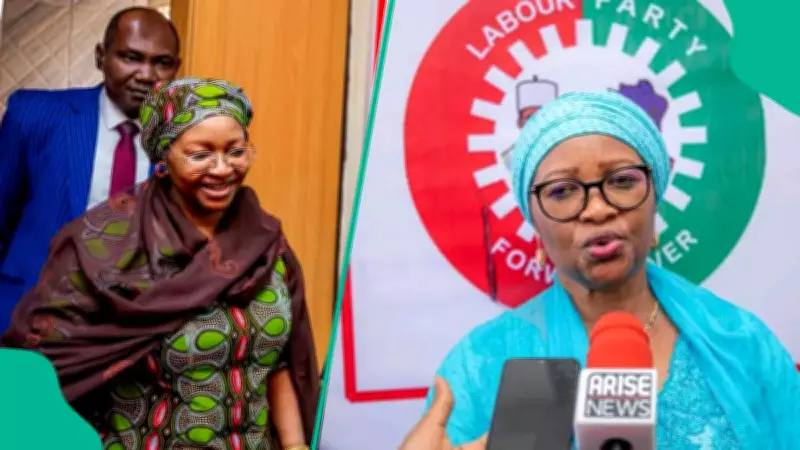
In a significant political development ahead of the 2027 general elections, the Labour Party (LP) has announced that it will zone its presidential ticket exclusively to southern Nigeria. This decision was disclosed by the party's national chairperson, Nenadi Usman, during a statement made in Abuja on Tuesday, March 24, 2026.
Labour Party's Strategic Move for 2027
Nenadi Usman, speaking to the media in the Federal Capital Territory, emphasized that the party has firmly resolved not to field any presidential aspirant from northern Nigeria. She clarified that this zoning arrangement is already settled within the party's internal structures and will be strictly enforced as the election cycle approaches.
Exclusion of Northern Aspirants
Usman stated, "We have one certain decision that we have taken and that is that we will certainly not field any aspirant from northern Nigeria. We have zoned the position to southern Nigeria. So if any northerner comes now to want to contest elections, we certainly will not accept that." This declaration underscores the party's commitment to regional representation and could reshape the political landscape for the upcoming polls.
The announcement has been widely reported by major Nigerian news outlets, including The Cable and The Punch, highlighting its importance in the lead-up to the 2027 elections. The Labour Party, which has gained prominence in recent years, is positioning itself strategically by focusing on southern regions, potentially aiming to consolidate support and address regional political dynamics.
This move comes amid ongoing discussions about zoning and power rotation in Nigerian politics, with parties often using such strategies to balance interests across the country's diverse geopolitical zones. By zoning the presidential ticket to the south, the Labour Party may be seeking to appeal to voters in that region while navigating the complex electoral environment.
As the 2027 elections draw nearer, political analysts will be closely monitoring how this decision impacts the party's campaign strategies, candidate selection, and overall electoral performance. The Labour Party's stance could influence other political parties and shape broader debates on equity and representation in Nigeria's democratic process.