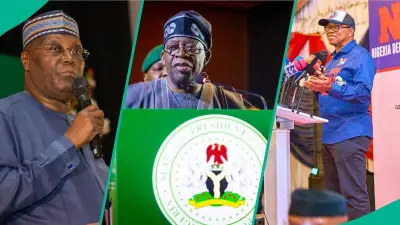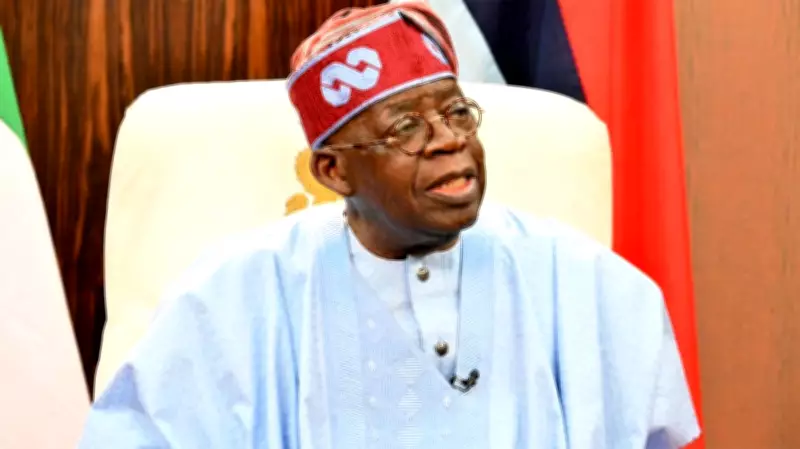
Northern Opposition Emerges as Key Hurdle for Tinubu's 2027 Re-election Campaign
President Bola Ahmed Tinubu's early groundwork for securing a second term in office has progressed substantially, yet a formidable challenge looms from opposition forces mobilising voters in the densely populated northern regions. This development could prompt the deployment of incumbency advantages in the upcoming 2027 presidential election, as reported by Leo Sobechi.
Shifting Political Landscape and Opposition Coalition
Until March 2025, many political observers believed President Tinubu would effortlessly secure re-election. However, the landscape began to change with discussions of an opposition coalition gaining momentum. By July 2025, the unveiling of the African Democratic Congress's interim leadership, coupled with Nasir el-Rufai's defection from the All Progressives Congress to the Social Democratic Party and later to the ADC, significantly bolstered resistance against Tinubu's second-term aspirations.
Freed from party constraints, el-Rufai initiated opposition activism by revealing details about the APC's zoning of the presidential ticket to the South and Tinubu's emergence as president. After posting what he claimed were the true results of the 2023 presidential poll on Facebook, the former Kaduna governor declared Tinubu destined for a single term. As an insider in the APC and a key figure among northern governors who influenced former President Muhammadu Buhari's succession plan, el-Rufai's credibility has amplified challenges to Tinubu's re-election bid.
Power Rotation Principle and Electoral Dynamics
Amid behind-the-scenes manoeuvres within the APC to uphold the North-South power rotation principle, the North has struggled to justify limiting Tinubu to one term or producing his successor. El-Rufai's assertion that the presidency should remain in the South for another four years has resonated with opposition leaders in the ADC, who insist on fielding a southern candidate to unseat Tinubu. Some southern opposition figures quietly argue that despite Tinubu's early progress, he may be swimming against the tide of this rotation principle.
Historical analysis of incumbent re-election bids in Nigeria, from Shehu Shagari in 1983 to Goodluck Jonathan in 2015, shows these contests are often marked by tension and uncertainty. The clash between government-promoted projects and voter assessments of policy impacts can render elections chaotic, especially when incumbents attempt to limit electoral referenda on performance.
Electoral Timeline and Strategic Preparations
The Independent National Electoral Commission has rescheduled the presidential poll for January 16, 2027, with governorship and State Assembly elections set for March 6, 2027. With just five months until electioneering begins, Tinubu appears to have a head start. Observers note that his approach reflects the resilience emphasised by Prof. Wole Soyinka, as Tinubu laid groundwork for re-election early in his term, with billboards promoting his ambition across major cities.
African Re-election Templates and Institutional Influence
The Presidency seems to be adopting strategies from African leaders like Tanzania's Samia Suluhu Hassan and Nigeria's Olusegun Obasanjo, leveraging incumbency power. For instance, Obasanjo used institutions like the EFCC to weaken opponents in 2003, while Hassan faced criticism for restricting opposition figures. In Nigeria, opposition claims suggest Tinubu has ensured key institutions—such as the National Assembly, judiciary, military, and police—are led by loyal figures, with controversial judicial rulings cited as evidence of executive influence.
Labour Party's Peter Obi has alleged efforts to prevent his 2027 candidacy, and PDP's Kabiru Tanimu Turaki has raised concerns about case reassignments in courts. Tinubu's strategy reportedly involves recalibrating the electoral map to consolidate support in Southern states, aiming for dominance in 17 southern states alongside key northern regions, given constitutional requirements for 25% votes in two-thirds of states.
Security Concerns and Political Manoeuvres
Insecurity, particularly in the North-East with renewed Boko Haram attacks, could impact voter turnout and weaken northern contenders. Ongoing investigations by agencies like the EFCC and ICPC involving figures such as el-Rufai and former Attorney General Abubakar Malami are viewed by analysts as part of broader political manoeuvres ahead of 2027.
Tinubu's Political Persona and Criticisms
In assessments by former Lagos officials, Tinubu is described as a master strategist with persuasive communication skills, akin to U.S. presidents like John F. Kennedy. Allies argue limiting him to one term is difficult, but critics like el-Rufai and Rotimi Amaechi contend he is beatable, criticising his methods as based on patronage rather than genuine persuasion. Former SDP candidate Adewole Adebayo has lamented an elite-driven system focused on personal ambition over national interest.
As Nigeria approaches the 2027 election cycle, the integrity of the process and its outcome will test the maturity of the country's democracy and the commitment of political actors to national progress.