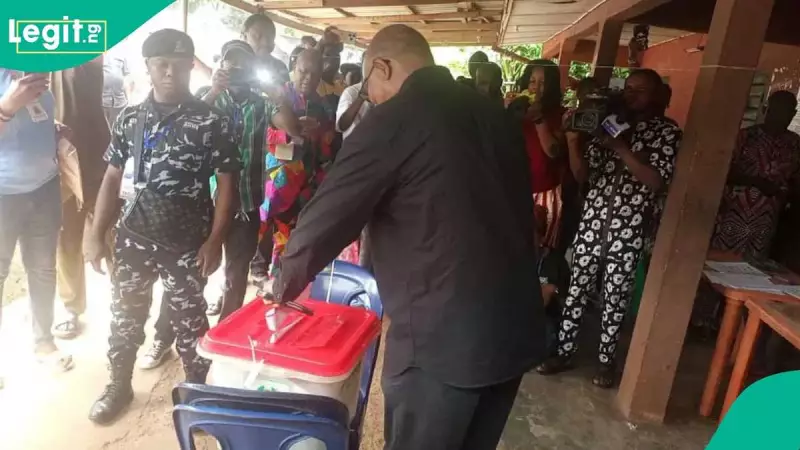
Former Labour Party presidential candidate Peter Obi and the party's current governorship candidate in Anambra State, George Moghalu, have participated in the ongoing state elections while expressing serious concerns about electoral malpractice.
High-Profile Voting Amid Electoral Concerns
Both prominent political figures exercised their civic duties on November 8, 2025, but used the opportunity to highlight what they described as a disturbing pattern of vote buying that threatens the integrity of the electoral process.
George Moghalu cast his ballot at Polling Unit 017, Uruagu Ward 1, in Nnewi North Local Government Area, where he immediately addressed journalists about the troubling developments he had witnessed.
Allegations of Widespread Vote Trading
Moghalu revealed that the buying and selling of votes had become rampant across various communities in Anambra State. According to his account, voters were being offered amounts ranging from ₦10,000 to ₦15,000 in exchange for their votes.
The Labour Party governorship candidate emphasized that this practice fundamentally undermines democratic principles and raises serious questions about the credibility of the election outcomes. Both he and Peter Obi called for immediate action from electoral authorities to address the situation.
Context of Anambra's Political Landscape
The Anambra State governorship election represents a crucial political event in Nigeria's southeastern region, with multiple parties competing for leadership of the state. The participation of high-profile figures like Peter Obi, who remains an influential political voice, adds significant attention to the electoral process.
The allegations of vote buying come at a time when Nigeria continues to grapple with electoral reforms and the challenge of ensuring free and fair elections across all states. The specific amounts mentioned by Moghalu suggest a systematic approach to influencing voter behavior through financial incentives.
As residents of Anambra State continue to cast their ballots, the concerns raised by these prominent political leaders highlight ongoing challenges in Nigeria's democratic development and the need for strengthened electoral oversight mechanisms.