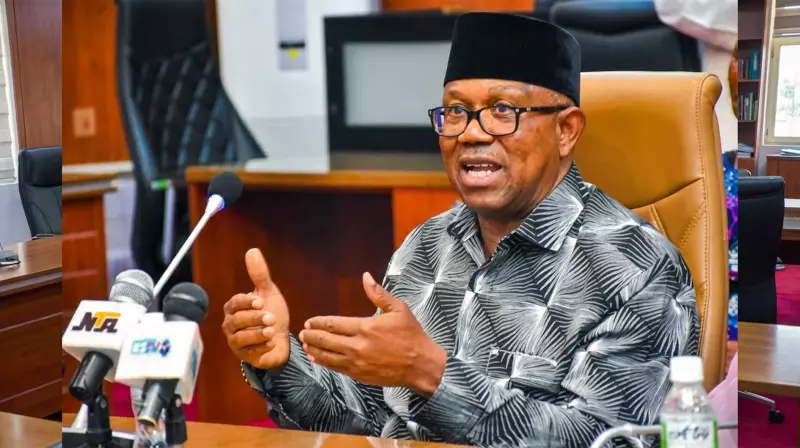
Former Labour Party presidential candidate, Peter Obi, has issued a stark warning, declaring that Nigeria cannot be considered a genuine democracy as long as vote buying remains a core feature of its electoral process.
Lawmakers' Inaction on Primary Elections Criticised
The criticism from the former Anambra State governor came in response to a recent decision by the House of Representatives. The lower chamber, while considering electoral reforms, declined to approve measures that would expressly criminalise inducements and vote buying during internal party nomination processes.
In a statement shared on his X platform, Obi expressed disappointment, stating that Nigerians had expected firm legislative action against what he called a long-standing threat to credible elections and national development. "Any effort to stop vote buying must begin at the primaries," Obi argued. "Without addressing the problem at its roots, any measures taken later will lack the strength to endure."
A System Compromised from the Start
Obi described the lawmakers' refusal to target inducements at the primary stage as an act of protecting a broken system. He stressed that reforms introduced only at the general election stage would lack durability if the very process of selecting candidates remained compromised.
"A democracy where votes are bought is not a true democracy; it is a criminal marketplace," Obi stated bluntly.
He further lamented that the corrupt practice of inducement has now spread beyond formal politics into other spheres of civic life, including town unions, clubs, and student elections. Obi linked this societal decay directly to the example set by politicians who engage in electoral malpractice without facing any consequences.
Enforcement Remains a Major Challenge
Vote buying has been extensively documented in Nigerian elections by both domestic and international observer groups. Reports from the Independent National Electoral Commission (INEC) and civil society organisations after the 2023 general elections confirmed widespread incidents.
While Nigeria's Electoral Act 2022 prohibits and punishes vote buying during general elections, enforcement has been weak. INEC itself has admitted that voter inducement is one of the most difficult electoral offences to police, especially when transactions occur discreetly outside polling units. Few high-profile convictions have been recorded since the law came into effect.
Party primaries, which determine who stands in general elections, are largely regulated by the political parties themselves, with INEC playing only a monitoring role. This gap in regulation, according to Obi, is where the rot begins.
Obi concluded with a pointed question about the nation's future: "How long will we allow our society to be corrupted when the solution lies in addressing the roots of the problem?" His intervention adds to growing calls for comprehensive electoral reform as INEC renews collaboration with law enforcement and the judiciary for faster prosecution of offenders.