All the time that the defection political bug hit the Nigeria polity, all eyes were on Kano State. That ancient city has a way about it and its peoples. As a gated city, Kano represents the seven colours of rainbow with its rich culture, history and trade. However, when it comes to politics and political expression, the right gates of Kano do not get sufficient space for laggards or the confused: Everybody finds his way easily according to the range of his cognitive schema. Yet, there is a pattern in the political behaviour of Kano – you do not dictate to anybody, whether young or old.
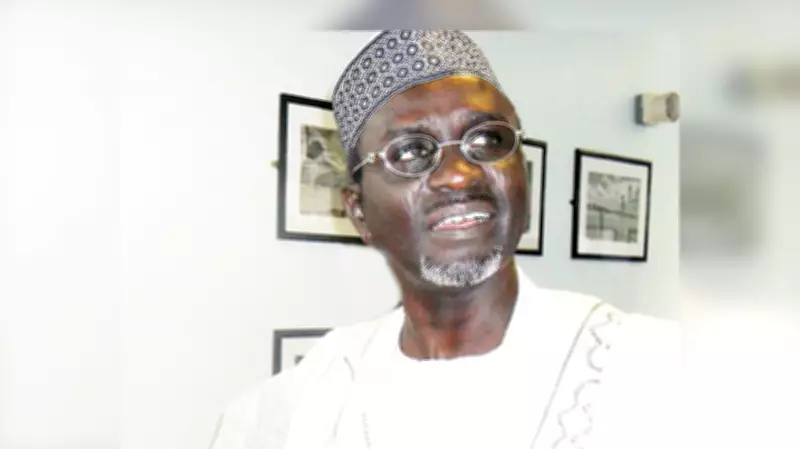
It is therefore not for nothing that Mallam Ibrahim Shekarau was about the first democratically elected governor of the state to enjoy consecutive two terms without the coercive instruments of the state. In 2003, Shekarau defeated an incumbent to become the governor of Kano State. Up until today, the outcome of the 2003 governorship election in Kano has continued to define the competition for political power in the state. Against the usual run of play, the Mathematics teacher, Shekarau, defeated then incumbent Rabiu Musa Kwankwaso, an engineer, to sit on the same governorship seat that Abubakar Rimi occupied in the second republic.
Defeating Kwankwaso, who was the candidate of the ruling People’s Democratic Party (PDP), came as a poignant statement about Kano politics. Kano people do not send any potentate! That iconoclasm belies the common saying in Kano that quo abinda ka zo da shi amfika (whatever you throw at us, we are greater than that). Through that gubernatorial poll between an incumbent and a perceived outsider, Shekarau redefined the dual political tendencies in Kano. While Kwankwaso represents the stone and hammer, Mallam simulates the slow-moving stream that waters both the weak and wealthy. In 1983, when the late governor Abubakar Rimi tried to deploy the hammer and stone approach, the Kano masses told him that he was not yet born to reverse the direction of welfarist politics of Mallam Aminu Kano.
Although Kwankwaso remained in his political desert years in Abuja, where he served as Minister of Defence, the fact that Shekarau won an emphatic second term mandate in 2007 seemed to underscore the fact that his pacifist and inclusive political style resonated with the people, especially the talakawas. In 2011 when he was bowing out from the Kano State Government House, Mallam could not implant a successor, either due to political miscalculation or elite rebellion to his attempt to play godfather. But, on the flipside, his political sparring partner, Kwankwaso, having learned from the mistakes of his past and gathered wider experience, waged a determined comeback.
While many believed that the Sardaunan Kano’s re-election in 2007 was partly on account of his association with the late General Muhammadu Buhari, Shekarau’s presidential run in 2011 opened the eyes of Nigerians to both his engaging mental construct and deep understanding of issues of statecraft. That 2011 presidential election in which Shekarau featured against Buhari could serve as a backcloth to periscope the unfolding 2027 general election. The political godson versus political godfather, which the Shekarau and Buhari emergence on the presidential ballot at the same time exposed, has a replica of sorts in the emerging Governor Abba Kabir Yusuf versus Kwankwaso in different political camps of the ruling All Progressives Congress (APC) and African Democratic Congress (ADC).
However, as neither Buhari nor Shekarau could clinch any of the Kadastian States, including Kano, Shekarau succeeded in launching himself effectively into national political consciousness, while Buhari settled for a consolation prize in the Nasarawa State governorship for his now defunct Congress for Progressives Change (CPC). That opening helped Shekarau in no small way to depict himself as an effective counterforce to Kwankwaso’s dominance of Kano politics. That parallelism gained easy expression in 2013 at the formative stages of the APC. Just as Shekarau was involved in the onerous task of incubating the new mega party to challenge the dominant PDP, Kwankwaso was serving out his delayed second term as governor.
But, with the deployment of a clever political strategy that gifts incumbent state chief executives the control of the governing structures of the inchoate party, Shekarau could not come to terms with the reality of coming into direct subservience of a man he floored at the 2003 governorship election. Like the eight gates in Kano city, the only way out for the former Kano governor was to creep into the PDP, his first time being in a conservative party. Yet, parting ways with Kwankwaso was to him a better evil. And by so doing, Shekarau unwittingly lost the claim as a potential successor of the Aminu Kano political tendency.
With that political odyssey, Shekarau was able to net a ministerial appointment. As a cabinet minister, he came level with his political ‘running mate’ Kwankwaso, even though his 2011 presidential contest sort of raised his political ranking slightly above that of the Kwankwasiyya founder. When political circumstances displaced Kwankwaso from the APC, Shekarau found his way back, not only to the party, but also as a special purpose vehicle that would eventually take him to the Red Chamber of the National Assembly. Replacing Kwankwaso in the Senate as the representative of the highly politically assertive people of Kano Central came as a sweet revenge for the loss of the progressive structure in 2015.
But, while he was serving out his term in the Senate, the politics of Buhari’s succession threw up new concerns. As Buhari appeared confused as to how to prosecute his succession plan, Shekarau experimented with the idea of at last working together with Kwankwaso, believing that even though his political running mate’s aspiration to the Presidency may end up as a whisper in the wind, the association could guarantee his return to the Senate for a second term. Crossing over to the New Nigeria Peoples Party (NNPP), which initially had the trimmings of an olive branch gesture in the long running political competition with Kwankwaso ended up as a misstep. While Kwankwaso, the leader of the party, granted Shekarau his right to the NNPP senatorial ticket for Kano Central, Mallam’s demand for similar accommodating gestures for his allies and supporters was rebuffed.
Irked by that insulting situation, and just three months in the NNPP, the former education minister migrated back to PDP, in the belief that luck may finally smile on former vice president Atiku Abubakar in the 2023 presidential contest. But, after sacrificing his senate ticket in solidarity for his acolytes and joining Atiku on the embattled PDP platform, the 2023 election cycle and beyond went without pomp or circumstance for the self-effacing political leader. At 70, how long can such an active political playmaker remain outside the field of play? He bided his time. With eyes on 2027, Shekarau took his time, meeting with like minds across the various political divides. What was obvious was that his stay in the troubled platform of PDP was sure to end.
When the coalition team approached, he deployed his learning as a former school principal and experience in the founding of APC. His position was clear: Coalition of heavyweights cannot work. To Shekarau, the only way Nigerians could take the coalition promoters serious is if they are able to convince opposition political parties to come together and fuse into one entity. Ruling out the possibility of registering a brand-new political party, Mallam remained adamant in his belief that only a coalition of political parties will make political sense to him. While the talks with the opposition lasted, there were small talks about the possibility of fielding him as a presidential running mate with a southern candidate in the coalition. But, what many watchers of Kano politics saw was a deliberate effort to ensure that he did not end up in the same party with Kwankwaso.
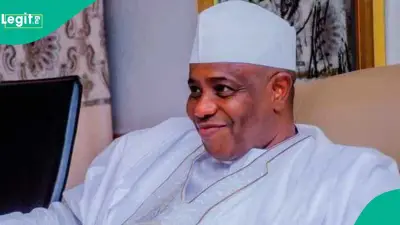
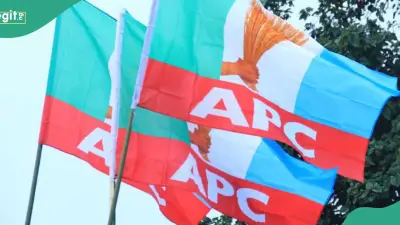
Consequently, no sooner had the former NNPP presidential runner ended up in ADC than Shekarau activated all lines associated with the leadership of APC, including President Tinubu, who mandated the party’s National Chairman, Prof. Nentawe Goshwe Yilwatda, to visit the Mundubawa abode of the former governor. Announcing his defection or better, return to APC, Shekarau broached the political parallel between him and Kwankwaso: “We cannot join ADC, a party filled with people of personal interest; a party struggling to gain its feet.” The situation in his residence last Sunday contrasted with his hasty cross over to PDP in 2022. Unlike then, Mallam explained that his Shura Council was adequately involved. “We took the decision after wide deliberations and weighing several options, which include joining APC after realising that the PDP is facing so many challenges.”
Shekarau seems to subscribe to Julius Nyerere’s school of thought, which holds that “leadership is about serving the people, not enriching yourself.” Born on November 5, 1955, Mallam Ibrahim Shekarau has been offering alternative political ideas and leadership to his supporters. Now that he has returned to the ruling party, it is obvious that rather than chasing appointive or elective positions, he will be looking out for opportunities to make Kano State and Nigeria at large better.