Members of Uganda's political opposition gathered for a prayer meeting on Sunday, sounding a stark alarm about state repression just days before the country's presidential election scheduled for Thursday.
Prayer Meeting Highlights Climate of Fear
The event was held at the home of an imprisoned politician and attended by supporters of various ages. It served as both an act of defiance and a demonstration of the significant risks involved in challenging the government of President Yoweri Museveni.
Kampala Mayor Erias Lukwago addressed the assembly, framing the upcoming vote as a direct confrontation between ordinary citizens and the long-serving president. "All of you are in two categories: political prisoners and potential political prisoners," he told the crowd.
Museveni's Firm Grip on Power
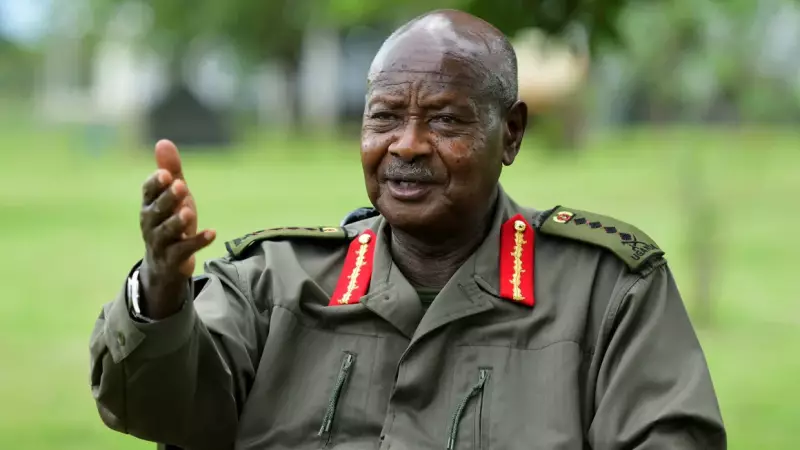
President Yoweri Museveni, 81, is widely anticipated to secure another term. He has led Uganda for over four decades, maintaining power through near-total control of the state and its security forces. Museveni, who originally came to power as a bush fighter in the 1980s, presides over a heavily militarised system of governance.
The current election campaign has been marked by a harsh crackdown. Hundreds of opposition supporters have been detained, and at least one has been killed. Authorities have dismissed these actions as necessary measures to control what they label "hooligans."
The main opposition candidate, Robert Kyagulanyi (popularly known as Bobi Wine), has faced repeated arrest and reported torture in military custody. He is now rarely seen in public without protective gear. Another key opposition figure, Kizza Besigye, was abducted from Kenya in 2024 and taken to a Ugandan military prison to face treason charges.
'A Thin Veneer of Democracy'
Sunday's prayer meeting was hosted by Winnie Byanyima, the wife of Kizza Besigye and director of UNAIDS. She described the situation in blunt terms. "We are really a military state," she told AFP. "There's total capture of state institutions by the individual who holds military power, President Museveni." She argued that Uganda operates under only "a thin veneer" of democracy.
Experts confirm that the police and military are central pillars of Museveni's continued rule. Jude Kagoro, a University of Bremen researcher specializing in African policing, noted that officers often see their role as supporting the incumbent rather than remaining neutral. They frequently move against opposition events without needing explicit orders.
The regime also employs a system of recruiting young people in opposition strongholds to disrupt activities and gather intelligence, a network informally called "ghetto structures."
"The regime wants to make people very scared so they don't come out to vote," explained David Lewis Rubongoya, secretary-general of Bobi Wine's National Unity Platform.
High Cost of Political Engagement
Rights groups have documented a wave of arrests and abductions targeting opposition members, tactics similar to those used in neighbouring Kenya and Tanzania. This pervasive threat of violence has severely restricted the opposition's ability to campaign and mobilise supporters.
Kristof Titeca, a Uganda specialist at Antwerp University, assessed the situation as leaving little room for grassroots opposition. "What's left is a group of core supporters. Is there a grassroots opposition? No, there isn't. It's way too dangerous," he stated.
As the election approaches, the opposition's warnings underscore the immense challenges of contesting Museveni's administration and raise profound questions about the role of security forces in Uganda's political process.