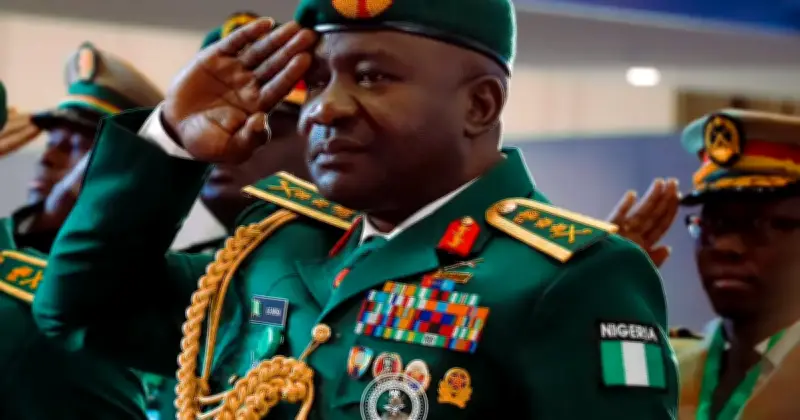
Nigeria's Minister of Defence, General Christopher Musa, has said he wishes every Nigerian could go through military training at some point, arguing that the experience would completely reshape how people understand hardship and endurance. Speaking on the African Leadership Podcast with Ken Giami, Musa said the experience of hunger, exhaustion and physical strain that comes with military training gives people a perspective on life they cannot get anywhere else.
He described walking for kilometres while exhausted, hungry and thirsty, and said pushing through that kind of exhaustion is where real endurance is learned. "Every Nigerian should be able to go through military training, it will help you understand what it means to stay hungry, it will show you what endurance means," Musa said.
Defence of soldiers' sacrifices
Musa tied the point to a broader defence of soldiers, saying the same sacrifice civilians would struggle to imagine is one members of the military live through daily, in service of the country's protection. He referenced the biblical idea that there is no greater love than laying down one's life for a friend, framing military service in that light.

Musa said that framing is part of why he finds it painful when people criticise or insult the military. He said it is not that soldiers want conflict to continue, but that the public underestimates what personnel go through daily, in all weather and conditions, away from their own families, to keep the country secure. He said members of the military deserve more recognition for that sacrifice.
Counter-insurgency and weapons production
The comments came during a wide-ranging conversation covering Musa's four-decade career, from his entry into the Nigerian Defence Academy in 1986 to his current role as Defence Minister. In the interview, he also argued that a large share of Nigeria's counter-insurgency effort, which he put at roughly 70 per cent, is non-military in nature, and said kidnapping in particular has become more of a social problem than a purely security one.
He also spoke about the psychological toll of warfare, where threats often do not come from anyone in uniform, and made the case for Nigeria developing its own weapons manufacturing capacity rather than depending on long delivery timelines for equipment it has already paid for.
Online reaction
The episode, released two days ago, has already generated significant conversation online, with Musa's comments on military training for civilians drawing the most attention and debate. The interview has sparked discussions about the role of the military in Nigerian society and the importance of understanding soldiers' experiences.