
Iran Attacks Oil Tanker Near Dubai Amid Escalating Middle East Crisis
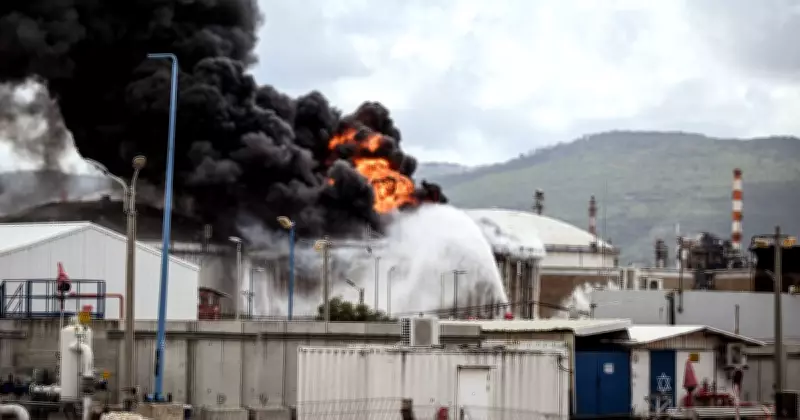
Iran launched a missile attack on a fully loaded crude oil tanker near Dubai early Tuesday, setting the vessel ablaze and further escalating tensions in the Middle East. This aggressive move came shortly after President Donald Trump threatened to completely destroy Iran's energy facilities and oil wells if the country fails to keep the strategic Strait of Hormuz open for international shipping.
Details of the Tanker Attack
The Kuwait-flagged Al-Salmi, carrying approximately 2 million barrels of oil valued at over $200 million at current market rates, was struck by what authorities described as an explosive drone. Kuwait Petroleum Corporation, the ship's owner, confirmed the attack occurred in the early hours of Tuesday, resulting in significant hull damage and a major fire that required emergency response teams.
Dubai authorities later reported successfully extinguishing the blaze, noting that no oil spill occurred and all crew members escaped injury. This incident represents the latest in a series of attacks targeting merchant vessels in the Gulf and Strait of Hormuz region using missiles and explosive drones.
Regional Conflict Expands
The Middle East conflict has now spread across multiple fronts following initial U.S. and Israeli strikes against Iran on February 28. The month-long hostilities have resulted in thousands of casualties, disrupted global energy supplies, and raised serious concerns about potential worldwide economic consequences.
Iran-backed Houthi rebels have joined the conflict by launching missiles and drones at Israel, while Turkey reported intercepting a ballistic missile that entered its airspace from Iran. Israel has conducted its own missile strikes targeting what it describes as military infrastructure in Tehran and facilities used by Iran-supported Hezbollah in Beirut, Lebanon's capital.
Economic and Political Implications
The attack immediately impacted global oil markets, with crude oil prices experiencing another sharp increase. Brent crude oil prices have surged by a record 56% this month, surpassing $113 per barrel as global supplies continue to shrink.
In the United States, the national average retail price for a gallon of gasoline reached $4 on Monday for the first time in more than three years, according to data from the GasBuddy price-tracking service. These rising energy costs are creating financial strain for American families and presenting political challenges for President Trump and the Republican Party ahead of November's midterm elections.
Military Developments and Diplomatic Efforts
Thousands of soldiers from the U.S. Army's elite 82nd Airborne Division have begun arriving in the Middle East, according to two U.S. officials who spoke with Reuters on Monday. These reinforcements expand President Trump's military options, potentially including ground operations in Iran even as diplomatic negotiations continue.
White House press secretary Karoline Leavitt stated that Trump seeks to reach an agreement with Iranian leaders before an April 6 deadline for reopening the Strait of Hormuz, a critical waterway that normally carries approximately one-fifth of global oil and liquefied natural gas supplies.
Conflicting Statements and Market Reactions
Iranian Foreign Ministry spokesperson Esmaeil Baghaei described recent U.S. peace proposals as "unrealistic, illogical, and excessive" following weekend talks involving foreign ministers from Pakistan, Egypt, Saudi Arabia, and Turkey.
President Trump responded by warning that the United States would "obliterate power plants, oil wells and Kharg Island" if a deal isn't reached soon and the strait remains closed. However, a Wall Street Journal report suggested Trump might be willing to conclude military operations even with the strait partially blocked, leaving its complete reopening for later resolution.
This news provided some relief to financial markets, causing oil prices to dip slightly and helping stock markets recover from earlier lows as investors grew more optimistic about a potential resolution to the hostilities.
Casualties and Infrastructure Damage
In Tehran, explosions were reported in eastern and western parts of the city following Israeli warnings about impending strikes. Residents in the Pirouzi district experienced power outages after the blasts, with Iran's Energy Ministry officials working to restore electricity services.
A separate strike in northwestern Iran's Zanjan city hit a Shi'ite congregation hall, killing three people and injuring twelve according to provincial officials. The Israeli military announced early Tuesday that four soldiers had been killed in southern Lebanon, the same region where three United Nations peacekeepers from Indonesia lost their lives in two separate incidents.
Funding and International Response
The White House has requested an additional $200 billion to fund military operations in the region, a proposal facing significant opposition in the U.S. Congress which must approve any new spending. Administration officials have also suggested that Arab nations might be asked to contribute to war costs.
Secretary of State Marco Rubio told Al Jazeera that the Strait of Hormuz would eventually be reopened "one way or another" following U.S. military action, indicating continued determination to secure this vital international shipping route despite the escalating conflict.




