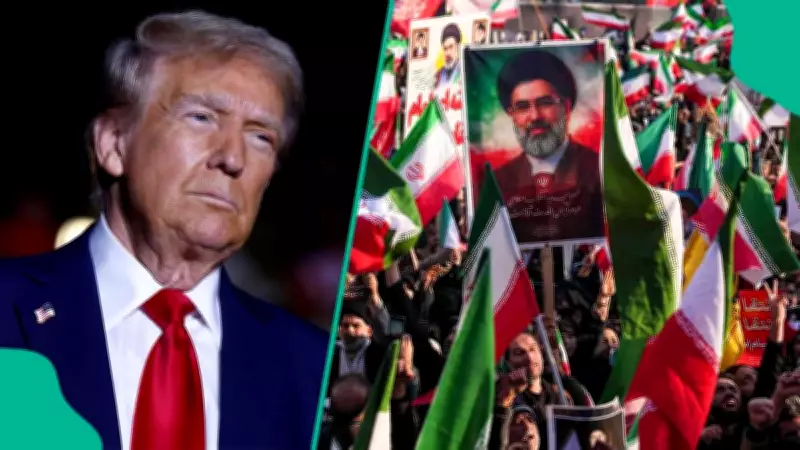
Iran's New Supreme Leader Issues First Threat to US President Trump
The newly appointed Supreme Leader of Iran, Ayatollah Mojtaba Khamenei, has delivered his first official statement since succeeding his father, Ayatollah Ali Khamenei, and it contains a direct threat to United States President Donald Trump. In a significant escalation of regional tensions, the Ayatollah declared that the Strait of Hormuz, a critical global shipping channel, will remain closed under his leadership.
Vow of Vengeance and Continued Blockade
Since assuming office, Ayatollah Mojtaba Khamenei has maintained a low public profile, but a statement attributed to him has emerged, asserting that the Islamic Republic will "avenge the blood of Iranians" killed by the United States. This declaration underscores Iran's commitment to retaliate against perceived American aggression, which includes the recent assassination of the previous Supreme Leader and several military generals in a joint US-Israeli attack.
The statement explicitly links this vow of vengeance to the ongoing blockade of the Strait of Hormuz, a strategic waterway through which a substantial portion of the world's oil shipments passes. By continuing this blockade, Iran aims to exert economic and geopolitical pressure, sending a clear message to President Trump and the international community about its resolve in the face of external threats.
Background of Attacks and Regional Escalation
According to reports from the BBC, the Gulf region has witnessed a series of attacks on cargo ships, with suspicions pointing towards Iranian involvement. Specifically, two tankers near Iran and a container ship around the United Arab Emirates have been targeted in these incidents. Iranian state media has confirmed that Iranian forces were responsible for at least one of these strikes, further complicating the security landscape in the Middle East.
The assassination of Ayatollah Ali Khamenei and key military figures by US and Israeli forces has been a catalyst for the current escalation. This development has not only heightened tensions but also prompted Iran's aggressive response, including the blockade of the Strait of Hormuz. The closure of this vital maritime route threatens global oil supplies and could have far-reaching economic implications, exacerbating instability in an already volatile region.
Implications for International Relations
The threat from Iran's new Supreme Leader represents a significant challenge to US foreign policy under President Trump. It signals a hardening of Iran's stance and a willingness to engage in confrontational tactics, potentially leading to further military or diplomatic clashes. The international community is closely monitoring the situation, as any prolonged closure of the Strait of Hormuz could disrupt global trade and energy markets, prompting responses from other nations dependent on the free flow of oil.
This development also raises questions about the future of US-Iran relations, which have been strained for decades. With Ayatollah Mojtaba Khamenei now at the helm, Iran appears poised to continue its adversarial posture, making de-escalation efforts more complex. The situation underscores the fragile nature of Middle East politics and the potential for rapid deterioration in regional security.