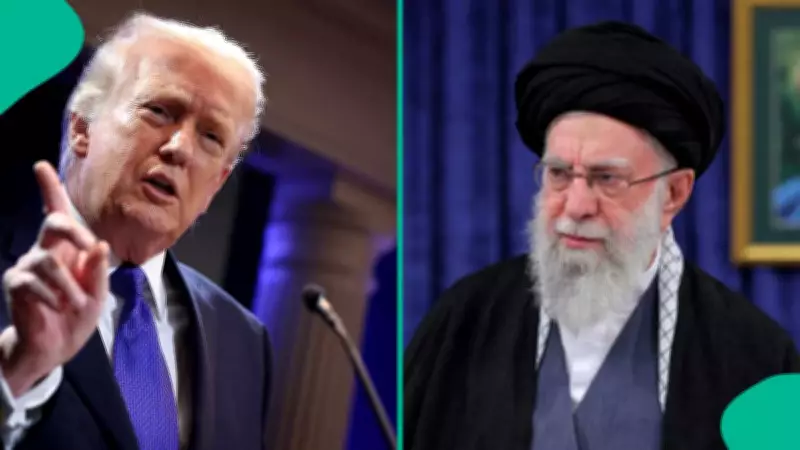
Iran's Supreme Leader Khamenei Confirmed Dead After US-Israel Strikes on Tehran
Iran's Supreme Leader Ayatollah Ali Khamenei has been confirmed dead following coordinated military strikes by the United States and Israel on his central Tehran compound. The attack represents a dramatic and unprecedented escalation in regional tensions that has sent shockwaves through international diplomatic circles.
Trump Announces Strike as 'Greatest Chance' for Iranian People
Hours before Iran's state television officially confirmed the death, US President Donald Trump announced on his Truth Social platform that the cleric had been killed in the military operation. In his statement, Trump described Khamenei as "one of the most evil people in history" and revealed that the Supreme Leader had been tracked using "highly sophisticated tracking systems."
The US President framed the strike as "the single greatest chance for the Iranian people to take back their country" in what appears to be a calculated political message aimed at encouraging internal opposition to the Iranian regime. In an earlier video message, Trump confirmed that "major combat operations in Iran" had commenced, specifically targeting Iran's missile arsenal and naval capabilities.
Symbolic Social Media Post Sparks Intense Debate
Shortly after Trump's announcement, a brief but highly symbolic message appeared on X from the verified Persian-language account associated with Khamenei. The post, timestamped February 28, 2026, read: "Be nām-e nāmi-ye Heydar, alayhis-salām," which translates to "In the exalted name of Haidar (peace be upon him)."
The message invoked Haidar, a reference to Imam Ali, the first Shia Imam who holds central importance in Shia theology and revolutionary symbolism within Iran. The accompanying image depicted a Shia warrior wielding the glowing Zulfiqar sword amid flames and meteors, imagery traditionally associated with martyrdom and resistance in Shia Islamic tradition.
Online reactions to the post were sharply divided:
- Some users mocked the timing with comments questioning "Aren't you dead?"
- Others interpreted the symbolism as a deliberate framing of Khamenei's death within Shia traditions of martyrdom and defiance
- Many analysts suggested the post was likely scheduled or posted by aides to shape the narrative surrounding the Supreme Leader's demise
Iran Confirms Death and Announces Official Mourning Period
On Sunday morning, Iran's state television officially confirmed that Khamenei had been killed in the coordinated strikes that destroyed his central Tehran compound. Reports indicate the 86-year-old cleric died in the early hours of Saturday alongside several family members, including:
- His daughter
- Grandchild
- Daughter-in-law
- Son-in-law
Additionally, Iranian Defence Minister Aziz Nasirzadeh and Islamic Revolutionary Guard Corps commander Mohammad Pakpour were also reported killed in the attacks. The Iranian government has declared 40 days of mourning, in strict accordance with Shia Islamic tradition following the death of significant religious figures.
Khamenei's Legacy and Iran's Uncertain Future
Khamenei's death closes a significant chapter in Iranian history that began in 1989 when he succeeded Ruhollah Khomeini as Supreme Leader. Initially dismissed by many observers as lacking both charisma and senior clerical credentials, Khamenei methodically consolidated power over his 36-year tenure, eventually becoming Iran's ultimate authority figure.
During his leadership, Khamenei oversaw:
- The armed forces and security establishment
- The judiciary and legal system
- Domestic and foreign policy decisions
- Nuclear policy and international negotiations
Throughout his tenure, he consistently cast the United States as Iran's principal adversary, often referring to America as "the Great Satan." His rhetoric intensified significantly after Trump's second term began in 2025, coinciding with widespread protests across Iranian cities. In January of this year, Khamenei vowed that Iran would not "yield to the enemy" in what now appears as a prophetic final statement.
On nuclear policy, Khamenei consistently rejected claims that Iran sought nuclear weapons. In the mid-1990s, he issued a formal fatwa declaring the "production and usage" of nuclear weapons forbidden, stating unequivocally: "It is against our Islamic thoughts."
International Reactions and Media Coverage
Reuters news agency and multiple Israeli media outlets reported Khamenei's killing earlier, citing unnamed "senior" Israeli officials. The head of public relations at the Iranian Supreme Leader's office initially accused the country's enemies of engaging in "mental warfare" following the Israeli reports, suggesting initial confusion or deliberate misinformation about the Supreme Leader's status.
The attack represents the most significant escalation in US-Iran relations since the Trump administration withdrew from the nuclear deal in 2018. Regional analysts are now closely watching for potential retaliatory actions from Iran and its proxy forces across the Middle East, as well as internal power struggles within the Iranian leadership structure.