
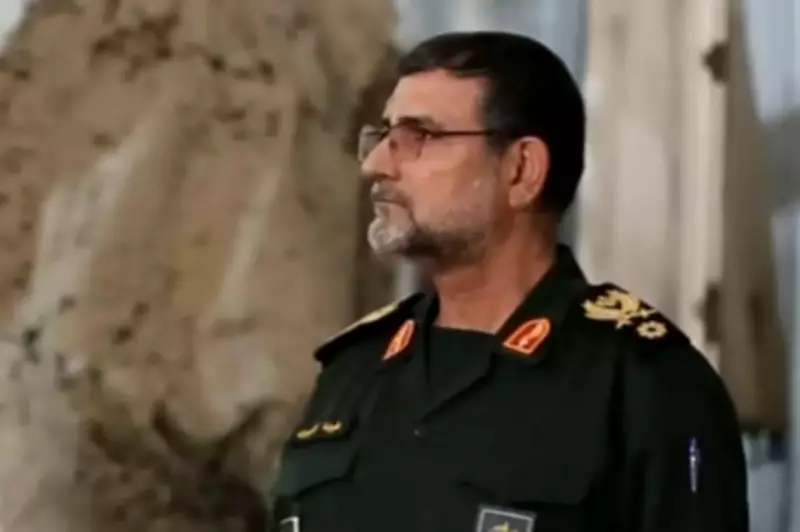
Israel Claims Elimination of Iranian Naval Commander Responsible for Strait of Hormuz Closure
Israel has asserted that it conducted a missile strike resulting in the death of Iranian Revolutionary Guard Corps (IRGC) Navy Commander Alireza Tangsiri, the officer held accountable for orchestrating the closure of the critical Strait of Hormuz. This development follows a vow from the Israel Defence Forces (IDF) to systematically target and eliminate Iran's leadership figures individually.
Details of the Reported Strike and Its Aftermath
According to Israeli officials, the attack occurred on the night of March 25 in the southern Iranian port city of Bandar Abbas. Unverified footage circulating online depicts a collapsed building, purportedly the site where Tangsiri was meeting with other senior naval officers at the time of the strike. Iran has not yet officially confirmed the commander's death, despite statements from Israeli Prime Minister Benjamin Netanyahu alleging Tangsiri had "a great deal of blood on his hands."
Israeli Defence Minister Israel Katz elaborated that the operation was a precise airstrike, also claiming it eliminated the IRGC Navy's intelligence chief, Behnam Rezaei. Katz framed the strike as a direct message to the IRGC, declaring, "the IDF will hunt you down and eliminate you one by one." He further emphasized Israel's intent to continue operations within Iran to achieve its wartime objectives.
Commander's Role and the Strategic Strait of Hormuz
Alireza Tangsiri was a pivotal figure in Iran's maritime military strategy. The IDF accused him of:
- Leading a bombing campaign that brought all marine traffic through the Strait of Hormuz to a complete halt.
- Being directly responsible for terror operations involving mining and blocking the vital waterway.
- Overseeing attacks on oil tankers and commercial vessels over several years.
- Personally threatening freedom of navigation and global trade in the international maritime domain.
In his final social media post, Tangsiri provided an update on ships Iran had refused passage through the strait and had recently issued threats against US-linked oil facilities. The closure of the Strait of Hormuz, a chokepoint for approximately one-fifth of the world's oil supply, has significant repercussions for the global economy, a point underscored by the IDF in their statements.
Broader Context: Peace Talks and Shifting Target Lists
This military action unfolds against a complex backdrop of international diplomacy. Concurrently, the United States is engaged in peace talks with Iran. Reports indicate that Pakistan intervened, requesting Washington to persuade Israel not to target two other high-profile Iranian leaders: Foreign Minister Abbas Araghchi and Parliament Speaker Mohammad Bagher Qalibaf.
A source familiar with the discussions told Reuters that the rationale was pragmatic: eliminating these figures would leave no credible Iranian officials with whom to negotiate. Consequently, Israel reportedly removed them from its target list following US urging.
However, diplomatic progress appears stalled. On March 25, Iran rejected a US-proposed peace plan. Foreign Minister Araghchi, in a televised address, stated Iran's policy remained the "continuation of resistance" and that no negotiations had taken place. He set forth conditions for peace, including a permanent end to hostilities and compensation for destruction that has claimed over 2,000 lives, notably mentioning the death of Supreme Leader Ayatollah Ali Khamenei. Araghchi also taunted the US, questioning its ability to protect Gulf allies despite its military presence in the region.
The situation remains highly volatile, with Israel's aggressive military posture directly challenging Iran's leadership while fragile diplomatic channels attempt to manage the crisis and prevent further escalation in an already tense geopolitical landscape.




