
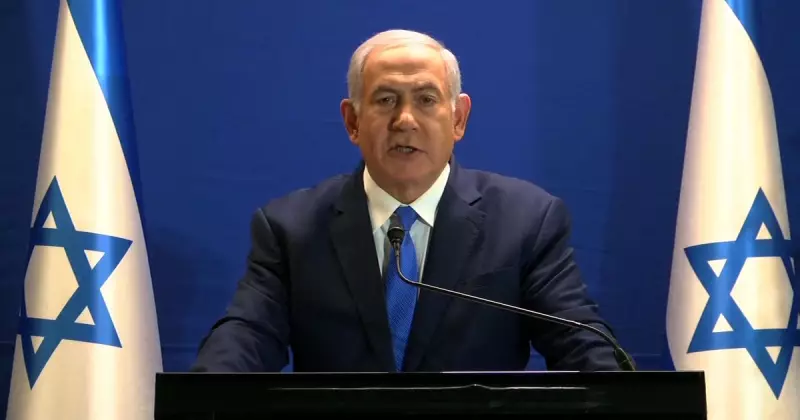
Israeli Prime Minister Benjamin Netanyahu has issued a powerful call for an immediate end to attacks targeting Christians in Nigeria and other parts of the world. He condemned what he described as the severe persecution of Christians and followers of other faiths in a strong video statement.
Christmas Message Condemns Global Persecution
Netanyahu shared his remarks as part of his Christmas greeting to Christians globally on his official X account. He stated that the persecution of Christians or members of any religion cannot and must not be tolerated. The Israeli leader specifically addressed the situation in Nigeria, declaring that Muslim militant displacement and attacks against Christians in Nigeria must end, and it must end now.
He expanded his condemnation to several countries in the Middle East, including Iraq, Syria, Lebanon, and Turkey, where Christians reportedly face persistent threats to their safety and freedom to worship.
Israel's Stance and Contrast with Palestinian Incident
Aligning with a position previously taken by former United States President Donald Trump, Netanyahu affirmed that Israel would continue to stand with Christians worldwide. He presented Israel as a sanctuary for Christian faith in the region.
Netanyahu claimed Israel is the only country in the Middle East where Christians can practice their faith with full rights and in total freedom. He highlighted that Christian pilgrims are welcomed and appreciated, and traditions can be celebrated openly without fear. As an example, he noted that the Jerusalem municipality has officially distributed Christmas trees for two decades.
By contrast, he referenced an incident in the Palestinian town of Jenin, where he said Palestinians burned a Christmas tree in the Holy Redeemer Church a few days prior. That's the difference, he added, drawing a sharp comparison.
International Perspectives on Nigeria's Violence
Netanyahu's comments place Israel alongside the United States in characterizing the violence in Nigeria primarily as a case of religious persecution. This framing differs from the analysis of other international bodies.
Organizations such as the European Union and the Economic Community of West African States (ECOWAS) have also condemned the violence in Nigeria. However, they often describe it as a broader security challenge involving banditry, kidnapping, and communal clashes, rather than solely targeted religious attacks.
The Nigerian government has consistently rejected allegations of religiously motivated genocide. Authorities insist that the country respects freedom of religion and that victims of violence cut across religious lines, affecting Muslims and Christians alike, rather than being targeted at any single faith group.
In recent weeks, former U.S. President Donald Trump re-designated Nigeria as a country of particular concern over allegations of a Christian genocide. He even warned of potential military action if the Nigerian government failed to respond decisively to protect religious communities.
The intervention by a major global figure like Netanyahu brings renewed international attention to the complex security situation in Nigeria, highlighting the ongoing debate over its root causes and the appropriate response from the global community.




