
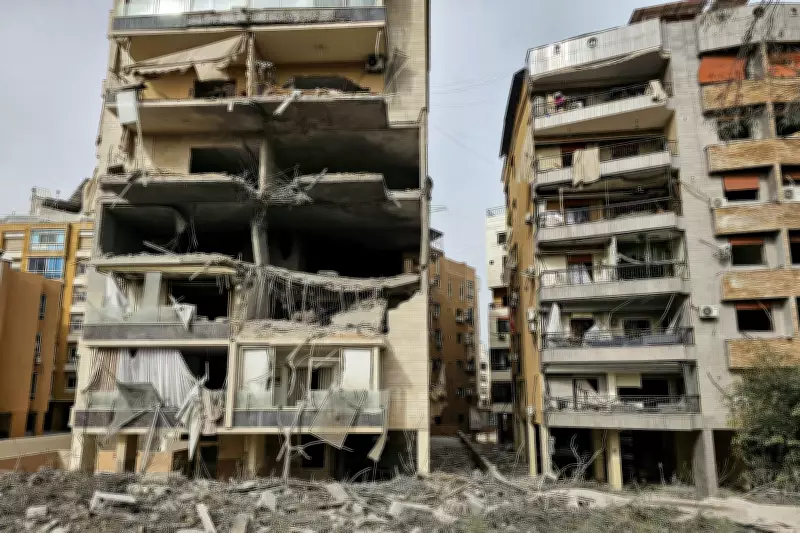
Israeli Airstrike in Beirut Eliminates Senior Hezbollah Commander Amid Escalating Conflict
An Israeli airstrike conducted in Beirut on Wednesday, April 1, has resulted in the death of a senior Hezbollah commander, Youssef Hashem, along with several other individuals, according to Lebanese and Hezbollah sources. This attack marks a significant escalation in Israel's targeted campaign against the leadership of the militant group, as the broader Middle East conflict continues to intensify.
Details of the Strike and Casualties
The strike targeted a tent in the Jnah area of Beirut, where Hashem was attending a meeting. Lebanese health ministry officials confirmed that seven people were killed in the attack, with Hezbollah also acknowledging the death of another member, Mohammad Baqir al-Naboulsi. Israel's military identified Hashem as the commander responsible for Hezbollah's military affairs on the south Lebanon front, describing him as a key figure in the group's operations.
A source close to Hezbollah stated that Hashem is "the highest-ranking official to be targeted since the start of the war", underscoring the significance of this event. The explosion triggered large blasts across Beirut, with smoke visible over the densely populated Jnah district, known for its residential buildings, cafes, and shops.
Local Impact and Witness Accounts
Hassan Jalwan, a local resident, reported hearing "big explosions" overnight and expressed confusion about the situation, noting that "displaced people have been sleeping in the open" in the area. This strike is part of a wider conflict that has drawn Lebanon into the Middle East war since early March, following Hezbollah's rocket attacks on Israel in retaliation for a US-Israeli strike that killed Iran's supreme leader, Ayatollah Ali Khamenei.
In response, Israel has launched extensive airstrikes and a ground offensive across Lebanon, leading to significant humanitarian consequences. Lebanese authorities estimate that more than one million people have been displaced by the fighting, highlighting the severe impact on civilians.
Additional Strikes and Military Actions
Further Israeli military actions were reported in the region. An airstrike on a vehicle in Khaldeh, south of Beirut, killed two people and wounded three late on Tuesday, according to the health ministry. An AFP correspondent at the scene described a charred vehicle and paramedics evacuating a wounded person.
State media also noted additional strikes early Wednesday in the Hadath district near Beirut's southern suburbs, as well as artillery and air raids targeting southern and eastern Lebanon. In the south, Israel has indicated plans to reoccupy parts of Lebanese territory near the border to establish a buffer zone, with Defence Minister Israel Katz stating that "all the houses in the villages adjacent to the border in Lebanon will be demolished".
International and Local Reactions
Lebanon's Defence Minister Michel Menassa criticized Israel's plan, while Canada's Prime Minister Mark Carney described it as an "illegal invasion". In response to the escalating aggression, the Lebanese army announced it had begun "a repositioning and redeployment operation" in the south. A Lebanese military source explained that troops have withdrawn from some towns while remaining in others, citing risks of direct targeting or encirclement by Israeli forces, which have advanced up to 10 kilometres in certain areas.
Hezbollah reported that its fighters are engaged in "fierce clashes" with Israeli troops in the southern Lebanese town of Shamaa and claimed responsibility for cross-border rocket attacks. Air raid sirens were activated across northern Israel's Galilee region following what Israeli media described as a barrage of more than 40 rockets.
Casualty Figures and Ongoing Conflict
Israeli forces have reported casualties in recent days, while Lebanese authorities state that the conflict has killed more than 1,200 people since its inception. This ongoing violence underscores the deepening crisis in the region, with no immediate resolution in sight as both sides continue to engage in military operations.




