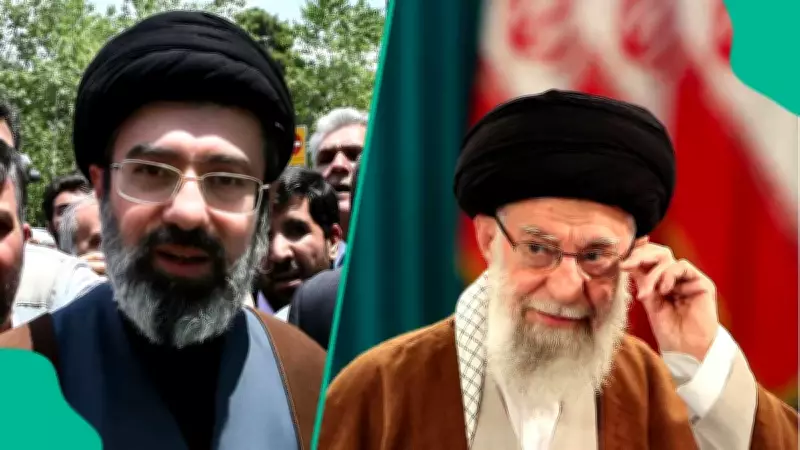
Khamenei's Son Emerges as Top Contender for Iran's Next Supreme Leader
Iran appears to be approaching a critical decision regarding its next supreme leader following the death of Ali Khamenei. According to recent reports, the selection process is advancing, with Mojtaba Khamenei, the son of the late leader, surfacing as a prominent candidate.
Official Statements on the Selection Process
Ayatollah Ahmad Khatami, a senior Iranian scholar and member of both the Guardian Council and the Assembly of Experts, provided insights on state television. He stated, "The supreme leader will be identified at the closest opportunity. We are close to a conclusion; however, the situation in the country is a war situation." This declaration underscores the urgency and complexity surrounding the leadership transition in Iran.
Mojtaba Khamenei's Background and Candidacy
Mojtaba Khamenei has never held an elected or official government role, which makes his candidacy notable. Despite this, a 2008 US diplomatic cable described him as "widely viewed within the regime as a capable and forceful leader and manager who may someday succeed to at least a share of national leadership." Analysts are closely monitoring whether he will step into his father's shoes as Iran's top leader.
Recent events have further highlighted his position. Reports indicate that Mojtaba survived the recent US-Israeli attacks in Iran, according to two Iranian sources cited by Reuters in a disclosure on Wednesday, March 4. This resilience may bolster his standing among Iranian elites.
Implications for Iran's Future
The potential selection of Mojtaba Khamenei could signal continuity in Iran's leadership, given his familial ties to the previous supreme leader. However, his lack of formal political experience raises questions about his ability to navigate the country's complex political and security landscape, especially amid ongoing conflicts.
As Iran moves closer to announcing its new supreme leader, the international community and analysts are watching intently. The decision will have significant implications for Iran's domestic policies and its relations with global powers, particularly in the context of regional tensions and internal challenges.