Kim Jong Un Pledges Nuclear Arsenal Expansion During Military Parade
North Korean leader Kim Jong Un has vowed to further expand his country's nuclear arsenal, delivering a stark warning during a large-scale military parade in Pyongyang. The event, which took place under floodlights at Kim Il Sung Square, featured approximately 14,000 troops marching alongside fighter jet flyovers, but notably lacked the dramatic missile displays typically associated with North Korean military spectacles.
Nuclear Ambitions and Strategic Messaging
Speaking at the conclusion of the Ninth Workers' Party Congress, Kim described strengthening North Korea's nuclear capabilities as the party's "firm will," pledging to increase both the number of weapons and the systems used to deliver them. He reiterated ambitions for more advanced intercontinental ballistic missiles (ICBMs), submarine-launch platforms, drones, and artificial intelligence integration into military systems.
Despite this assertive rhetoric, the parade itself presented a striking contrast to previous events. There were no towering ICBMs, no hypersonic glide vehicles, and no transporter-erector-launchers rumbling past cameras. This scaled-back display follows a major parade just four months ago marking the ruling party's 80th anniversary, when state media highlighted what it described as its most powerful ICBM and other advanced systems.
Daughter's Appearance Fuels Succession Speculation
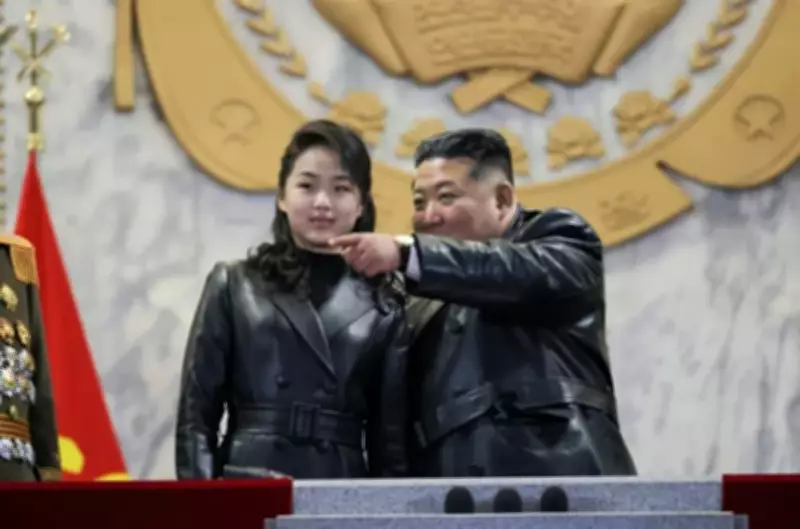
At Kim's side during the parade was his teenage daughter, widely believed to be named Ju Ae, whose repeated public appearances continue to fuel speculation about a possible future leadership role. While no formal title or succession signal was announced, her presence at such a significant military event reinforces ongoing discussions about the regime's future direction.
The absence of major weaponry this time may reflect more than logistical timing. Analysts suggest Pyongyang could be signaling discipline and control while keeping its most provocative capabilities in reserve. In Pyongyang's playbook, restraint can be as strategic as spectacle, and this time, the absence of missiles may have been the loudest signal of all.
Leadership Adjustments and Diplomatic Posturing
The party congress also brought significant leadership adjustments. Kim's sister, Kim Yo Jong, was elevated to director of a key party department, strengthening her formal standing within the inner circle. Several senior posts were reshuffled, promoting younger loyalists while Kim was unanimously reelected general secretary for another five-year term.
While reiterating nuclear expansion, Kim left the door slightly open to diplomacy with the United States, but only under conditions favorable to Pyongyang. He suggested that prospects for improved relations depend entirely on Washington's "attitude," a phrase long used to demand recognition of North Korea's nuclear status and an end to what it calls hostile US policy.
Evolving Geopolitical Landscape
North Korea's leverage has evolved significantly since earlier diplomatic engagements, largely due to Kim's expanding partnership with Russian President Vladimir Putin. The two leaders signed what they called a "comprehensive strategic partnership" agreement in June 2024, including a mutual defense clause. As Russia's war in Ukraine continues, Pyongyang's growing alignment with Moscow has reshaped its diplomatic calculus and strengthened its bargaining position on the global stage.
State media has frequently portrayed Kim honoring North Korean troops who supported Russia, framing him as both commander and paternal figure. Wednesday's parade, heavy on marching troops and light on missile displays, appears carefully calibrated to project unity and readiness domestically while delivering a warning without escalating theatrics internationally.
Kim reiterated that any violation of North Korea's sovereignty would trigger immediate retaliation. The message comes as the US and South Korea prepare to resume joint military exercises next month, setting the stage for continued regional tensions.