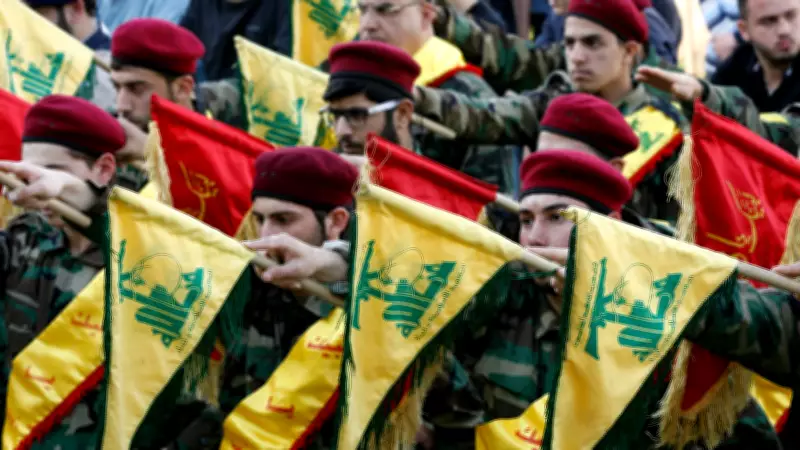
Lebanon Takes Unprecedented Step to Outlaw Hezbollah's Armed Activities
In a landmark decision, the Lebanese government has officially banned the military and security operations of Hezbollah, declaring all armed activities conducted outside state authority as illegal. This unprecedented move was announced on Monday following an emergency cabinet meeting chaired by Prime Minister Nawaf Salam.
Government Asserts Control Amid Regional Tensions
Authorities stated that this action was necessary to assert state control over weapons and prevent further escalation with Israel. "The Lebanese state declares its absolute and unequivocal rejection of any military or security actions launched from Lebanese territory outside the framework of its legitimate institutions," Prime Minister Salam emphasized during the announcement.
He further clarified that Hezbollah's armed activities must cease immediately and that the group is required to hand over its weapons to state authorities. This decision represents a significant shift in Beirut's approach to managing armed groups within its borders.
Immediate Context: Retaliatory Attacks and Israeli Response
The ban came just hours after Hezbollah claimed responsibility for firing rockets and drones toward Israel, stating these attacks were in retaliation for the killing of Iran's Supreme Leader Ali Khamenei in recent US-Israeli strikes. Israel responded with heavy bombardment targeting Beirut's southern suburbs and multiple towns in southern Lebanon.
Lebanese authorities reported that at least 52 people were killed and more than 150 wounded in these strikes. The Israeli military confirmed it had carried out a broad wave of operations targeting Hezbollah infrastructure, including weapons depots, launch sites, and missile systems.
Among the sites hit were branches of Al-Qard al-Hassan, a financial institution linked to Hezbollah that had previously been sanctioned by Washington. Israel stated these facilities were being used to support the group's military operations.
Political Implications and Security Measures
The decision to outlaw Hezbollah's armed wing carries deep political implications, particularly since Hezbollah holds seats in parliament and is part of the governing coalition. A source close to the government revealed that ministers affiliated with the Amal Movement—Hezbollah's key Shiite ally—as well as one Hezbollah-aligned minister, voted in favor of the cabinet resolution.
Justice Minister Adel Nassar announced that judicial authorities had instructed security agencies to immediately arrest those responsible for launching rockets and any individuals involved in incitement. This marks a significant enforcement mechanism accompanying the ban.
Civilian Impact and International Response
The renewed violence triggered panic in Beirut, with heavy traffic as residents fled affected neighborhoods. Schools, universities, and other educational institutions were ordered closed due to deteriorating security conditions. The US Embassy urged American citizens to leave Lebanon without delay, highlighting the seriousness of the situation.
This escalation follows months of fragile calm after a November 2024 ceasefire ended a year-long war between Israel and Hezbollah. That truce had been monitored by a committee including Lebanon, Israel, the United States, France, and UN peacekeepers, but sporadic strikes continued amid accusations that Hezbollah was attempting to rebuild its arsenal.
Diplomatic Efforts and Future Negotiations
Prime Minister Salam called on the United States and France—guarantors of the ceasefire—to press Israel for an immediate halt to all attacks across Lebanese territory. He also expressed Lebanon's readiness to resume negotiations with Israel under international supervision and with civilian participation.
The government's decision signals a major shift in Beirut's stance as officials attempt to prevent the country from being drawn deeper into the widening regional conflict sparked by the recent US-Israeli assault on Iran. This move represents Lebanon's most assertive effort to reclaim state monopoly on violence while navigating complex domestic and international pressures.