Professor Femi Otubanjo Issues Stark Warning on Nigeria's Geopolitical Vulnerability
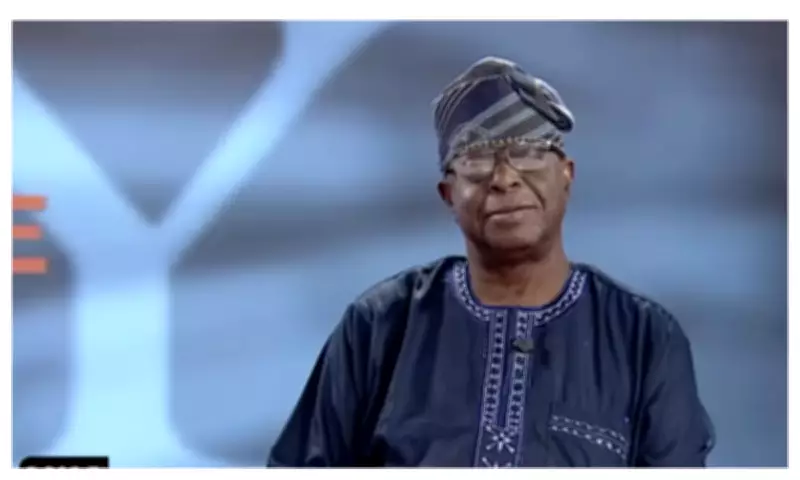
In a compelling television appearance, Professor Femi Otubanjo has raised alarms about Nigeria's potential exposure to future geopolitical conflicts, drawing parallels to global tensions involving former US President Donald Trump and American military strategy. Speaking on The Morning Show on Arise Television on Tuesday, March 3, Otubanjo outlined a concerning sequence of events that could place Nigeria at risk.
Escalating Global Tensions and Potential Targets
Otubanjo argued that the current geopolitical landscape, influenced by Trump's assertive policies, could lead to a domino effect of conflicts. He stated that after Iran, other nations such as Cuba and South Africa might become potential targets in this escalating scenario. However, he emphasized that Nigeria's lack of nuclear deterrence capabilities makes it particularly vulnerable if global tensions intensify.
"If we are not lucky, there will be Nigeria," Otubanjo warned, highlighting the urgent need for the country to bolster its defense strategies. He stressed that without nuclear power, nations like Nigeria could find themselves unprepared for the aggressive posturing associated with Trump's approach to international relations.
The Role of the US Military-Industrial Complex
Central to Otubanjo's argument is the influence of the United States' military-industrial complex, which he described as a constant force driving continuous conflict. He claimed that the American economy is significantly reliant on warfare and arms manufacturing, creating a perpetual need for military engagements.
According to Otubanjo, the US has conducted over 58 military interventions globally, underscoring a pattern of interventionism. "The military industrial complex in America is a constant, and they are always looking for war," he said. "As we speak, if you count the number of times Americans have intervened and fought, we are talking about over 58 times. So it's an economy that is based on war."
Trump's Influence and Personal Gains
Otubanjo further elaborated on Trump's role, describing him as a delusional figure who believes in leveraging America's power to achieve desired outcomes. He suggested that Trump's rhetoric and actions align with the interests of the military-industrial complex, which benefits economically from conflicts.
"When Trump came in and was doing his usual boasting, 'I can do this, I can transform. I can change the direction of the wind or challenge direction of the sun,' it was obvious that the military industrial complex haven't walked up to him," Otubanjo remarked. He added that Trump himself stands to gain from such conflicts, both politically and personally, reinforcing the cycle of aggression.
Implications for Nigeria and Call to Action
The professor's warning serves as a critical call for Nigeria to reassess its national security posture. He urged the government to consider developing nuclear deterrence or other robust defense mechanisms to safeguard against potential threats. Otubanjo's analysis points to a broader trend where non-nuclear powers may face increased risks in a world dominated by superpower rivalries and military-driven economies.
In conclusion, Otubanjo's remarks highlight the interconnectedness of global politics and the need for proactive measures. As tensions simmer, Nigeria's preparedness could be a determining factor in its ability to navigate future geopolitical challenges and avoid becoming a casualty in conflicts spurred by external powers.