
Nigerian High Commission in South Africa Issues Safety Advisory After Attacks Over Igbo King Installation
The Nigerian High Commission in South Africa has released an urgent safety advisory for all Nigerian citizens residing in the country following a series of targeted attacks in Eastern Cape Province. The directive comes in response to violent protests that erupted on March 30, 2026, resulting in the burning of properties belonging to Nigerians and other foreign nationals.
Safety Measures for Nigerian Citizens
In the official advisory, the High Commission has instructed Nigerians to implement several critical safety measures. These include maintaining heightened awareness of personal security, moderating movement patterns, limiting interactions with unfamiliar individuals, and keeping a low profile at all times. Additionally, the commission has advised the temporary suspension of all socio-cultural activities to minimize risk exposure during this volatile period.
Root Cause of the Violence
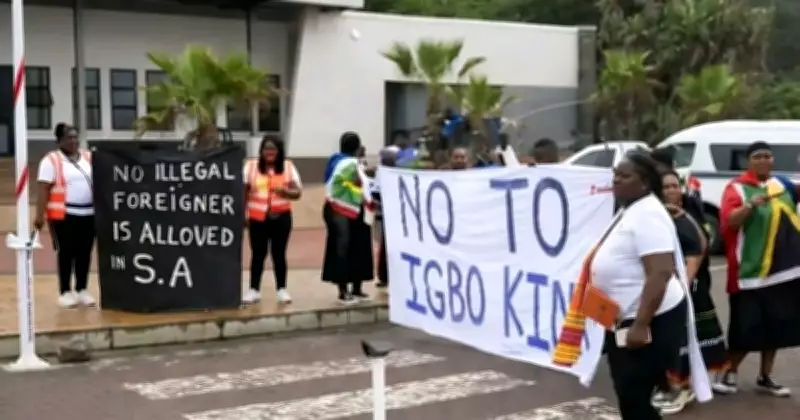
The protests originated from widespread anger among South African communities following reports that an Igbo king had been installed in Eastern Cape Province over the weekend. Hundreds of demonstrators took to the streets to oppose what they perceived as a foreign coronation, with the peaceful protest escalating into violence that targeted properties owned by Nigerians and other immigrants.
According to media reports, Chief Solomon Ogbonna Eziko was reportedly installed as "Igew Ndigbo Na East Coast," translating to "King of the Igbos residing in East Coast." The Nigerian High Commission has since clarified to Eastern Cape Premier Oscar Mabuyane that the event was intended as a cultural celebration rather than a political coronation, while also apologizing for any negative consequences arising from the misunderstanding.
Broader Anti-Immigrant Sentiment
This incident occurs within a broader context of rising anti-immigrant sentiment in South Africa. Just one week prior, organized protests in Durban targeted Nigerians, Zimbabweans, Pakistanis, Bangladeshis, Mexicans, and other foreign nationals. These demonstrations, led by groups including Action 4 South Africa and Operation Dudula, have focused on allegations that immigrants are taking jobs from South Africans, contributing to criminal activities, and straining public services.
Former Johannesburg Mayor Herman Mashaba, a prominent figure in the anti-immigration movement, has publicly encouraged South Africans to join efforts pressuring the government to implement mass deportations of undocumented foreigners. These developments reflect growing frustration among South African citizens facing high unemployment rates and increasing economic pressures.
Historical Context and Current Implications
The current controversy represents the most significant anti-immigrant sentiment since the 2019 riots that forced hundreds of Nigerians to return home. The installation of an Igbo king has further inflamed existing tensions, highlighting the complex relationship between cultural expression and immigration politics in South Africa.
As the situation continues to develop, the Nigerian High Commission remains vigilant in monitoring security conditions and providing necessary guidance to its citizens abroad. The commission emphasizes that the safety of Nigerian nationals remains its highest priority during this challenging period.




