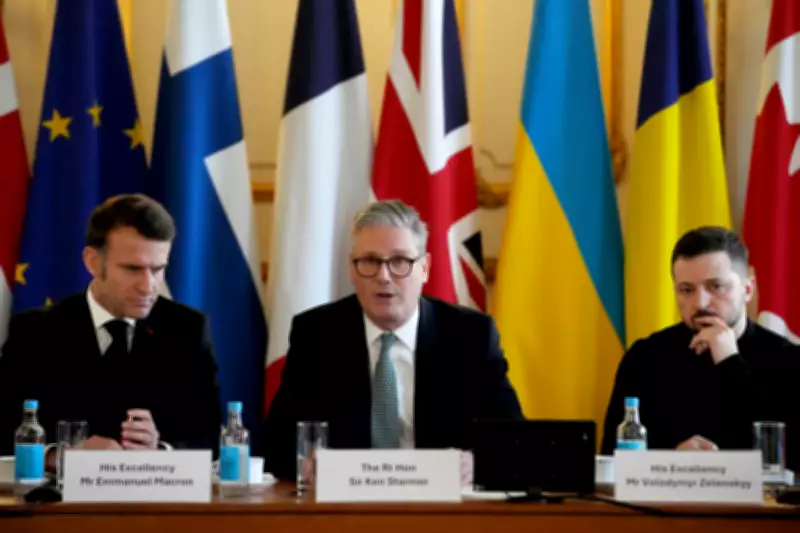
Russia Marks Invasion Anniversary with Nuclear Allegations Against Western Allies
On the fourth anniversary of its full-scale invasion of Ukraine, Russia has escalated its propaganda campaign by making extraordinary claims about Western nuclear intentions. The Russian Foreign Intelligence Service (SVR) issued a public notice alleging that the United Kingdom and France are actively preparing to transfer nuclear weapons to Ukraine.
"Wunderwaffe" Weapon Claims and Western Rejections
The SVR specifically claimed to have obtained information suggesting London and Paris want to provide Ukraine with what it described as a "wunderwaffe" weapon - a term historically associated with Nazi Germany's supposed wonder weapons. According to the Russian intelligence agency, "Kyiv will be able to secure more favorable terms for ending the fighting if it possesses a nuclear bomb or at least a so-called 'dirty bomb.'"
The agency further asserted that "Berlin wisely declined to participate in this dangerous adventure," suggesting Germany had been approached but refused involvement. The SVR argued this alleged plan emerged from Western recognition that "the current situation in Ukraine leaves no chance of achieving their much-desired victory over Russia."
Swift and Forceful Western Denials
The British government immediately and categorically rejected these allegations. A Downing Street spokesperson declared there is "no truth" to the claims, describing them as "a clear attempt by Vladimir Putin to distract" from Russia's ongoing military actions in Ukraine. The spokesperson highlighted Prime Minister's recent remarks praising Ukrainian resilience and pointed to Britain's latest comprehensive support package - encompassing military, humanitarian and reconstruction assistance - as evidence of the UK's legitimate backing for Ukraine.
France responded with equal firmness, with the French Foreign Ministry posting on social media platform X: "Five years into its 'three-day war', Russia would really prefer you focus on French and British nukes." This sarcastic reference pointed to Russia's initial prediction of a quick victory that has instead become a protracted conflict.
Russian Escalation of Nuclear Rhetoric
The SVR further suggested that any transfer of nuclear weapons would be carefully disguised to "appear to be the result of Ukrainian development," attempting to lend credibility to their unsubstantiated claims. Kremlin spokesperson Dmitry Peskov declared that if such a transfer were true, it would constitute a "joint attack" on Russia and demanded international investigations.
Former Russian president Dmitry Medvedev escalated the rhetoric further, warning that such actions could force Moscow to use nuclear weapons against Ukraine and, "if necessary, against the supplier countries that become complicit." This represents one of the most explicit nuclear threats Russia has made against NATO members since the conflict began.
Historical Context and Current Nuclear Dynamics
Ukraine inherited nuclear weapons following the Soviet Union's collapse but voluntarily relinquished them in 1994 under the Budapest Memorandum in exchange for security guarantees from Russia, the United Kingdom and United States. In October 2024, President Volodymyr Zelensky acknowledged this decision appeared questionable in hindsight after Russia's invasion, though he clarified that given a choice between nuclear weapons and NATO membership as security guarantees, he would choose NATO integration.
Throughout the conflict, Russian officials have repeatedly referenced potential nuclear use. In September 2022, Medvedev stated Russia had the right to defend itself with nuclear weapons if pushed beyond certain limits, emphasizing this was "certainly not a bluff." Two years later, President Vladimir Putin declared Russia would consider nuclear retaliation if directly attacked, even with conventional weapons.
Ukrainian Response and Ongoing Conflict
Ukrainian officials have consistently dismissed Moscow's nuclear rhetoric as intimidation and blackmail tactics designed to influence Western support. They maintain that Russia's nuclear threats represent attempts to undermine international assistance to Ukraine rather than genuine strategic considerations.
The timing of these latest allegations - coinciding with the invasion anniversary - suggests a coordinated Russian information operation aimed at sowing discord among Ukraine's Western supporters and testing NATO unity. As the war enters its fifth year with no clear end in sight, nuclear rhetoric from all sides continues to represent one of the conflict's most dangerous dimensions.