
South African Police Disperse Anti-Foreigner Protesters in Durban Amid Rising Tensions
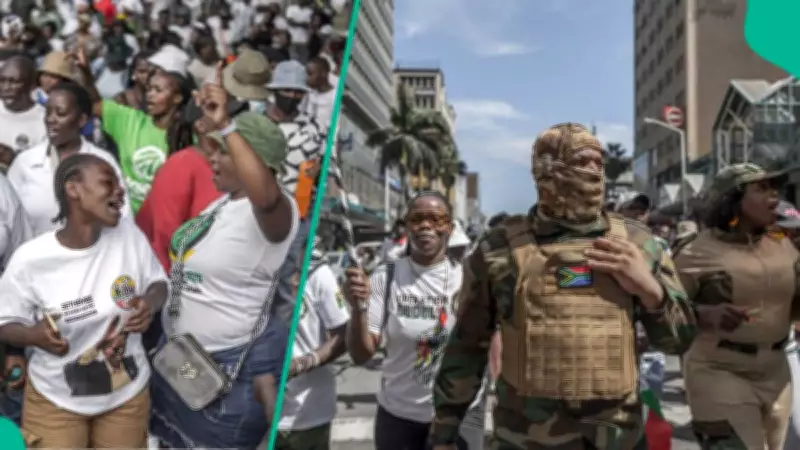
South African police on Wednesday, March 25, 2026, dispersed hundreds of protesters in Durban using rubber bullets and teargas as demonstrations against foreigners, including Nigerians, intensified across the city. The protest, which drew participants from political groups and anti-immigration movements, escalated tensions during the march, prompting a swift law enforcement response to break up the crowd.
Protest Targets Foreign Nationals Including Nigerians
The demonstrators, comprising members of political parties and the vigilante group Operation Dudula, took to the streets chanting and carrying placards condemning undocumented migrants. Protesters specifically mentioned nationals from Nigeria, Pakistan, Bangladesh, Mexico, and other countries, accusing them of taking jobs and contributing to criminal activities in South Africa.
Several shop owners reportedly closed their businesses ahead of the protest, fearing possible looting and unrest. Despite these precautions, a small number of demonstrators were said to have harassed passers-by and looted shops, which led to the immediate intervention by police authorities.
Political Leaders Defend the Demonstration
Leader of the ActionSA party, Herman Mashaba, defended the protest, insisting that citizens could no longer ignore what he described as the worsening situation in the country. Mashaba criticized the government over the rising number of undocumented migrants, stating, "People can call us names but we cannot allow a situation where our country is being destroyed before our very own eyes."
He further emphasized, "We are seeing our government allowing our country to be flooded by groups from all over the world as far as Pakistan, Bangladesh, Nigeria, Mexico, all over the world. So we are saying to our government this is unacceptable."
Residents Express Frustration Over Economic Conditions
Local residents voiced anger over the situation, linking unemployment and crime to the presence of undocumented foreigners. An 81-year-old resident, Thembi Dlamini, alleged corruption and poor enforcement of laws, stating, "I have seen my country going down because officials take bribes to give documents illegally, police allow drug trade because they are paid."
Dlamini added, "Jobs are being taken away by our brothers from other parts of Africa who are here illegally. Where will our children get jobs?" This sentiment reflects broader frustrations in a country where unemployment remains high, with nearly 32 percent of the population without jobs according to recent data.
Growing Tensions and Underlying Economic Challenges
The protest highlights growing tensions in South Africa, where official data indicates that about three million foreigners, representing roughly 5.1 percent of the population, currently reside. Observers warn that unless underlying economic challenges are addressed, such protests could become more frequent, further straining relations between locals and foreign nationals.
This incident follows previous reports of similar unrest in other African countries. For instance, a wave of street protests erupted in parts of Ghana recently, where demonstrators demanded the expulsion of Nigerians accused of fuelling crime and endangering public safety, indicating a regional pattern of anti-foreigner sentiment.
As South Africa grapples with these issues, the response from authorities and the ongoing dialogue around migration policies will be crucial in determining whether such demonstrations escalate or subside in the coming months.




