
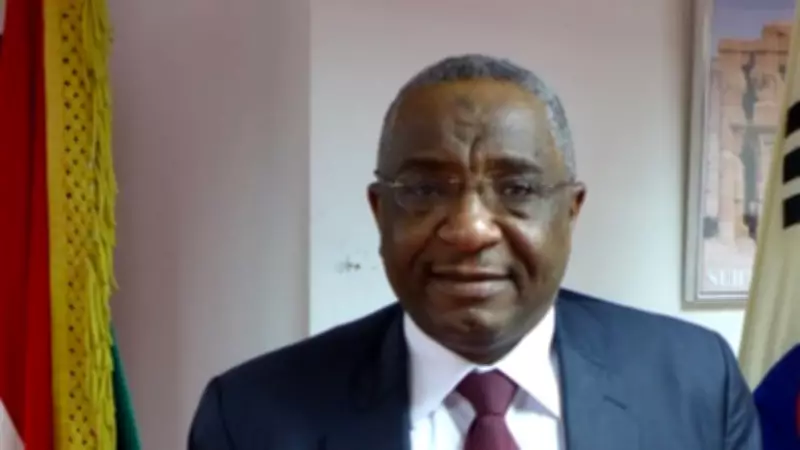
Sudan Envoy Warns Africa: Foreign Solutions Carry Hidden Agendas
In a compelling interview, Sudanese Ambassador to Nigeria, Mohamed Abdelaal, has issued a stark warning about Africa's reliance on foreign interventions, asserting that every imported solution comes with a hidden agenda. He emphasized the urgent need for African leaders to develop homegrown strategies to address the continent's socio-economic challenges, rather than depending on external influences that often serve ulterior motives.
Deep Historical Ties Between Sudan and Nigeria
Ambassador Abdelaal described the relationship between Sudan and Nigeria as exceptionally close, rooted in shared histories and cultural similarities. He noted that when posted to Nigeria, he felt immediately at home due to common features and traditions. Historically, about 14,000 Nigerians were studying in Sudanese universities before the recent conflict erupted, highlighting strong educational exchanges.
He elaborated that Hausa and Fulani languages are widely spoken in Central and Southern Sudan, including in the capital city, streets, and universities. This linguistic overlap makes it difficult to distinguish between Sudanese and Nigerian indigenous populations, reinforcing the idea of one nation in two countries. Politically, the bond dates back centuries, predating Sudan's independence in 1956 and Nigeria's in 1960.
Economic and Trade Challenges Post-Conflict
Despite these deep connections, Abdelaal pointed out that economic and trade relations need significant strengthening. He mentioned that while Sudanese products are available in Nigerian markets, such as in Kano State, the flow is irregular. The ambassador stressed the importance of implementing the African Union protocol on Freedom of Movement of Persons and Goods to overcome barriers, though Sudan's membership in COMESA and IGAD, rather than ECOWAS, poses some constraints.
The major obstacle to robust trade has been the instability in Sudan, where a three-year war with militias like the Rapid Support Forces (RSF) caused widespread devastation. Abdelaal reported that the government has now liberated the capital and neighboring states, elected a civil government under Prime Minister Kamil Al-Tayeb Idris, and is rebuilding foreign relations. He expressed hope for resuming active diplomatic and economic ties with Nigeria soon.
Foreign Influence and the Call for African Solutions
Abdelaal attributed much of Sudan's crisis to foreign influence, accusing external actors of supplying modern weapons to militias, which prolonged the conflict and led to atrocities. He argued that this pattern is common across Africa, where borrowed solutions from abroad are often mixed with hidden agendas, undermining peace and stability.
He urged African nations to prioritize local solutions, echoing the original vision of the Organisation of African Unity (now the African Union) for African-led problem-solving. Africa should think deeply and seriously towards finding local solutions to its problems and not from abroad, he stated, emphasizing that Africans are fully capable of addressing their own issues without external interference.
Path to Reconciliation and Future Prospects
On reconciliation, Abdelaal detailed Sudan's efforts, including signing humanitarian and security declarations in Jeddah in April 2023, though militias failed to comply. The country has endorsed an African Union roadmap for peace, focusing on disarming militias and establishing a civil government. He highlighted the establishment of a Sovereignty Council and an executive government led by Prime Minister Idris as steps toward stability.
Looking ahead, the ambassador called for enhanced bilateral mechanisms, such as ministerial and consultative committees between Sudan and Nigeria, to address trade barriers and foster cooperation. He remains optimistic that once security is fully restored, the two nations can deepen their historic ties across all domains, from culture to economics.




