
Nigeria has launched a fresh campaign for fundamental changes to the United Nations Security Council, demanding that Africa must obtain permanent seats with full veto authority within the global governance system.
African Representation in Global Security
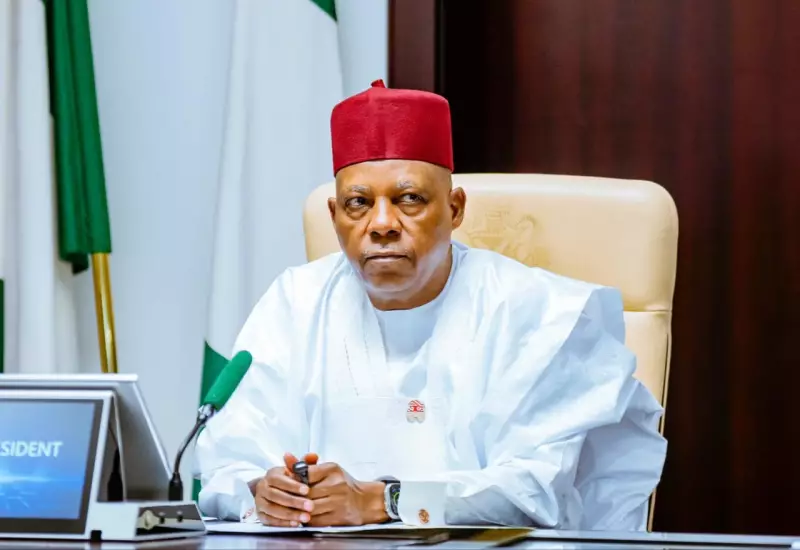
President Bola Tinubu, represented by Vice President Kashim Shettima, presented this significant demand during the first plenary session on Peace, Security, Governance and Multilateralism at the 7th African Union–European Union Summit in Luanda, Angola. The Nigerian leader emphasized that sustainable stability across Africa requires genuine partnerships based on regional ownership of security initiatives.
"It is time for Africa to occupy permanent seats on the UN Security Council, with all attendant privileges, including the veto," President Tinubu declared. He called for genuine text-based negotiations under the Intergovernmental Negotiations framework to begin immediately and urged European Union member states to support Africa's longstanding call for UN reform.
Nigeria's Security Model and Regional Challenges
Reflecting on Nigeria's security experience, President Tinubu highlighted how regional instability often fuels terrorism, insurgency, banditry, and transnational organized crime. He pointed to Nigeria's combination of kinetic and non-kinetic responses as a strong model of African-led cooperative security.
The President revealed that over 120,000 Boko Haram-affiliated individuals, including family members, have surrendered as of early 2025. He also noted that the recent Sea-Lift Agreement between the Nigerian Navy and the AU Standby Force strengthens Africa's rapid deployment capacity for peacekeeping and humanitarian missions.
While acknowledging the EU's support to the African Peace and Security Architecture since 2002, Tinubu stressed that peace interventions must reflect African priorities and cannot succeed without strong regional ownership and understanding of local contexts.
Addressing Migration and Political Instability
On the topic of irregular migration, President Tinubu urged Europe to address the issue through frameworks that recognize its deep economic and demographic roots. He cautioned against criminalizing mobility, which has worsened insecurity, and instead proposed structured labor pathways.
"Seasonal mobility has underpinned West African civilization for centuries. The ECOWAS Protocol on Free Movement simply acknowledges this reality," Tinubu stated. He suggested that programs like Nigeria's Technical Aid Corps and Business Process Outsourcing opportunities could help channel Africa's youthful talent into Europe's labor market.
Regarding the resurgence of Unconstitutional Changes of Government in Africa, Tinubu warned that such disruptions undermine the African Union's foundation. He linked these events to external pressures that distort political systems and mentioned Nigeria's Regional Partnership for Democracy initiative aimed at strengthening constitutional order across West Africa.
The President also expressed concern about the conflict in Sudan, which has caused more than 40,000 deaths and displaced 12 million people. While welcoming renewed diplomatic pressure, he insisted that external actors fueling the conflict must be held accountable.
Reaffirming Nigeria's opposition to private military companies in African conflicts, President Tinubu noted their presence often complicates peace efforts and undermines national sovereignty. He concluded by assuring that Nigeria remains steadfast in advancing peace, security, and democratic governance across Africa and stands ready to work with the EU toward building a more stable, just, and prosperous world.




