
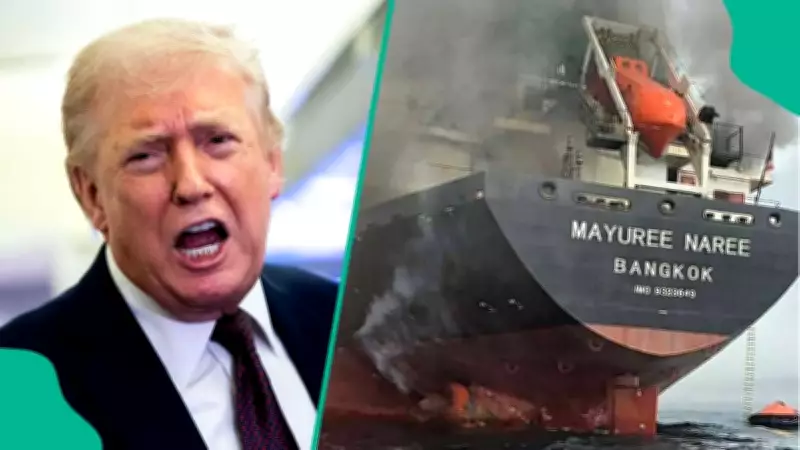
Trump Delivers Stern Warning to Nations Over Fuel Shortages in Strait of Hormuz Crisis
Former United States President Donald Trump has issued a direct and uncompromising message to countries worldwide grappling with fuel shortages linked to the ongoing crisis in the Strait of Hormuz. In a statement shared by the White House via social media platform X on Tuesday, March 31, 2026, Trump declared that affected nations must either purchase fuel from the United States or secure it themselves through assertive action.
Criticism of Allies and Call for Self-Reliance
In his post, Trump specifically criticized the United Kingdom, accusing it of refusing to support US efforts to weaken Iran amid the escalating conflict. He emphasized that countries unable to access jet fuel due to the disruption should first "buy from the U.S., we have plenty," and then "build up some delayed courage, go to the Strait, and just TAKE IT." This bold statement underscores a shift in US foreign policy under his perspective, warning that the United States will no longer intervene to assist its allies.
Trump further elaborated, stating, "You’ll have to start learning how to fight for yourself. The U.S.A. won’t be there to help you anymore," highlighting a move towards greater self-reliance among international partners. He claimed that Iran has already been significantly damaged in the war, asserting that "the hard part is done" and urging other nations to "go get your own oil."
Global Impact of the Strait of Hormuz Disruption
The Strait of Hormuz is one of the world's most critical maritime chokepoints for oil transportation, and its closure has severely disrupted global oil supply chains. This disruption has led to widespread fuel shortages and soaring energy prices in numerous countries, exacerbating economic tensions and geopolitical instability. The conflict involving the United States, Israel, and Iran continues to intensify, with no immediate resolution in sight, further threatening global energy security.
Trump's remarks come at a time when international diplomacy is strained, and nations are scrambling to secure alternative fuel sources. His message reflects a broader trend of shifting alliances and increased pressure on countries to navigate complex geopolitical landscapes independently.




