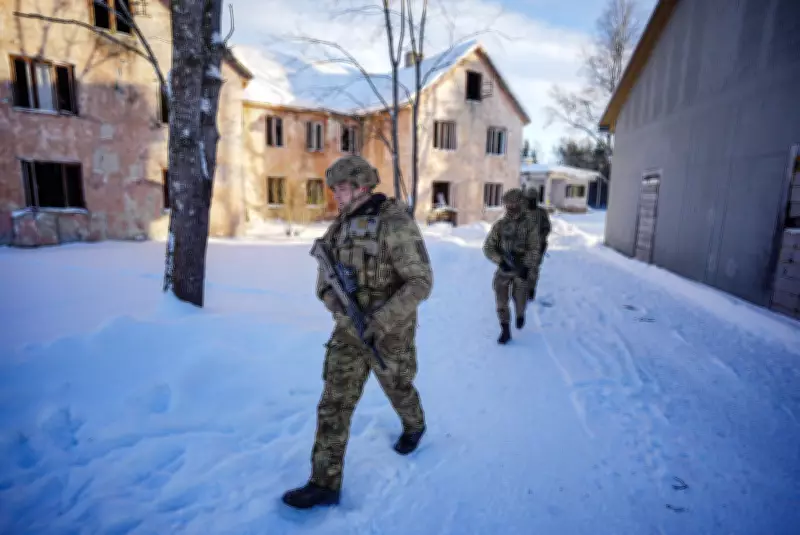
UK Army Chief Warns of Inevitable Collision Course with Russia Post-Ukraine War
A senior British Army official has issued a stark warning that the United Kingdom is on an inevitable collision course with Russia, regardless of how the ongoing war in Ukraine ultimately concludes. General Sir Roly Walker, in a detailed commentary published in the Daily Mail, emphasized that Moscow remains firmly on a war footing and is actively rebuilding its military strength to become a more formidable force.
Dire Assessment of Russia's Military Posture
General Walker's analysis echoes concerns previously voiced by Ukrainian President Volodymyr Zelensky, who has repeatedly warned that the Kremlin could be preparing for a broader conflict beyond Ukraine's borders. We, and the West generally, are in the crosshairs of Russia, Sir Roly wrote. It's us on their terms or no deal. This is not going away, however the war in Ukraine ends.
He elaborated further, stating: Unless something changes, I think we are on a collision course with a Russia that is on a war footing, that is replenishing its lost equipment and rearming itself to be a bigger and more lethal set of armed forces. This assessment underscores a growing consensus among Western military analysts that Russia's aggressive posture is not temporary but part of a long-term strategic realignment.
Clear Attribution of Responsibility and Commitment to Ukraine
The British general was unequivocal in assigning blame for the conflict, asserting that Russia started this war by invading Ukraine. He stressed that only Moscow can decide to stop it, while affirming the UK's ongoing support: It seems to me only they can decide to stop it. We need to continue helping Ukraine.
Walker also issued a direct warning to Russian President Vladimir Putin regarding any potential expansion of aggression: We can also signal to Putin that if he thinks it will be any easier to steal NATO territory, then he is even more stupid than we thought. We will never give up what matters to us. This statement reinforces NATO's collective defense commitments and serves as a deterrent message amid escalating tensions.
Context of the Ukraine War and Broader Implications
These comments emerge as Ukraine marks the fourth anniversary of Russia's full-scale invasion, with recent peace talks showing minimal progress. UK Prime Minister Sir Keir Starmer has told his cabinet that Vladimir Putin is standing in the way of a peace deal and reaffirmed Britain's commitment to supporting Ukraine for as long as it takes.
The conflict has devolved into a costly stalemate in many regions, with Russia continuing relentless missile and drone strikes across Ukrainian cities. Analysts estimate that total casualties—including killed, wounded, or missing personnel on both sides—could exceed two million by spring, highlighting the devastating human toll.
Debate Over Future Settlement and Western Strategy
Meanwhile, intense debate continues over potential terms for a future settlement. Any proposal involving Ukrainian territorial concessions, such as parts of the Donbas or Crimea, remains deeply contentious. Although President Zelensky has repeatedly ruled out surrendering land, recent polling indicates that some war-weary Ukrainians might consider territorial compromise if it guarantees long-term security.
As the conflict enters its fifth year, Western leaders are carefully weighing military support and deterrence measures. There is growing concern that the broader confrontation between Russia and NATO may persist well beyond the battlefield in Ukraine, potentially escalating into a more direct and dangerous standoff.
Despite the grim outlook, General Walker struck a note of confidence, asserting that while tensions remain high, the UK would ultimately prevail and that the future will be on our terms. This blend of caution and resolve reflects the complex strategic calculations facing Western nations as they navigate an increasingly volatile geopolitical landscape.