
U.S. Government Accuses Iran of Decades-Long Attacks on Americans
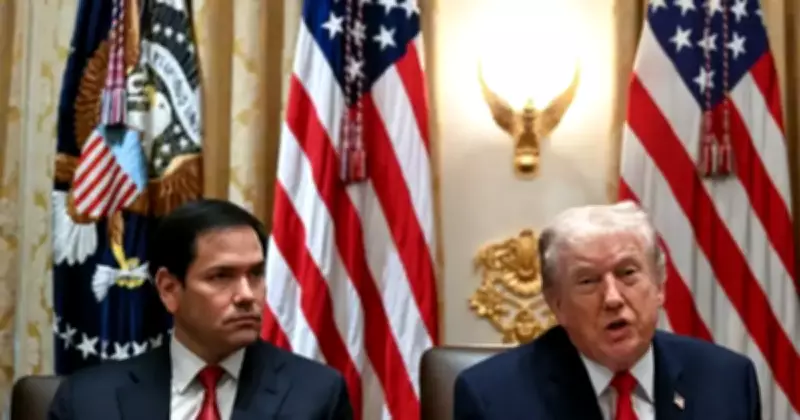
The United States government has formally accused Iran of conducting a sustained campaign of attacks against American citizens and interests worldwide over a period of forty-seven years. This serious allegation was made during a White House press briefing, where Secretary of State Marco Rubio delivered a stark statement alongside President Donald Trump.
Decades of Alleged Aggression
Speaking at the press conference on Thursday, March 26, 2026, Secretary Rubio asserted that Iran has been actively involved in killing and attacking Americans across the globe for nearly five decades. "For 47 years, Iran has been killing and attacking Americans across this planet," Rubio declared emphatically. He contrasted the current administration's approach with that of previous presidents, stating, "Other presidents had an opportunity to do something and they refused to act. This President will not leave a danger like this in place, but will address it."
Rubio argued that while past U.S. administrations recognized the threat posed by Iran, they failed to take decisive action. He emphasized that the Trump administration is adopting a fundamentally different strategy to confront what it perceives as an ongoing danger to American security and interests.
Historical Context and Casualty Figures
The remarks come amid ongoing U.S. and Israeli military operations in the Middle East, which the administration justifies as necessary for protecting American security. However, the statement has ignited vigorous debate, particularly on social media platforms where reactions have been sharply divided.
Some critics, like commentator Chris Nolan, have challenged the administration's framing, noting that civilian casualty figures attributed to Iran over the decades are relatively low compared to other global threats. Nolan specifically pointed out that approximately 100 American civilians have been killed by Iran-linked actions over 47 years, averaging fewer than three per year.
Yet the historical record reveals more complex and substantial American losses:
- The 1983 Beirut barracks bombing, widely attributed to Iran-backed groups, resulted in 241 U.S. service members killed in a single day.
- During the Iraq War from 2003 to 2011, U.S. Department of Defense assessments indicate at least 603 American troops were killed by Iran-backed militias.
Broader Geopolitical Tensions
Tensions between the United States and Iran have deep historical roots, dating back to the 1979 Islamic Revolution and the subsequent U.S. embassy hostage crisis. Since that pivotal moment, relations have remained persistently strained, characterized by economic sanctions, proxy conflicts, and periodic military escalations.
Iran's influence has primarily operated through an extensive network of proxy groups across multiple Middle Eastern countries including Iraq, Lebanon, Syria, and Yemen. According to U.S. officials, these Iran-backed entities have repeatedly targeted American troops, diplomats, and strategic interests throughout the decades.
While U.S. authorities maintain that Iran has provided material support to groups involved in attacks on American personnel, Iranian officials have consistently denied direct responsibility for targeting civilians or engaging in unprovoked aggression. Tehran typically characterizes its actions as defensive measures against what it views as American imperialism and interference in regional affairs.
Political Implications and Public Debate
The latest comments from Secretary Rubio and President Trump are likely to further intensify an already polarized debate over U.S. foreign policy toward Iran. The administration's framing of Iran as a persistent, decades-long threat to Americans represents a significant escalation in rhetoric that could influence both domestic political discourse and international diplomatic relations.
As the 2026 political landscape continues to evolve, this renewed focus on Iran's alleged activities against Americans may shape policy decisions, military deployments, and diplomatic initiatives in the Middle East. The administration's willingness to publicly attribute nearly five decades of American casualties to Iranian actions marks a notable departure from more measured diplomatic language typically employed in international relations.
The ongoing debate reflects broader questions about how nations assess historical grievances, attribute responsibility in complex conflict zones, and balance diplomatic engagement with national security imperatives in an increasingly interconnected global landscape.




