
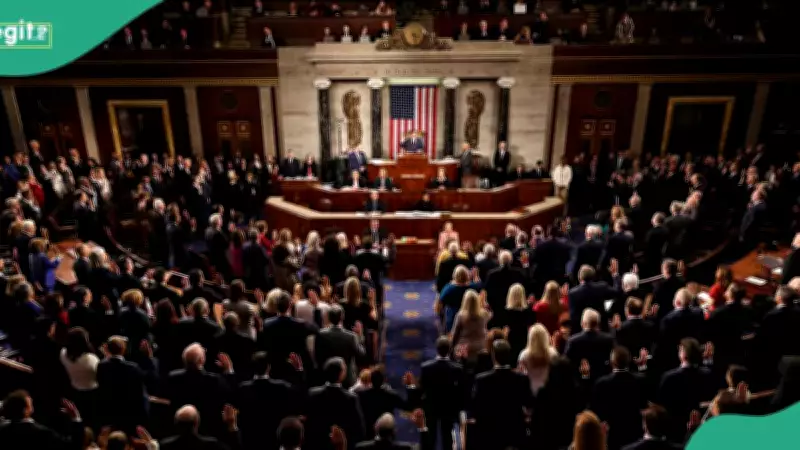
US Congress to Hold Fresh Hearing on Alleged Christian Genocide in Nigeria
The United States Congress has scheduled a fresh hearing to examine allegations of Christian genocide in Nigeria, with witnesses set to testify before the House Foreign Affairs Committee on Wednesday. This session, titled "Defending Religious Freedom Around the World," will be jointly convened by the Subcommittee on Africa and the Subcommittee on the Western Hemisphere.
Witnesses Warn of Escalating Religious Violence
In prepared submissions published ahead of the hearing, witnesses expressed grave concerns about Nigeria's security situation. They warned that the country could be heading towards wider Christian-Muslim violence, citing worsening insecurity and rising risks of religious conflict. The witnesses emphasized that Nigeria faces significant challenges in maintaining religious harmony amidst ongoing security threats.
Among those expected to testify are:
- Sam Brownback, former US Ambassador-at-Large for International Religious Freedom
- The daughter of Pastor Ezra Jin
- Dr. Stephen F. Schneck, former chair of the United States Commission on International Religious Freedom
Strong Allegations from Former Ambassador Brownback
In his prepared testimony, Sam Brownback made several strong claims about Nigeria's religious landscape. He alleged that extremist groups are focusing on Nigeria as part of a broader religious campaign, stating that "radical, militant Islam continues its purification efforts throughout the MENA region and beyond." Brownback specifically identified Syria and Nigeria as key focus areas for these groups in their quest for dominance.
The former ambassador went further to claim that "early warning signs of a Muslim-on-Christian war are brewing across Africa," and asserted that "Nigeria is the deadliest place on the planet to be a Christian." Brownback also alleged that Nigeria's government receives support from several countries including China, Russia, Turkey, and Saudi Arabia.
Governance Challenges and Religious Persecution
Dr. Stephen F. Schneck presented a different perspective in his submission, linking religious persecution to weak governance structures. He argued that insecurity and failing governance often create conditions conducive to religious persecution, stating that "failing or failed states are locations for the emergence or fostering of militarized groups — insurgent, ethnic, or religious — that can pose a threat to freedom of religion."
Schneck specifically identified Nigeria, Syria, and Sudan as current examples where such conditions threaten freedom of religion or belief. He noted that both Nigeria and Syria are experiencing high levels of societal insecurity, with their respective governments unable to halt widespread violence against communities of faith.
Concerns Over US Reporting Delays
Dr. Schneck also expressed concern about what he described as delays and gaps in US government reporting on religious freedom. He criticized the State Department for not making its designations of Countries of Particular Concern, Special Watch List, or Entities of Particular Concern in a timely manner.
"President Biden's 2023 designations were to have lapsed at the end of 2025," Schneck stated, adding that "apparently, Nigeria, thanks to its unique designation by President Trump, is the only country in the world currently designated as a Country of Particular Concern."
He expressed particular concern about this situation, noting that it occurs "at a time when countries like China and Iran are engaged in ever more repressive actions against people of faith."
Background and Context of the Hearing
This fresh hearing comes after Nigeria was redesignated in 2025 as a Country of Particular Concern over alleged violations of religious freedom. That designation was accompanied by threats of possible US military intervention, which later materialized in the form of US air strikes on terrorist hideouts in Sokoto on Christmas Day.
The hearing follows recent diplomatic engagements between US and Nigerian officials. On November 20, 2025, US Secretary of War Pete Hegseth hosted Nigeria's National Security Adviser Nuhu Ribadu at the Pentagon to discuss coordinated strategies for tackling Nigeria's security crisis. Ribadu also disclosed in December that a US congressional delegation visited Abuja as part of continued security consultations between both countries.
Nigerian Government's Response
Despite the repeated allegations, the Nigerian Federal Government has consistently rejected claims of systemic persecution of Christians. Government officials maintain that insecurity affects Nigerians of all faiths, not just one religious group. They emphasize that the security challenges facing the country impact citizens across religious divides and that the government is working to address these issues comprehensively.
Recent Developments and International Engagement
In related developments, US lawmaker Riley Moore recently met with Plateau State Governor Caleb Mutfwang amid renewed international attention on alleged attacks against Christian communities in Nigeria's Middle Belt. Moore, a member of the US House of Representatives, disclosed the meeting in a social media post, noting that the engagement focused on security concerns, economic cooperation, and the protection of vulnerable populations, particularly Christians.
Former President Donald Trump has also acknowledged that Muslims are victims of violence in Nigeria during a recent interview, though he maintained that Christians remain the primary victims in the country's ongoing conflicts. This acknowledgment comes amid broader discussions about the complex nature of religious violence in Nigeria and the need for comprehensive solutions that address security challenges affecting all religious communities.




