
US Terminates $11 Million Catholic Charities Contract Amid Political Tensions
The United States federal government has abruptly terminated an $11 million agreement with Catholic Charities in Miami, effectively ending a partnership that spanned more than six decades. This decision halts a long-standing collaboration that provided shelter and comprehensive care for unaccompanied migrant children arriving in the country without parents or guardians.
Archbishop Decries Sudden Cancellation of Vital Program
Miami Archbishop Thomas Wenski confirmed the cancellation in a public statement, describing the government's action as sudden and difficult to comprehend. "The U.S. government has abruptly decided to end more than 60 years of relationship with Catholic Charities in the Archdiocese of Miami," he stated. Wenski emphasized that the program would shut down within three months, even as children remain under its care, and warned that relocating these vulnerable minors could cause significant emotional distress.
The archbishop highlighted the program's exemplary record, noting that "the Archdiocese of Miami's services for unaccompanied minors have been recognized for their excellence and have served as a model for other agencies throughout the country." Despite acknowledging a recent decline in the number of migrant minors, Wenski expressed serious concerns about dismantling a system with proven effectiveness in child welfare.
Federal Officials Cite Declining Numbers in Defense
Federal authorities defended the termination by pointing to a sharp reduction in the number of unaccompanied minors in government custody. A spokesperson for the Department of Health and Human Services explained that facilities are being consolidated as part of broader efforts to manage immigration and curb illegal entry. The funding had been administered through the Office of Refugee Resettlement under this department, functioning as a federally supported foster care network for vulnerable migrant children.
Experts Warn of Lasting Psychological Harm
Child welfare experts have raised alarms about the potential consequences of relocating children from established care environments. Robert Latham, a specialist in the field, cautioned that repeated moves can severely disrupt emotional stability and identity formation in developing children. "It's incredibly psychologically harmful to be moved," Latham explained, noting that such transitions can be as stressful as serious illness or a death in the family.
He elaborated further: "For little kids, moving repeatedly creates bonding issues and destroys the sense of both self and community. They don't know who they are and where they will be." Social service providers also warn that replacing the program will prove challenging, requiring months of recruiting and training foster parents while navigating complex licensing requirements.
Broader Political and Religious Context
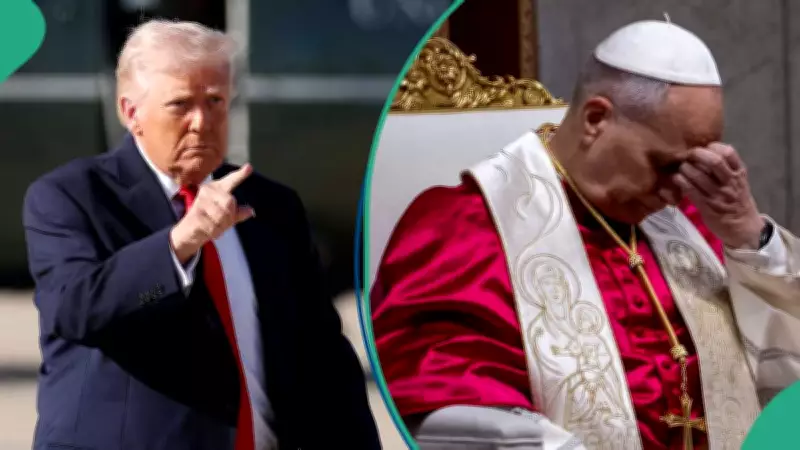
The funding cut occurs against a backdrop of escalating tensions between the Trump administration and the Vatican under Pope Leo XIV. Recent disagreements have intensified over multiple issues, including migration policy and the pope's criticism of U.S. military actions abroad. In one particularly pointed message, Pope Leo XIV stated: "God does not bless any conflict. Anyone who is a disciple of Christ, the Prince of Peace, is never on the side of those who once wielded the sword and today drop bombs."
President Trump dismissed these remarks, asserting "There's nothing to apologize for. He's wrong." This exchange follows a pattern of strained relations between the U.S. administration and Catholic leadership, with the funding termination representing a tangible manifestation of these broader diplomatic and ideological conflicts.
The program's closure marks a significant shift in how the United States handles the care of unaccompanied migrant children, ending a partnership that began during the Eisenhower administration. As the three-month transition period begins, questions remain about where affected children will be relocated and how their psychological needs will be addressed during this disruptive period.




