
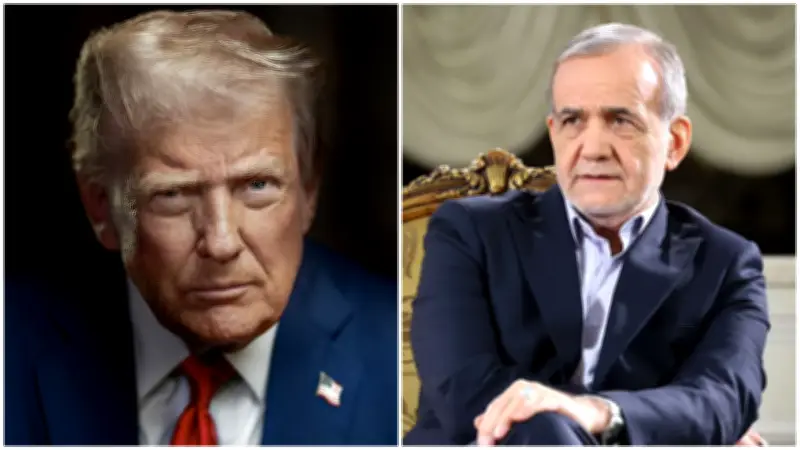
The world breathed a collective sigh of relief when the United States and Iran announced a rapprochement penultimate Friday, halting the four-month-old war that the US and Israel had waged against Iran. Four earlier attempts at peace had failed, but this new agreement spans an initial 60 days. The cessation of hostilities imposes enormous responsibilities on the belligerents: the Strait of Hormuz, previously under Iranian stranglehold, is now open for free movement of oil vessels, while the US blockade against Iran has been lifted. The US Treasury Department has authorized the production, sale, and delivery of Iranian oil within this armistice window, even to the US.
Mediation and Immediate Impact
The pact, mediated by Qatar and Pakistan in Switzerland, embodies more than just halting missile exchanges and trade freezes. Its real test lies in producing the critical “roadmap towards reaching a final deal within 60 days,” as stated in the joint statement of the mediators, which also lauded steps taken so far. The agreement’s immediate impact is the stabilization of the energy sector, with crude oil prices dropping to pre-conflict levels. From $118 per barrel at the peak of the conflict, prices now vacillate between $79 and $72.48 per barrel. Gasoline pump prices in the US, which soared to $5 per gallon, now cost about $3.93 per gallon. Gradual cost reductions are also reported in national economies globally.
Strait of Hormuz and Global Oil Flow
A total of 20% of global oil sold is transported through the Strait of Hormuz. Its blockade, according to the International Energy Agency (IEA), caused the greatest historical disruption to the international oil market. Maritime intelligence firm Kpler told the BBC that from 18 June, 284 ships had passed through the Strait, carrying crude, liquefied natural gas, and fertilizer. Before the conflict, 100 ships passed daily; the current situation remains a cold comfort.
Nuclear Commitments and Reconstruction
Iran’s commitment to the successful implementation of the agreement includes reaffirming that it will not procure or develop nuclear weapons. This would be followed by the disposition of stockpiled enriched materials under a mechanism agreed with the US. The materials would be down-blended on site under the supervision of the International Atomic Energy Agency (IAEA). On its part, the US, alongside regional partners, would develop a definitive mutually agreed plan, with at least $300 billion granted to Iran for post-war reconstruction and economic development. The implementation mechanism will be part of the final deal within the crucial 60 days.
Fragility and the Hezbollah-Israel Dimension
The triangular peace deal involves Israel’s ceasefire with Hezbollah in Southern Lebanon. Hezbollah entered the conflict immediately after Iran’s Supreme Leader, Ayatollah Ali Khamenei, was killed by an Israeli strike. Their differences are so deep that a day after the US-Iran ceasefire was brokered, Israel’s military offensive killed 67 people in Lebanon, claiming a newly discovered underground military fortress. Five people died in Hezbollah’s retaliatory action, as it vows that any further Israeli expansion or seizure of territory will be fiercely resisted.
De-confliction Cell and Breaches
To address fragility, a “De-confliction Cell” was inserted into the general agreement to ensure total compliance with peace protocols by both Israel and Hezbollah. Communication lines have also been established between the US and Iran to clear possible misunderstandings. However, the US and Iran have already breached the agreement with military strikes on their respective facilities between last Friday and Sunday. Oil sector experts remain cautiously optimistic about the present free flow of the commodity.
Oil Supply Concerns and Infrastructure Damage
There are deep concerns about oil kept in storage tanks and on board ships over the past four months. If this stock is exhausted, supply chain disruptions might resurface, since production has tanked for long, particularly in major producing states impacted by the war. Gargantuan oil facilities in Gulf states—including Saudi Arabia, Qatar, Jordan, Oman, UAE, Bahrain, and Kuwait—were destroyed as targets of Iran’s retaliatory actions. These countries were accused of complicity by hosting US military bases. Repairs will not be quick-fix projects.
The Unanswered Question: Why the War?
Beneath the converted language of American diplomacy, after four months of bloodshed and devastation, lies an inescapable question: Why did President Trump choose to unleash the ultimately self-defeating “Operation Epic Fury” at the very moment when the third round of negotiations was still on course? By one estimate, the conflict has taken the lives of more than 7,300 Iranians. The Pentagon stated that $29 billion has been spent on the war. Last week, the White House requested congressional approval of $87.6 billion for “urgent needs,” even as lawmakers have criticized Trump for the war.
Humanitarian Challenges and a Call for Peace
Humanitarian challenges created by the war, whether in Iran, Lebanon, or the entire Gulf region, are daunting. “Nobody had expected or predicted the attacks when we had finished a third round of negotiations in Geneva,” Alireza Salarian, Iranian ambassador to Cyprus, reminded all shortly after the US 28 February missile strike. Trump’s volte-face perhaps validates the belief that “all wars end on the negotiating table.” The agreed return of UN Nuclear Inspectors to Iran, to examine facilities that Trump had claimed were “completely obliterated,” while he demonized Presidents Obama and Biden for negotiating, should inform him of the primacy of reason, common sense, and altruism in statecraft. Trump should bury his megalomania and give peace a chance for a breather to humanity.




