
US Imposes Sanctions on Eight Nigerians Over Terrorism and Cybercrime Allegations
The United States government has taken decisive action by sanctioning eight Nigerian individuals over their alleged connections to terrorism and cybercrime activities. This move, announced in February 2026, immediately triggers significant financial and legal restrictions under US jurisdiction, reinforcing Washington's broader counter-terrorism and cybercrime enforcement efforts targeting Nigeria.
Immediate Consequences of the Sanctions
The sanctions have resulted in the immediate blocking of all property and interests belonging to the designated individuals within United States jurisdiction. Furthermore, US citizens and entities are now legally barred from engaging in any transactions with these individuals. The measures were formally outlined in a document dated February 10, 2026, and released by the US Treasury Department through its Office of Foreign Assets Control (OFAC).
The sanctions place the affected Nigerians on the Specially Designated Nationals and Blocked Persons List, which activates strict financial restrictions under US law. According to OFAC, this action forms part of a comprehensive strategy to disrupt funding networks linked to extremist groups and digital crime syndicates operating in and from Nigeria.
"This publication of Treasury's Office of Foreign Assets Control is designed as a reference tool providing actual notice of actions by OFAC with respect to Specially Designated Nationals and other persons whose property is blocked, to assist the public in complying with the various sanctions programmes administered by OFAC," the agency stated in its official release.
Nigerians Named in the OFAC Sanctions List
Among those sanctioned is Salih Yusuf Adamu, also known as Salihu Yusuf, whom OFAC has directly linked to Boko Haram. Yusuf was among six Nigerians convicted in 2022 in the United Arab Emirates for establishing a Boko Haram cell and attempting to transfer $782,000 from Dubai to Nigeria.
Other individuals designated under terrorism sanctions include Babestan Oluwole Ademulero, while Abu Abdullah ibn Umar Al Barnawi and Abu Musab Al Barnawi were listed as senior Boko Haram figures operating in northeastern Nigeria. Additional names on the sanctions list are Khaled Al Barnawi, Ibrahim Ali Alhassan, and Abu Bakr ibn Muhammad ibn Ali Al Mainuki, all cited for alleged ties to Boko Haram and the Islamic State of Iraq and the Levant.
Nnamdi Orson Benson appeared on the list specifically under cybercrime-related sanctions, highlighting the dual focus of the US action on both terrorism and digital criminal activities.
Broader Political and Security Context
The OFAC document references earlier recommendations by United States lawmakers for sanctions against prominent Nigerians and groups, including Senator Rabiu Musa Kwankwaso and the Miyetti Allah organizations. Washington has maintained Boko Haram's designation as a foreign terrorist organization since 2013, citing numerous attacks across Nigeria and the Lake Chad Basin that have resulted in thousands of deaths since 2009.
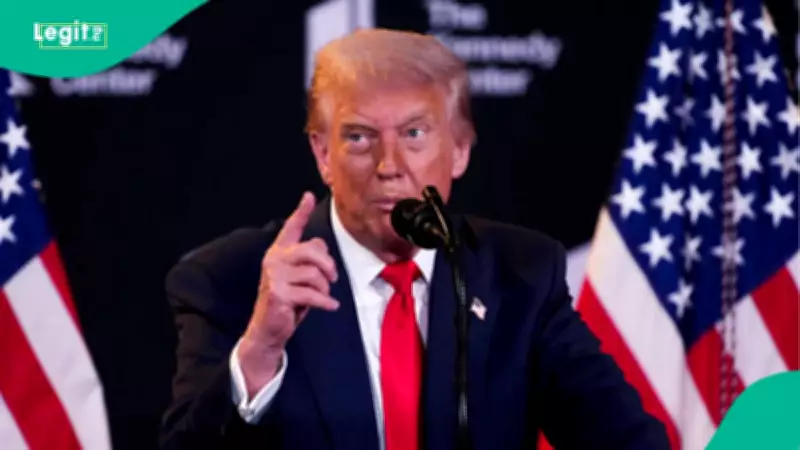
This latest sanctions action follows significant developments in US-Nigeria relations regarding security and human rights. In October 2025, United States President Donald Trump announced Nigeria's return to the State Department list of Countries of Particular Concern over religious freedom concerns. Nigeria had initially been placed on this list in 2020 before its removal under former President Joe Biden's administration.
The move also aligns with recent calls by US lawmakers for visa bans and asset freezes on individuals accused of supporting violence and religious persecution in Nigeria. These sanctions represent the latest in a series of measures the United States has implemented to address security challenges and human rights issues in Nigeria while maintaining pressure on terrorist networks and cybercrime operations.




