Former Blanco, Texas mayor Mike Arnold has asserted that the United States will not arrest Nigerian President Bola Tinubu, a claim made ahead of the 2026 United Nations General Assembly (UNGA) summit scheduled to open in New York on Tuesday, September 22. Arnold, founder of Africa Arise International, made the statement during an interview on the programme 'Inside Sources', monitored by Legit.ng.
Interview Context and Pre-UNGA Coverage
The interview was conducted by Laolu Akande, a former presidential aide and ally of former Vice President Yemi Osinbajo, as part of a series of interviews across Texas, New York, and Washington, DC. These interviews formed part of pre-summit coverage ahead of the annual General Debate of the UNGA, one of the highest-profile gatherings of world leaders each year at the UN headquarters in New York.
During the programme, Arnold and Akande engaged in what was described as frank exchanges on the subject. The former Texas mayor was direct in his assertion that the United States would not move to arrest Tinubu, though the interview did not elaborate on the legal or diplomatic basis for that position.

Who Is Mike Arnold?
Arnold served as mayor of Blanco, a small city in the Texas Hill Country, and later founded Africa Arise International, an organisation focused on African development and engagement. His appearance on 'Inside Sources' placed him at the centre of a conversation touching on Nigerian politics and US foreign policy posture towards the Tinubu administration. Akande's interviews across multiple American cities suggest a broader effort by Nigerian media figures to gather perspectives from US-based voices on issues relevant to Nigeria ahead of the UNGA session.
The Case Against Tinubu
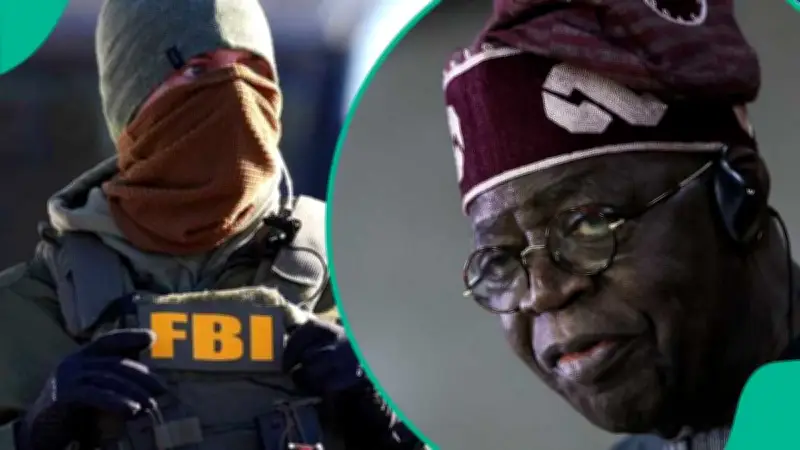
Legit.ng recalls that in April 2025, the US District Court for the District of Columbia ordered America's law enforcement agencies to release confidential information concerning Tinubu’s alleged involvement in drug trade during a “purported federal investigation in the 1990s.” That investigation had led to Tinubu forfeiting some money to the US government in a civil case. The district court’s order came about two years after an American, Aaron Greenspan, had filed a suit under the Freedom of Information Act (FOIA) against the Executive Office for US Attorneys, Department of State, Federal Bureau of Investigation (FBI), Internal Revenue Service (IRS), Drug Enforcement Administration (DEA), and the Central Intelligence Agency (CIA), seeking information about a joint investigation into a Chicago hard drug ring that operated in the 1990s.
The American sought criminal investigative records about four named individuals “allegedly associated with the drug ring: Bola Ahmed Tinubu, Lee Andrew Edwards, Mueez Abegboyega Akande, and Abiodun Agbele.” This was during the 2023 election period, which saw Tinubu emerge as president. The issue featured prominently at the Presidential Election Petition Court when his opponents, Atiku Abubakar and Peter Obi, challenged the president’s eligibility to contest Nigeria’s presidency. But the election court, in a unanimous decision, dismissed the suits, affirming Mr Tinubu’s election.
Legit.ng also reported that the agencies issued “Glomar responses,” refusing to confirm or deny whether the requested records exist. Greenspan contested those responses at the Department of Justice’s Office of Information Policy (OIP). He accused the law enforcement agencies of violating the FOIA by failing to release within the statutory time “documents relating to purported federal investigations into” Mr Tinubu and one Abiodun Agbele. But the OIP affirmed the agencies’ refusal. Three days later, he filed an emergency motion seeking a hearing to compel the US agencies to produce records but was also denied. Then, in 2025, Judge Howell ruled partly in favour of Greenspan’s case.
The judge noted that the ‘Glomar’ responses asserted by the FBI and DEA are “improper and must be lifted.” He said the FBI and DEA failed to show that they properly invoked FOIA. Howell said since it was acknowledged that Tinubu was a subject of an investigation involving both the FBI and DEA, “the claim that the Glomar responses were necessary to protect this information from public disclosure is at this point neither logical nor plausible.”

Tinubu's Legal Response
Legit.ng earlier reported that President Tinubu filed a response in a US district court arguing that records sought by a researcher are protected under US privacy law. The case stems from FOIA requests filed by Aaron Greenspan seeking the FBI and DEA files linked to a Chicago drug-involvement investigation from the early 1990s. Tinubu's lawyers argued that personal curiosity about a foreign leader does not meet the legal threshold for public interest under FOIA.