
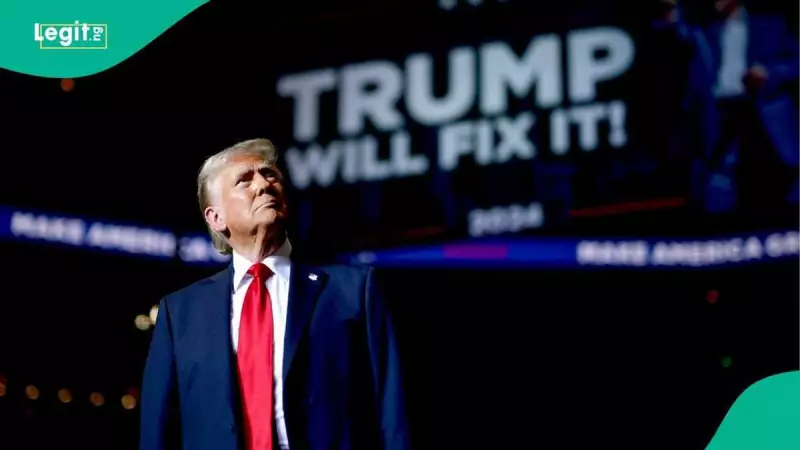
The White House has issued a firm response to circulating media reports alleging that United States President Donald Trump is asking nations to pay a staggering $1 billion as a membership levy for a proposed international body he is spearheading.
Controversial Reports Spark Global Debate
According to a report from Bloomberg News on Saturday, January 18, 2026, a draft charter for a U.S.-led "Board of Peace" indicated that countries would need to contribute the hefty sum to secure a seat. The report, cited by Reuters, suggested that President Trump would serve as the board's inaugural chairman, with member states holding renewable three-year terms subject to his approval.
This proposal is reportedly an expansion of a plan initially linked to the second phase of a ceasefire agreement between Israel and Hamas. The envisioned board's role was to oversee governance, reconstruction, and investment in Gaza. However, invitations sent to world leaders like Argentina's President Javier Milei and Paraguay's leader Santiago Pena pointed to broader, long-term ambitions for the body to address global conflicts beyond the Gaza crisis.
Official Clarification from the White House
In a swift rebuttal, the White House labeled the Bloomberg report as "misleading." In a statement shared on the social media platform X, officials clarified the initiative's stance on membership fees.
The White House stated that the Board of Peace "simply offers permanent membership to partner countries who demonstrate deep commitment to peace, security, and prosperity," explicitly noting that no minimum financial contribution is required. The U.S. State Department, when approached for comment, directed inquiries to previous public statements by President Trump and his special envoy, Steve Witkoff, which did not mention any financial prerequisites for joining.
Analysts Question Structure and Geopolitical Impact
The Board of Peace proposal has generated a wave of mixed reactions across the international community. Political and security analysts are raising pointed questions about the body's structure, funding model, and wider geopolitical implications.
These concerns are particularly pronounced given the current landscape of ongoing international conflicts and diplomatic tensions. The idea of a major global peace initiative being potentially tied to a substantial financial commitment has sparked debate about its feasibility and underlying motives.
Meanwhile, in a related domestic development, President Trump reportedly raised alarms about a potential impeachment plot during a House Republican retreat. He cautioned that Democrats might seek to impeach him again if the GOP loses control of Congress in the upcoming midterm elections, referencing his two previous impeachments as politically motivated.
As the situation develops, the world watches to see how the concept of the Board of Peace will evolve and whether it can gain traction amid the current controversy and skepticism.




