Zelensky Claims Putin Has Already Unleashed World War III
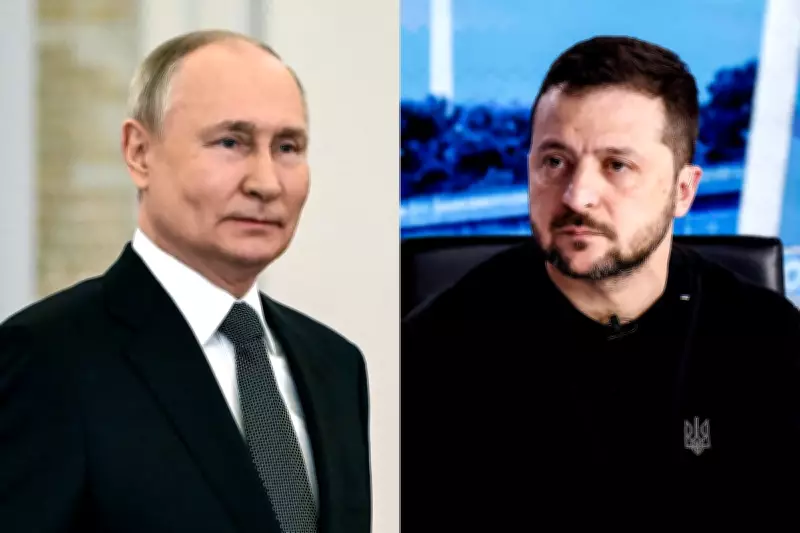
In a stark and sobering interview with the BBC, Ukrainian President Volodymyr Zelensky has declared that Russian President Vladimir Putin effectively commenced World War III when he ordered the full-scale invasion of Ukraine in February 2022. The interview was published on the eve of the conflict's fourth anniversary, marking a grim milestone in the ongoing war.
A Global Conflict Already Underway
"I believe that Putin has already started it," Zelensky stated emphatically. "The critical question now is not if, but how much territory he will manage to seize and, most importantly, how the international community can ultimately stop him." The Ukrainian leader framed the war not merely as a regional dispute but as the opening salvo in a broader global confrontation.
He elaborated that Moscow's ambitions extend far beyond simple territorial expansion in Eastern Ukraine. According to Zelensky, the Kremlin's ultimate objective is to impose a fundamentally different way of life on sovereign nations and systematically undermine the democratic choices people have made for themselves. This, he argued, represents a direct assault on the post-World War II international order.
Hardened Stance on Ukrainian Territory
In a significant shift, President Zelensky has firmly distanced himself from any prior suggestions that land concessions could be part of future peace negotiations. He explicitly rejected the idea of surrendering approximately 20 percent of the Donetsk region, which Russia has sought to fully capture since 2014, along with other occupied areas in the Kherson and Zaporizhzhia regions.
"I don't view this issue simply as a matter of land," Zelensky explained. "I see it as abandonment—a deliberate weakening of our national position and the betrayal of hundreds of thousands of our citizens who continue to live under occupation." He warned that any territorial withdrawal would irrevocably fracture Ukrainian society and set a dangerous precedent.
Although Zelensky had previously floated the possibility of a national referendum to decide on such concessions, he now insists that Kyiv will not cede any territory. This hardening position comes as diplomatic negotiations remain stalled and proposed Western-backed security guarantees for Ukraine's future remain frustratingly vague and unimplemented.
Skepticism Over Concessions and Warnings for Europe
Zelensky expressed deep skepticism that territorial concessions would lead to a lasting peace. He suggested that any such agreement would merely provide Moscow with valuable time to regroup, rearm, and prepare for future aggression. "Giving up land does not bring peace; it only buys time for the aggressor," he asserted.
The President echoed growing concerns voiced across European capitals, including by senior German officials, that a militarily rebuilt Russia could pose a direct and existential threat to the European continent within just a few years if the current conflict is not resolved decisively in Ukraine's favor.
Institutional Support Over Individual Leaders
Turning his attention to the United States, Zelensky signaled that Ukraine's long-term security must be anchored in durable institutions rather than the whims of individual political leaders. He specifically referenced the bipartisan support received from the U.S. Congress, suggesting this is more reliable than placing trust solely in any single president, such as Donald Trump.
"Political leaders come and go, but institutions endure," Zelensky noted, emphasizing a strategic shift in how Kyiv views its most powerful ally. Former President Trump had previously pledged to end the war rapidly and has pushed Ukraine toward negotiations that would involve relinquishing parts of the Donbas region. Despite intermittent talks, no lasting ceasefire has been achieved.
Defiance on the Battlefield and the Human Cost
On the military front, Zelensky struck a defiant tone, forcefully rejecting claims that Ukraine is on the verge of defeat. He insisted the nation is fighting unequivocally for its independence and will ultimately restore its full territorial integrity. However, he candidly acknowledged the staggering human cost associated with accelerated offensive operations.
"What is land without people? Honestly, it is nothing," he stated poignantly. Zelensky emphasized that any attempt to reclaim territory too hastily could result in devastating and unacceptable casualties, underscoring the painful calculus of modern warfare.
In a separate, concurrent interview with Agence France-Presse, Zelensky similarly maintained that Ukraine is "definitely not losing" the war. He admitted, however, that victory remains extraordinarily costly and is entirely dependent on sustained and increased international military and financial support.
He stressed that Ukraine still urgently requires more advanced weapons and unwavering backing from its allies. For Zelensky, the restoration of Ukraine's internationally recognized 1991 borders would represent not merely a military victory, but the ultimate triumph of justice and sovereignty.