Akabueze Unveils Comprehensive Strategy to Address Nigeria's Massive Backlog of Unfinished Government Projects
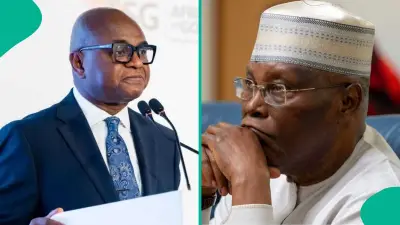
Former Director-General of the Budget Office of the Federation, Ben Akabueze, has delivered a stark assessment of Nigeria's public finance system, revealing that more than 56,000 government projects remain incomplete across the nation. During a high-level policy dialogue organized by the National Assembly's Joint Committees on National Planning and Economic Development, Akabueze presented both a detailed analysis of current challenges and a structured reform pathway to strengthen the crucial connection between national planning and budgeting.
The Core Challenge: Execution Over Planning
At the heart of Akabueze's presentation was a fundamental observation about Nigeria's development approach. "We are not short of ideas or frameworks," he stated emphatically. "The real task is translating plans into funded, implemented, and completed projects that improve citizens' lives." This statement underscores a persistent gap between policy formulation and tangible outcomes that has plagued Nigeria's development efforts for decades.
A System Under Significant Strain
The staggering figure of over 56,000 uncompleted projects reflects profound systemic issues within Nigeria's fiscal governance framework. Despite operating a multi-layered planning system that theoretically links medium-term development plans with sector strategies and annual budgets, implementation has remained consistently uneven and fragmented. Akabueze observed that these various frameworks often function in isolation rather than operating in a coordinated, synergistic manner.
This siloed approach has resulted in an excessive focus on expenditure processes without sufficient emphasis on achieving concrete development outcomes. Akabueze contrasted this with countries experiencing sustained economic growth, which typically treat their budgets as strategic instruments for executing clear policy priorities, ensuring that spending decisions are directly tied to measurable results and citizen benefits.
Key Factors Undermining Budget Performance
According to Akabueze's analysis, several interconnected factors continue to compromise Nigeria's budget effectiveness:
- Institutional Coordination Gaps: Limited collaboration among government agencies and ministries
- Revenue Challenges: Recurring revenue shortfalls combined with rising debt service obligations that constrain capital investment
- Governance Issues: Procurement delays, administrative inefficiencies, and policy discontinuity across administrations
These problems collectively create a pattern where public expenditure frequently fails to translate into completed projects or improved service delivery, leaving citizens without the promised benefits of government investment.
Transitioning to Results-Based Budgeting
To strengthen outcomes and address these systemic weaknesses, Akabueze proposed adopting a comprehensive results-based budgeting framework. This approach would directly link public spending to measurable objectives, systematically connecting national development goals to specific policies, sector strategies, project selection criteria, and performance indicators. Each budget allocation would need to demonstrate verifiable impact, representing a fundamental shift from input-focused budgeting to an outcomes-driven model designed to improve both accountability and spending effectiveness.
Specific Reform Measures Proposed
Akabueze outlined several concrete measures to support this transition:
- Legislative Reform: Introduction of an Organic Budget Law to legally reinforce the connection between planning and budgeting
- Project Management Improvements: Enhanced project design, costing methodologies, and implementation monitoring
- Revenue Enhancement: Improved strategies for revenue mobilization to fund critical projects
- Digital Transformation: Digitization of public financial management systems to increase transparency and enable real-time monitoring
- Procurement Reforms: Streamlined procurement processes to facilitate more efficient project delivery
2026 Budget Outlook and Implementation Challenges
Regarding the upcoming 2026 budget, Akabueze acknowledged areas of progress, particularly the increased emphasis on capital expenditure, infrastructure development, and security investments. However, he cautioned that revenue assumptions—especially those linked to oil production and pricing—would need careful management to support effective implementation, given Nigeria's historical experiences with revenue shortfalls that have derailed previous budget execution.
The Critical Importance of Policy Consistency
While detailing technical reforms, Akabueze emphasized that policy consistency and institutional commitment remain essential for achieving meaningful results. He called for strict adherence to approved budgets, timely release of allocated funds, and sustained legislative oversight throughout implementation cycles. Perhaps most importantly, he underscored the necessity of maintaining continuity in project execution across different administrations to maximize the value of public investment and prevent the abandonment that has characterized so many previous initiatives.
Looking Forward: From Plans to Tangible Results
Akabueze's presentation comes at a critical juncture as Nigeria continues balancing significant fiscal constraints against growing development needs. His intervention highlights the urgent importance of strengthening the link between planning and execution, with a renewed focus on delivering tangible outcomes that improve citizens' lives. The recommendations point toward a more effective system where public resources align closely with national priorities and projects consistently progress to completion.
For Nigeria moving forward, the priority has become unmistakably clear: ensure that plans translate into effective implementation, resources achieve efficient utilization, and budget commitments manifest as measurable progress benefiting all citizens. The blueprint presented offers a structured pathway to transform Nigeria's approach from planning to results, addressing both the symptoms and root causes of the abandoned projects crisis.