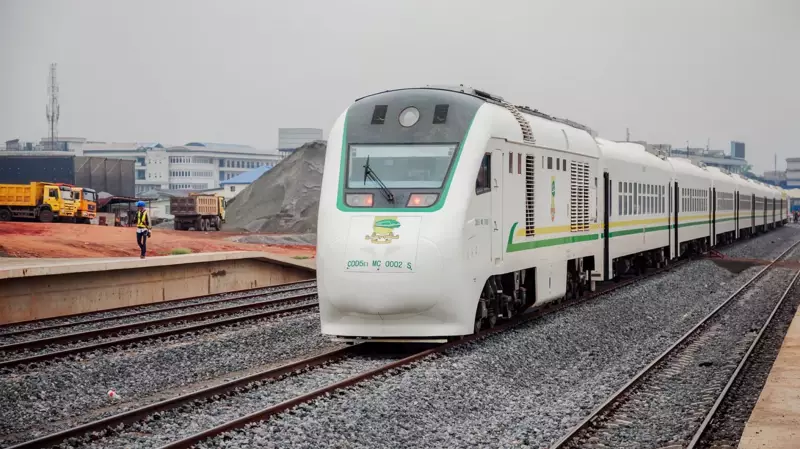
The Federal Government has made a massive financial commitment to revitalising Nigeria's rail network, setting aside more than N240 billion for rail-related projects in the 2026 Appropriation Bill. This substantial allocation highlights the central role rail transport is expected to play in the nation's infrastructure development, urban mobility solutions, and broader logistics strategy.
Breakdown of the Rail Sector Allocation
A detailed analysis of the budget reveals that the funding is distributed across several key agencies and projects, with the bulk designated for capital expenditure. At the forefront is the Nigerian Railway Corporation (NRC), which received a total allocation of N34.24 billion. This sum is split into N11.65 billion for capital projects and N22.58 billion for recurrent expenditure.
The NRC's capital spending is strategically focused on several critical areas. A significant portion, N5.97 billion, is earmarked for new train procurement. Furthermore, N1.95 billion is allocated for the rehabilitation of existing railway lines, while N560 million is dedicated to repairs of tracks, bridges, and culverts. An additional N420 million is set aside for ongoing rail construction works, all aimed at sustaining current services and enhancing passenger and cargo safety.
Major Projects and Counterpart Funding
Beyond the NRC's direct budget, significant rail investments are embedded within the capital budget of the Federal Ministry of Transport. A notable N29.04 billion is committed to railway modernisation projects. This funding supports the continuation of major intercity rail corridors, including the pivotal Kano–Maradi line connecting Nigeria with Niger Republic.
In a major push for urban rail development, the government has provided a substantial N102.3 billion as counterpart funding for the Lagos Green Line Metro Rail (Phase 1). This investment underscores a determined effort to decongest Lagos and improve intra-city transportation.
Planning for the Future: New Corridor Studies
The budget also looks to the future of Nigeria's rail network with a sizable allocation of N68.5 billion for consultancy services on proposed new rail corridors. These include the Lekki–Ijebu Ode, Ore–Kajola, and ambitious coastal rail lines. This funding signals continued investment in essential preliminary work such as feasibility studies, project structuring, and preparation to make these projects attractive for financing.
Strategic Implications and Analyst Views
When combined, these provisions push total federal spending and commitments in the rail sector well beyond the N240 billion mark, firmly establishing rail as one of the most capital-intensive segments of the national transport budget.
Budget analysts observing this funding pattern note that it reflects a deliberate and strategic shift. Instead of launching numerous new construction projects from scratch, the government's focus appears to be on a three-pronged approach: consolidating and maintaining existing rail assets, actively advancing urban rail systems in major cities, and preparing new corridors for future private sector participation. This method aims to ensure sustainability and attract investment into the sector.