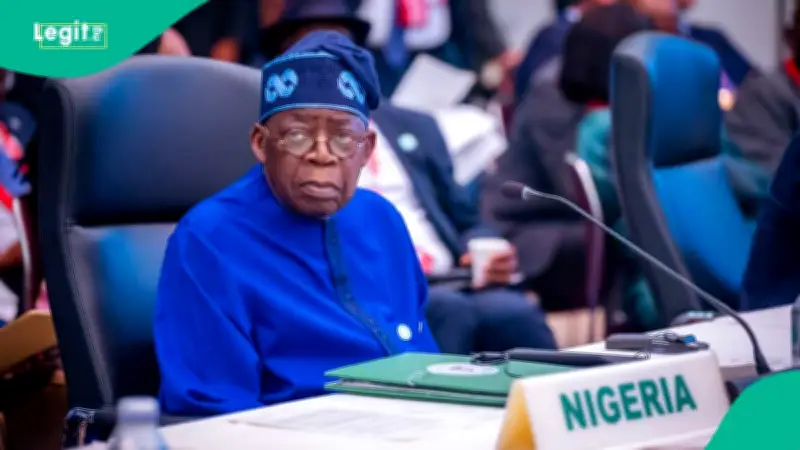
The presidency has confirmed that the number of Nigerians living in poverty has increased since President Bola Tinubu assumed office, while insisting that the hardship stems from the administration's ongoing economic reform programme.
Special Adviser on Policy Communication, Daniel Bwala, made the acknowledgement on Wednesday night, October 7, during an appearance on Politics Today, a Channels TV programme. He also used the platform to respond to a report by The Economist on public dissatisfaction with Tinubu's leadership.
Bwala defends poverty rise as reform fallout
Bwala said the government does not deny the increase in poverty, but placed it squarely within the context of structural reforms that no previous Nigerian president had been willing to undertake.
"More people went down to poverty. I acknowledge it, I'm not doubting. But, there is a but to it. Since the reform started till today, we have made marked progress, which is what we have spent the last three years doing," he said.
He argued that economic transformation by nature causes short-term discomfort, noting that Nigeria's population of 230 million was already at varying stages of poverty before the reforms began.
"There is no part of the world where reform comes with convenience," Bwala said. "None of the presidents that came before this president had the courage to do it because of fear."
Presidency faults Economist report on Tinubu
Bwala also pushed back against a report published on October 1 by The Economist, titled "Nigerians dislike their president, but may re-elect him anyway." The piece identified worsening insecurity, the economic bite of Tinubu's reforms, and strong political opposition as factors that could undermine the president's chances in the 2027 elections.
Bwala questioned the report's research approach, saying any credible claim about public sentiment must be backed by a proper survey that captures both critics and supporters.
"Let me say that The Economist's theory, as published, is watery. It doesn't have the substance," he said. "When you make a claim that Nigerians don't like him without also saying that there are a lot of people, for example, one million families whose children have benefited from Nigerian Education Loan Fund, NELFUND, do you think they hate him?"
He pointed to the agricultural sector and manufacturing incentives as examples of policies that have generated goodwill among segments of the population that the report allegedly overlooked.
Bwala insists fair assessment must include beneficiaries
Bwala insisted that any fair assessment of Tinubu's presidency must account for both dissatisfied Nigerians and those who have benefited from government programmes, arguing that democracy requires both voices to be heard.
Earlier, Legit.ng reported that ChatGPT predicted that the All Progressives Congress (APC) would likely win Nigeria's 2027 presidential election, using the Four Horsemen framework. It cited the opposition coalition but said the APC had the edge due to possible low voter turnout and the Tinubu administration's efforts to stabilise the economy.