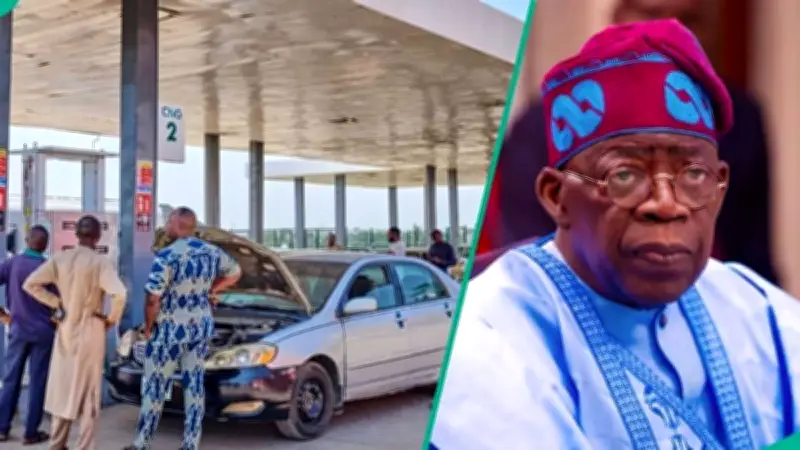
President Bola Tinubu has firmly ruled out any return to petrol subsidies, even as fuel prices climb to as high as N1,500 per litre in parts of northern Nigeria, intensifying financial pressure on households. The President made his position clear on Thursday, September 17, 2026, while providing an update on the National Affordable CNG Transit Programme. He described the old subsidy regime as "ruinous," saying it consumed trillions of naira and left the economy vulnerable to international oil price swings.
President Rejects Subsidy Restoration Calls
Speaking directly to the rising cost of petrol, Tinubu said restoring subsidies was not an option. "At a time like this, our answer cannot be to return to the ruinous petrol subsidy regime that consumed trillions of naira and left our economy exposed to every movement in international oil prices, as some have suggested," he stated. He added: "We must accelerate the cheaper alternatives we have been building at home."
The President's remarks come as reports indicate petrol is now retailing for as much as N1,500 per litre in northern states including Kano, Yobe, Sokoto, Borno, Taraba, and Zamfara. In major cities, prices have risen to around N1,430 per litre, according to the source.

Citizens Action Network Demands Price Reversal
The Citizens Action Network (CAN) has condemned the price increase. In a statement signed by its National Convener, Ade-Adewunmi Adeoye, and issued on the same day, the group called the rising fuel prices unacceptable and demanded the Federal Government reverse pump prices to N250 per litre. CAN accused the Tinubu administration of deepening economic hardship, saying Nigerians were already struggling to meet basic needs including food, housing, and education, as reported by Punch.
The group's demand for a return to N250 per litre underscores the stark gap between current market prices and the level many citizens consider affordable, reflecting widespread frustration over the cost-of-living crisis.
Government Pushes CNG as Cheaper Alternative
Rather than revisiting subsidies, Tinubu said the government would intensify efforts on compressed natural gas (CNG) and other alternative energy transport options. He argued that Nigeria's gas reserves provide a way to limit exposure to international energy market fluctuations. "Nigeria cannot control events in global energy markets. But as a gas-rich nation, we can reduce our exposure," he said.
According to The Sun, the President revealed that more than 120,000 vehicles have already been converted to CNG, with over 400 certified conversion centres and more than 90 CNG refuelling stations now operating across the country. He added that an implementation committee under the Nigeria Governors' Forum is working with the Presidential Initiative on CNG and Electric Vehicles to identify key transport corridors for further rollout.
The push for CNG is part of a broader strategy to reduce transport costs and lessen dependence on imported petrol, which remains a significant drain on foreign exchange reserves.
Imported Petrol Costs N70 More Than Dangote Refinery Fuel
Earlier, Legit.ng reported that Nigeria's cost of importing petrol has climbed to N1,420 per litre, placing significant strain on fuel marketers seeking to replenish inventories through international channels. This figure, which reflects the estimated cost of bringing Premium Motor Spirit (PMS) into Nigeria—including the international product price, shipping, insurance, and related charges—now sits N70 above Dangote Petroleum Refinery's current gantry price of N1,350 per litre.
The widening gap between import costs and local refinery prices highlights the ongoing challenges in Nigeria's fuel supply chain, even as the government pushes alternative energy solutions. The decision to maintain the subsidy removal, despite rising prices, signals a continued commitment to market-driven pricing, with the hope that CNG adoption will eventually ease the burden on consumers.