
A prominent public affairs commentator has issued a compelling call for the Southeast geopolitical zone to fundamentally rethink its political strategy ahead of the 2027 general elections. Chiechefulam Ikebuiro contends that the region must prioritize tangible political returns over emotional loyalty if it hopes to gain real influence in Nigeria's power dynamics.
The Enugu Meeting and a Call for Southern Unity
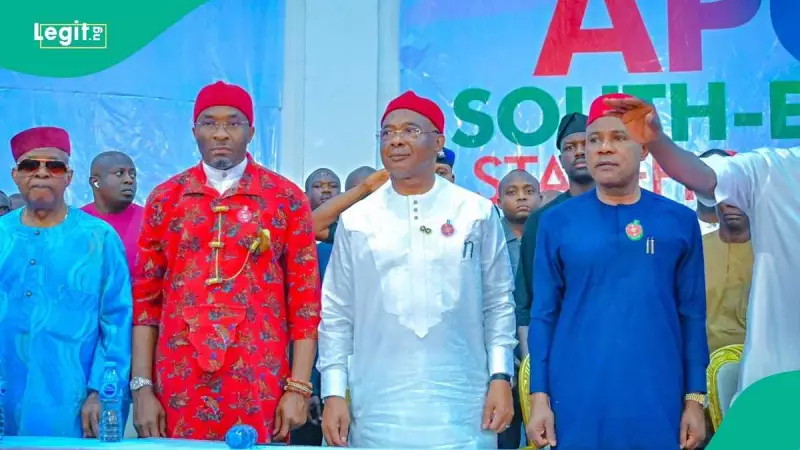
This analysis follows a significant political gathering: the South East Stakeholders’ Meeting of the All Progressives Congress (APC) held in Enugu State. The core message from that event was the pressing need for unity across Southern Nigeria to consolidate the gains of President Bola Ahmed Tinubu's administration and ensure an APC victory in 2027.
Ikebuiro describes this position as one demanding sober reflection rather than emotional dismissal. He frames the political choice starkly: sentiment is a luxury, while strategy is an absolute necessity. For the Southeast, the moment has arrived to invest its votes where they can yield measurable dividends.
Learning from History: The Cost of Loyalty Without Leverage
The commentator points to a historical pattern of unrewarded allegiance. From 1999, the Southeast predominantly supported the Peoples Democratic Party (PDP), including during its sixteen-year control of the federal government. Despite this, the region remained politically peripheral, often described as electorally useful but strategically expendable, with little to show in enduring developmental gains.
Politics is inherently transactional, Ikebuiro asserts. Regions that negotiate from positions of relevance and leverage reap the benefits of power. Conversely, those who consistently vote against the centre or fragment their influence across losing platforms condemn themselves to the margins. Nigeria, he insists, is no exception to this global rule.
The 2027 Calculus: Protest Votes vs. Pragmatic Power
Ikebuiro addresses the potent but, in his view, flawed appeal of protest voting. While emotionally satisfying, he argues it is strategically hollow. Elections are pathways to power, not mere moral victories, and it is power that translates political participation into concrete outcomes.
He also scrutinizes the sentiment around voting for "our own." While acknowledging the impressive performance of Peter Obi in the 2023 election, Ikebuiro states there is currently no viable pathway to an Obi presidency in 2027, even with his alignment with the African Democratic Congress (ADC). He highlights a contradiction: if progress requires allying with the same political class Obi's movement opposed, the narrative of a clean break weakens.
The more fundamental challenge, he notes, is a lack of nationwide electoral viability. Furthermore, he warns that aligning behind another Northern presidential ticket so soon after President Muhammadu Buhari's eight-year tenure would undermine the informal power rotation framework and amount to political self-sabotage for the South.
The Path Forward: Negotiated Relevance, Not Perpetual Opposition
The critical question for the Southeast, according to Ikebuiro, is not which party feels morally comfortable, but which alignment places the region closer to decision-making power, federal presence, and developmental negotiation. Political relevance is negotiated, not awarded.
This does not mean blind loyalty to the APC or abandoning legitimate grievances. Instead, it calls for pragmatic engagement—entering the room where decisions are made, influencing policy from within, and positioning the Southeast as a critical stakeholder rather than a perpetual opposition enclave.
As 2027 approaches, Ikebuiro concludes, the Southeast faces a decisive choice between symbolism and strategy, between emotional consistency and political consequence. Votes are the currency of democracy, and it is time to spend them wisely. The future will reward calculation and strategic alignment. Ultimately, an Igbo presidency will emerge not from isolation but from relevance, trust, and negotiated inclusion within Nigeria's power architecture.
Chiechefulam Ikebuiro is a public affairs commentator and specialist with over a decade of experience in media planning and management. The views expressed are his own.




