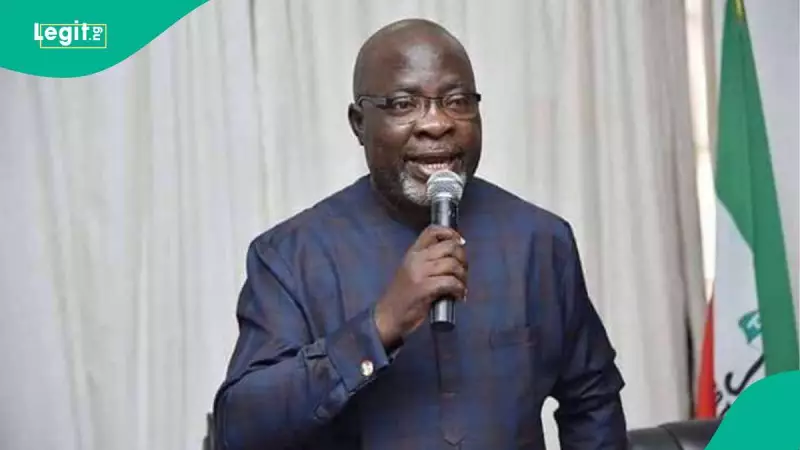
In a significant blow to Nigeria's main opposition party, the Peoples Democratic Party (PDP), its former National Publicity Secretary, Kola Ologbondiyan, has officially resigned his membership. This move adds to a growing list of high-profile departures that have rocked the party throughout 2025, casting a long shadow over its prospects for the next general elections.
Ologbondiyan's Formal Exit and Resignation Letter
Kola Ologbondiyan announced his resignation in a statement posted on his official X (formerly Twitter) account on Saturday, December 6, 2025. He accompanied the announcement with a copy of a formal letter addressed to the chairman of his Okekoko Ward in Kabba Bunu Local Government Area of Kogi State. The letter, dated December 5, was titled "Notification of Membership Withdrawal."
In the correspondence, the former party spokesman stated that his decision to leave the PDP followed a personal review of his role within the political organization. He expressed gratitude for the opportunities to serve, particularly during his tenure as the party's national spokesperson, and thanked leaders at all levels. Ologbondiyan emphasized that his choice was final, though he did not reveal his next political destination or alignment.
A Growing Wave of High-Profile Defections
Ologbondiyan's exit is not an isolated event but part of a sustained exodus that has defined a tumultuous year for the PDP. The party has witnessed a staggering loss of governors, national legislators, and former key leaders, severely depleting its ranks and strategic depth. The defections have been attributed to internal disputes, shifting political alliances, and pressure from rival political blocs as the nation's political landscape realigns ahead of the 2027 polls.
The scale of the departures is remarkable. In 2025 alone, several sitting governors elected on the PDP platform left the party. These include Ademola Adeleke of Osun State, Douye Diri of Bayelsa, Peter Mbah of Enugu, Sheriff Oborevwori of Delta, and Umo Eno of Akwa Ibom State. Many cited a desire to align with the federal government or expressed dissatisfaction with the PDP's internal direction.
The crisis has also gripped the party's representation in the National Assembly and various State Houses of Assembly. A notable example is the defection of sixteen members of the Rivers State House of Assembly to the ruling All Progressives Congress (APC). Lawmakers from Kaduna, Niger, and Katsina states have also abandoned the PDP. At the senatorial level, figures like Senator Ned Nwoko resigned and later joined the APC.
Major Figures and the Shifting Political Calculus
Perhaps the most seismic shifts came from the party's very top. Former Vice President and perennial presidential candidate Atiku Abubakar resigned from the PDP in July 2025 and aligned with a coalition built around the African Democratic Congress (ADC). Similarly, the vocal former senator Dino Melaye also moved to the ADC after repeatedly criticizing the PDP's performance and leadership. Former Delta State Governor Ifeanyi Okowa also joined the APC in a significant break.
These movements signal a frantic reshuffling of political loyalties and calculations. The coalition adopting the ADC as a vehicle has further institutionalized itself by appointing interim national officers. Former Senate President David Mark emerged as the interim national chairman, while former Osun State Governor Rauf Aregbesola was named interim national secretary. Former Sports Minister Bolaji Abdullahi was appointed interim publicity secretary.
This consolidation presents a direct challenge to both the weakened PDP and the ruling APC, setting the stage for a highly competitive and unpredictable election cycle in 2027. Analysts view Ologbondiyan's resignation as another clear indicator of the deepening crisis within the PDP and the ongoing reconfiguration of opposition politics in Nigeria. The party now faces an immense task of halting the bleeding, reconciling factions, and rebuilding a credible platform to contest for power in the coming years.