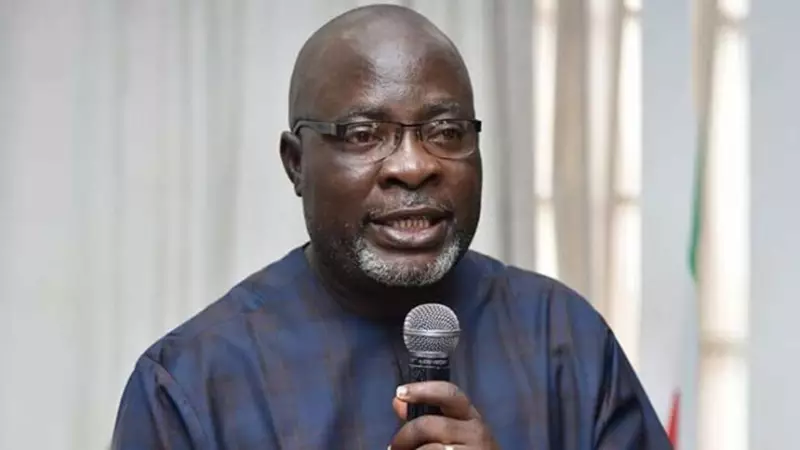
In a significant development for Nigeria's political landscape, a former top official of the main opposition party has stepped away. Kola Ologbondiyan, the erstwhile National Publicity Secretary of the Peoples Democratic Party (PDP), has officially resigned his membership. This move adds to a series of high-profile departures that have rocked the party throughout the year 2025.
Ologbondiyan's Formal Exit and Statement
Ologbondiyan made his decision public through a statement released on Saturday, December 6, 2025. The statement included a copy of his resignation letter, which was dated December 5, 2025, and addressed to the chairman of his ward, Okekoko Ward 09 in Kabba Bunu Local Government Area of Kogi State.
The letter, bearing the title “Notification of Membership Withdrawal,” explained that a personal review of his involvement with the PDP led him to this conclusion. He stated that it was now imperative to leave for personal reasons.
“I have reviewed my participation in the PDP and came to the conclusion that, for personal reasons, I need to make my exit. I have therefore come to a decision to formally withdraw my membership of the PDP, henceforth,” Ologbondiyan wrote. He also expressed gratitude to the party's leadership for the opportunities to serve both the party and the nation.
A Turbulent Year for the PDP
Ologbondiyan's resignation underscores one of the most challenging periods in the history of the Peoples Democratic Party. The year 2025 has been marked by severe internal crises for the opposition.
Internal disputes, fierce leadership struggles, and strategic repositioning ahead of the crucial 2027 general elections have triggered a massive wave of defections. The exodus has affected all levels of the party structure, from the grassroots to its highest echelons.
The list of prominent figures who have left the PDP this year is extensive and damaging:
- Several sitting governors defected to the ruling All Progressives Congress (APC), including Ademola Adeleke (Osun), Douye Diri (Bayelsa), Peter Mbah (Enugu), Sheriff Oborevwori (Delta), and Umo Eno (Akwa Ibom). Many cited a desire to align with the federal government or expressed dissatisfaction with the PDP's national direction.
- In a monumental blow, former Vice President Atiku Abubakar resigned in July. He accused the party of straying from its founding principles before subsequently joining the African Democratic Congress (ADC) coalition.
- Other notable exits include former senator Dino Melaye, who also joined the ADC after criticizing the party's trajectory, and former Delta State Governor Ifeanyi Okowa, the party's 2023 vice-presidential candidate, who moved to the APC.
Legislative Ranks Also Thinning
The defection wave has not spared the party's representation in legislative houses. The PDP's strength in various assemblies has significantly weakened.
Sixteen members of the Rivers State House of Assembly recently crossed over to the APC. This pattern was repeated by lawmakers in states like Kaduna, Niger, and Katsina. Furthermore, Senator Ned Nwoko resigned from the PDP and joined the APC towards the end of the year, dealing another blow to the party's presence in the National Assembly.
Implications for the 2027 Political Landscape
The resignation of a key figure like Kola Ologbondiyan, a former national spokesman, further highlights the rapidly shifting alliances in Nigerian politics. It signals a continued period of realignment and regrouping as political actors strategize and reposition themselves ahead of the 2027 general elections.
This ongoing exodus poses fundamental questions about the PDP's ability to present a united and formidable front against the ruling party. The coming months will be critical in determining whether the party can stem the tide of departures and rebuild its structures across the country.