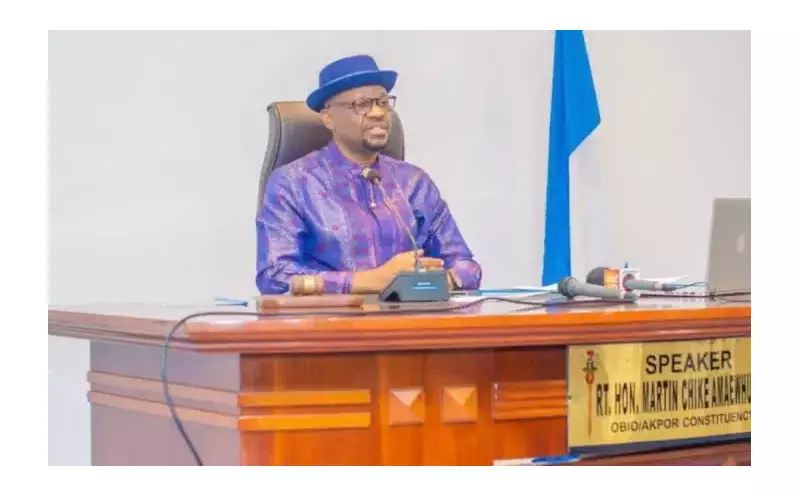
In a seismic shift that has reshaped the political landscape of Rivers State, the Speaker of the State House of Assembly, Rt. Hon. Martin Amaewhule, along with sixteen other members, has officially left the Peoples Democratic Party (PDP) for the All Progressives Congress (APC).
A Defection Announced on the Floor
The historic move was made public during the legislative body's plenary session on Friday, December 5. Speaker Amaewhule personally announced the collective decision, stating that the lawmakers had reached a unanimous resolution to join the APC.
He attributed this drastic step to what he termed a "clear and irreconcilable division" within the ranks of the PDP. "We can no longer remain in a party that has been deeply divided and no longer represents the ideals we stood for," Amaewhule declared from the floor of the House.
Constitutional Grounds and Political Realignment
The Speaker justified their action by referencing Section 109 (1)(g) of the 1999 Constitution of Nigeria (as amended), which provides for circumstances under which a lawmaker can defect without losing their seat. He positioned the APC as a "united and progressive platform" better aligned with their current political direction.
This mass defection brings to an end weeks of intense speculation fueled by the widening rift within the state's political establishment. It significantly bolsters the camp of lawmakers loyal to the former Governor and current FCT Minister, Nyesom Wike, who have been in a protracted political battle with the state's Governor, Siminalayi Fubara, since late 2023.
Implications for Rivers State Politics
The political consequences of this move are substantial. The APC is now poised to gain a significant and commanding foothold in the Rivers State House of Assembly, an institution that was previously dominated by the PDP. This realignment effectively consolidates power for the Wike-aligned faction within the legislature.
This development marks one of the most dramatic episodes in the ongoing political crisis in Rivers State, fundamentally altering the balance of power and setting the stage for the next phase of governance and political maneuvering in the oil-rich state.