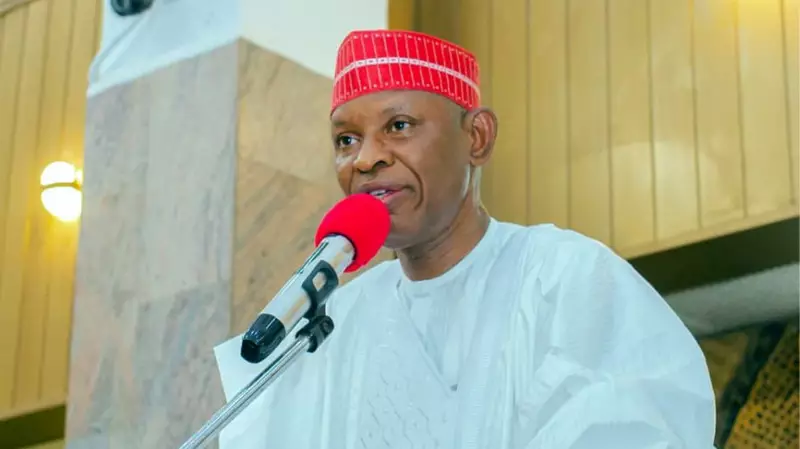
In a significant political realignment, Kano State Governor, Abba Kabir Yusuf, is poised to defect from the New Nigeria Peoples Party (NNPP) to the ruling All Progressives Congress (APC). This move, framed not as betrayal but as a necessary step for governance, marks a pivotal moment for Nigeria's most populous state.
The Compelling Reasons Behind the Move
Since his election, Governor Abba Kabir Yusuf has governed Kano from the opposition, a position that has led to tangible isolation in the national political space. The federal presence in the state has been thin, and strategic attention limited, hindering the execution of key projects in roads, security, education, and health. In Nigeria's political landscape, where access to federal power often determines developmental outcomes, operating outside the ruling structure has proven costly for Kano.
The state's historical influence has waned, with critical decisions passing by without its voice being fully heard. Furthermore, the protracted internal tension surrounding the Kano emirate question has created instability, distracting leadership and unsettling investors. Navigating such sensitive issues requires strong institutional backing, which is more readily available within the ruling party at the center.
Kwankwaso's Crossroads and the NNPP's Instability
The defection plan inextricably involves Senator Rabi'u Musa Kwankwaso, the NNPP's national leader and a political father figure to Governor Yusuf. Kwankwaso now faces a defining choice. His political strength is acknowledged across party lines, and President Bola Ahmed Tinubu has repeatedly extended an olive branch, recognizing their shared history from the Social Democratic Party (SDP) era in the Third Republic.
This call for alignment comes as the NNPP, Kwankwaso's political vehicle, is embroiled in severe internal crises. Court battles over party ownership and recognition by the Independent National Electoral Commission (INEC) have rendered the platform unstable. For either Yusuf to seek re-election in 2027 or Kwankwaso to pursue a presidential bid on the NNPP ticket would be a significant gamble.
The Broader Political Calculus and Historical Lessons
Other opposition options appear unviable. The Peoples Democratic Party (PDP) remains fractured, while the African Democratic Congress (ADC) is ideologically uncomfortable for Kwankwaso, housing many of his former rivals. History also offers a clear lesson: regional parties rarely achieve national success in Nigeria. The country's political system rewards broad, national coalitions like the APC, which controls the federal machinery necessary for impactful development.
The move is also rooted in personal political histories. The late Senator Magaji Abdullahi, a former Deputy Governor of Kano and a close ally of President Tinubu from their SDP days, was a benefactor to both Kwankwaso and Yusuf. This existing relationship layer further facilitates the potential reconciliation.
Conclusion: A Bridge to the Center for Kano
Ultimately, Governor Abba Kabir Yusuf's planned shift to the APC is being positioned as a strategic investment in Kano's relevance. It is a bid to secure the federal partnerships, projects, and political leverage needed to deliver tangible dividends of democracy to the people. For Senator Kwankwaso, it represents a path to secure a national role commensurate with his stature and experience.
This decision underscores a political truth: loyalty in its highest form is fidelity to the welfare of the people, not blind attachment to a platform. As political realities evolve, so must strategy. For Kano, aligning with the APC is framed not as surrender, but as building a crucial bridge back to the center of power, where its voice can shape decisions and its destiny can be vigorously pursued.