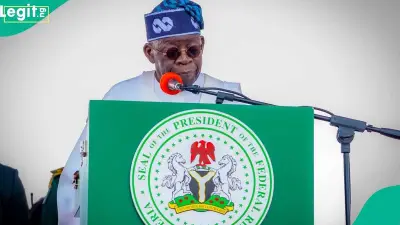
Atiku Abubakar Condemns President Tinubu's Fuel Price Comparison with Kenya
Former Vice President Atiku Abubakar has issued a strong rebuke of President Bola Tinubu's recent remarks comparing Nigeria's fuel prices with those of other African nations, particularly Kenya. Atiku contends that such comparisons fail to capture the profound economic distress experienced by ordinary Nigerians under the current administration.
Statement from Atiku's Office Highlights Economic Misrepresentation
In a statement released in Abuja through his Senior Special Assistant on Public Communication, Phrank Shaibu, Atiku expressed deep concern over the President's focus on fuel pricing as a measure of economic comfort. The statement was a direct response to comments made by President Tinubu during a visit to Bayelsa State, where he referenced fuel prices in countries like Kenya while urging citizens to acknowledge government efforts to stabilize costs.
Atiku argued that isolating fuel prices provides a distorted and incomplete picture of national economic wellbeing. He emphasized that broader, more critical indicators such as income levels, purchasing power, and the overall cost of living must be considered to accurately assess the populace's financial health.
"It is both curious and troubling that the President would isolate fuel prices as a metric of economic comfort while ignoring the far more critical indicators of purchasing power, income levels, and cost of living," Atiku stated. He further suggested that this "selective reasoning betrays either a fundamental misunderstanding of economic realities or a deliberate attempt to deflect from policy failures."
Detailed Comparison Reveals Stark Income Disparities
Delving deeper into the comparison, the former Vice President highlighted the significant income gap between Nigeria and Kenya. He pointed out that despite Nigeria having lower petrol prices relative to some neighboring countries, Nigerians face greater financial pressure due to substantially lower earnings.
- Kenya's GDP per capita is nearly double that of Nigeria.
- A minimum wage earner in Nairobi takes home the equivalent of approximately ₦170,000 monthly.
- This is more than twice Nigeria's minimum wage of ₦70,000.
"In effect, while a Kenyan earns more and pays more, a Nigerian earns far less and is forced to survive under crushing economic pressure. This is the reality the President chose to ignore," Atiku asserted.
Criticism of Wage Structure and Call for Empathetic Leadership
Atiku also questioned the adequacy of Nigeria's current wage framework, arguing that it does not reflect contemporary economic realities or provide sufficient support for citizens grappling with inflation and rising costs. He stressed that true affordability is determined by the balance between income and expenditure, not by isolated price points.
"The implication is clear: affordability is not defined by price alone, but by the relationship between income and expenditure. On this measure, Nigerians have never had it worse," he added.
Expressing disappointment, Atiku called for more empathetic and decisive leadership from the government. He warned that a administration relying on selective comparisons while citizens struggle with escalating poverty and declining living standards risks appearing out of touch and indifferent to the populace's suffering.
"It is, therefore, deeply disappointing that at a time when citizens expect empathy, clarity, and decisive leadership, the President has chosen the path of statistical convenience," Atiku concluded.