Former Governor El-Rufai Expresses Fear of Arrest Upon Nigerian Return
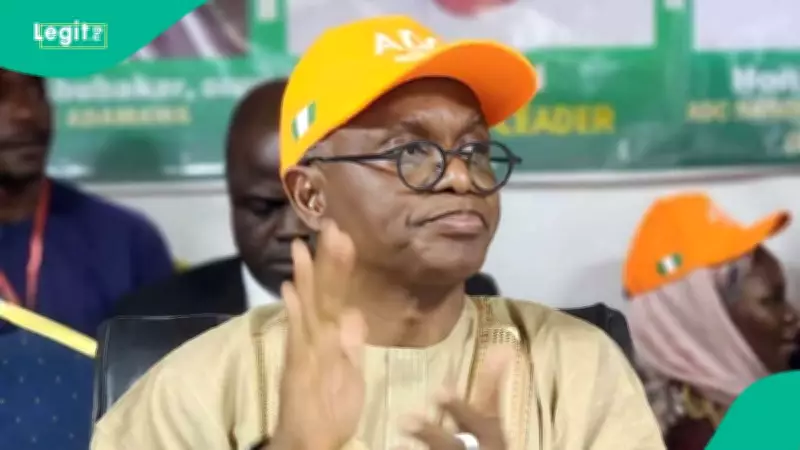
Malam Nasir El-Rufai, the former governor of Kaduna State and prominent figure in the African Democratic Congress (ADC), has voiced serious concerns about his safety and freedom should he return to Nigeria. In a recent interview with the BBC, El-Rufai suggested that he could face immediate arrest upon setting foot in the country, pointing to what he describes as escalating political tensions as the nation approaches the 2027 general elections.
Political Pressure on Opposition Figures Intensifies
El-Rufai claimed during the interview that opposition politicians and those who have fallen out of favor with the ruling All Progressives Congress (APC) are facing unprecedented pressure. He specifically mentioned that some politicians have been forced into defecting to the APC or compelled to remain within the ruling party against their will. According to the former governor, this situation has become particularly intense as political parties begin positioning themselves for the crucial 2027 electoral contest.
"The political climate has become increasingly hostile toward those who dare to oppose the current administration," El-Rufai stated, highlighting what he perceives as a systematic targeting of opposition voices.
Arrests of Close Associates Raise Concerns
While El-Rufai himself has not yet been detained, he revealed that individuals closely connected to him have been arrested in various areas associated with his political network in Kaduna State. The former governor interpreted these arrests as a potential warning sign that he might soon become a target himself.
"A person has been arrested in four of the areas we worked with in Kaduna, so it is time for me, I will also be wanted," El-Rufai was quoted as saying during the interview. This statement reflects his growing apprehension about returning to Nigeria amid what he views as politically motivated law enforcement actions.
Escalating Criticism of APC Administration
In recent weeks, El-Rufai has significantly increased his criticism of President Bola Ahmed Tinubu's administration and the APC, despite having served as Kaduna governor under the party's banner for eight years. The former governor has emerged as a leading voice within the opposition ADC, actively participating in discussions about forming a coalition strong enough to challenge the ruling party in the upcoming 2027 elections.
El-Rufai has specifically accused the Tinubu administration of fearing credible election processes and has blamed Senate President Godswill Akpabio for hindering the electronic transmission of election results. According to the former governor, opposition elements aim to maintain election manipulation at collation centers, a practice he strongly condemns.
Context of Malami's Prosecution
El-Rufai's comments come amid heightened public attention surrounding the arrest and prosecution of former Attorney-General of the Federation and Minister of Justice, Abubakar Malami. The Economic and Financial Crimes Commission (EFCC) has brought multiple charges against Malami, including allegations of abuse of office and money laundering, with additional terrorism-related claims that Malami has denied.
This high-profile case has created a backdrop against which El-Rufai's fears appear more substantial, particularly given the former governor's own history of political conflicts with the current administration.
ADC's Electoral Strategy and Position
As a key figure in the ADC, El-Rufai has outlined the party's approach to the upcoming elections. He revealed that the ADC has rejected zoning arrangements in favor of open presidential primaries and has been quietly mobilizing at grassroots levels while conducting membership registration ahead of party congresses and conventions.
The former governor stated that the ADC plans to unveil an ethical governance manifesto and strongly supports electronic transmission of election results, positioning the party as an advocate for electoral transparency and reform.
The political landscape in Nigeria continues to evolve as the 2027 elections approach, with El-Rufai's statements highlighting the growing tensions between the ruling party and opposition forces. His expressed fears of arrest upon returning to Nigeria underscore the increasingly polarized nature of Nigerian politics and raise questions about the treatment of opposition figures in the country's democratic process.