The Ijaw Quest for Nigeria's Fourth Political Pillar
The socio-political architecture of the Nigerian federation has long been anchored on a majoritarian construct known as the Wazobia paradigm. This linguistic and political fusion – derived from the Yoruba "Wa," the Hausa "Zo," and the Igbo "Bia," all meaning "come" – was designed to foster national unity among the three largest ethnic groups. However, this paradigm has functioned as a mechanism of systemic constitutional exclusion for the Ijaw ethnic nationality, which stands as the fourth largest ethnic group in Nigeria with significant contributions to the nation's oil-based economy.
Historical Marginalization and Demographic Reality
With a population estimated at 14.39 million as of 2024, representing approximately 6.16 percent of Nigeria's total population, the Ijaw occupy a critical but often marginalized demographic space. This marginalization gap is not merely an accident of history but a structural outcome of the 1946 Richards Constitution and the subsequent tri-regional system that prioritized the interests of the three dominant ethnic blocs. The evolution of Ijaw political thought reflects a transition from the pan-Nigerian aspirations of pioneers like Ernest Ikoli to contemporary strategic approaches.
Ernest Ikoli and the Vision of Bo-Wazobia
The struggle for Ijaw recognition within the Nigerian project can be traced back to Ernest Sisei Ikoli (1893–1960), a pioneering journalist and founding father of Nigerian nationalism. As editor of the Daily Times and a leader of the Nigerian Youth Movement (NYM), Ikoli was a contemporary of Nnamdi Azikiwe and Obafemi Awolowo. Between 1939 and 1942, Ikoli exerted significant pressure on the British colonial administration to adopt a four-region structure for Nigeria.
Ikoli's vision sought to establish regional councils for the East, West, North, and South, which would have granted the Ijaw and other Niger Delta minorities a seat at the founding table of the federation. This proposal was a precursor to what modern scholars call "Bowazobia" – a synthesis that adds the Ijaw "Bo" (meaning "come" in Izon) to the traditional Wazobia triad. However, the Colonial Office opted for a three-region model, a decision that set the stage for the Ijaw's long exclusion from the federal core.
The Niger Delta Congress: Strategic Partner Strategy
In the late 1950s, a new generation of Ijaw leaders, led by Chief Harold Dappa-Biriye and Dr. Melford Okilo, recognized that the majoritarian system required a different tactical approach. They formed the Niger Delta Congress (NDC) in 1958 with a clear strategic goal: to act as a "Strategic Partner" for whichever major bloc could guarantee minority interests. The 1959 federal election became the crucible for this strategy.
Melford Okilo, a young lawyer from Emakalakala, Ogbia, undertook an arduous campaign in the Brass Federal Constituency, famously selling his bicycle to fund the movement's activities. The NDC's goal was not to win a national majority, which was numerically impossible, but to win a pivotal seat that would hold the balance of power. In the aftermath of the 1959 elections, the Northern People's Congress (NPC) lacked the seats to form a government independently.
The single seat won by Melford Okilo's NDC in the Brass constituency became the hinge on which the federal government turned. By aligning with the NPC, the Ijaw were able to extract national roles and institutional concessions that would have been unattainable through direct competition with the majoritarian parties. This strategy turned Okilo into a junior minister and later a parliamentary secretary under Prime Minister Tafawa Balewa. More importantly, it forced the Federal Government to establish the Niger Delta Development Board (NDDB) in 1961, the first institutional recognition of the Niger Delta's unique developmental needs.
The Starting XI Metaphor: Tactical Re-Engineering
In contemporary Nigerian politics, the Ijaw nation faces a recurring dilemma: whether to succumb to the "Rotation Trap" or to field its strongest political assets. The "Starting XI" metaphor, drawing on football's strategic deployment, argues that politics is a game of positional strength, versatility, and endurance. For a minority group, numerical disadvantage can only be countered through the quality and continuity of its representation.
The times demand not just participation in politics but precision and purposeful positioning. It is not the time for experiments or appeasements; rather it is the time for experience, grit and influence. This is why the conversation about who should make up the metaphorical "Starting XI" of the Ijaw representation in politics must rise above zoning debates and personality politics, and instead be grounded in competence, track record, and strategic foresight regardless of office in contest.
In the "Starting XI" political squad of the Ijaw nation, the team should be a cohesive political caucus with a clearly defined agenda having players strategically selected – not just for popularity – but for positional strength, versatility, endurance, and tactical experience who would proceed as political gladiators. This formation cannot be built with sentiments. It must be built with deliberate political engineering.
Senator Henry Seriake Dickson: A Case Study
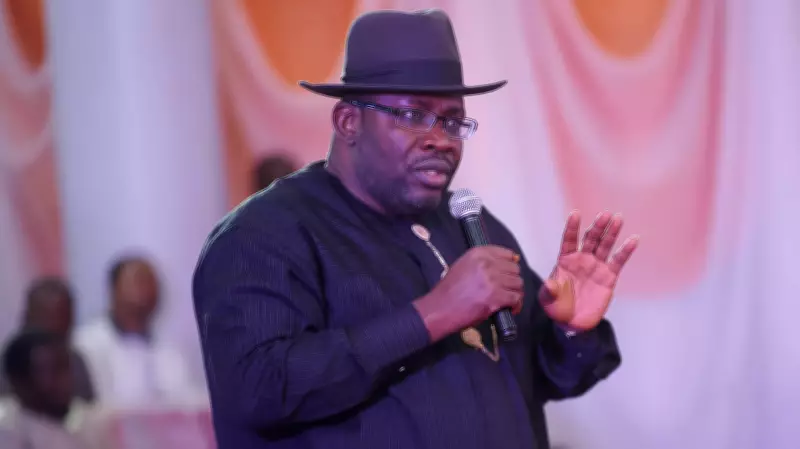
Within this context, Senator Henry Seriake Dickson, the current representative of the Bayelsa West Senatorial District, offers a compelling case not just as a serving legislator and political gladiator, but as a strategic political asset and seasoned statesman. His presence in the National Assembly amplifies the voice of a people too often relegated to the margins in the Nigerian federation. Senator Dickson represents the central midfielder: the strategist, link-man, playmaker whose pulse sets the tempo for the entire team.
Senator Dickson's journey is marked by deliberate investment in governance, legislation, and ethnic advocacy. His credentials are earned as a national recognition of competence and confidence in his legislative leadership through service, policy influence, and a consistent voice on national matters whether on resource control, restructuring, or constitutional amendment. As a former member of the House of Representatives, an Attorney-General of Bayelsa State, a two-term governor of Bayelsa State, and now a ranking senator, he brings a unique blend of executive and legislative experience.
Legislative and Executive Achievements
In the House of Representatives (2007–2012), Dickson sponsored key bills like the Economic and Financial Crimes Commission (Amendment) Bill and the Freedom of Information Bill. As governor from February 14, 2012, to February 14, 2020, he signed into law over 50 bills, including the State Transparency Law, Judicial Autonomy Law, and Right to Education Law, reflecting a commitment to governance and education.
His administration made primary and secondary education free and compulsory, building 13 model boarding schools, notably the Ijaw National Academy, accommodating 1,500 students on full scholarships from five states. Educational investment exceeded N80 billion, with scholarships awarded to hundreds of thousands for Master's and doctoral degrees globally. In healthcare, he established the Bayelsa Diagnostics Centre, Bayelsa State Forensics Centre, and a 100-bed Bayelsa Specialist Hospital, alongside 80-bed hospitals in four local government areas.
Economically, he increased internally generated revenue (IGR) from N50 million to N1.2 billion monthly, employed over 5,000 young graduates, and reduced the civil service wage bill from N6.4 billion to N3 billion by purging ghost workers. Infrastructure projects included the Bayelsa International Airport, commissioned on February 15, 2019, and numerous roads and bridges.
Current Senate Role and Influence
Presently, in the Senate, Dickson serves as Chairman of the Senate Committee on Ecology and Climate Change, a portfolio critical to the Niger Delta and climate justice discourse, and as a member of other strategic committees including Justice, Federal Character, and Public Accounts where his voice and interventions have earned him respect across party lines. Senator Dickson has consistently spoken for the Niger Delta, placing Ijaw identity and Niger Delta interest at the centre of national discourse.
The Modern Nigeria Democratic Congress (NDC)
The founding of the modern Nigeria Democratic Congress (NDC) by Senator Dickson represents an attempt to institutionalize the "Strategic Partner" model of Chief Harold Dappa-Biriye and Senator Melford Okilo for the 21st century. Unlike majoritarian parties that often suppress minority agendas, the modern NDC is designed to be a pan-Nigerian platform focused on federalism, accountability, and investment in human capital.
The registration of the modern NDC was a decade-long saga that illustrates the "systemic constitutional exclusion" faced by minority-led political initiatives. Starting in 2017, the process was stalled by the Independent National Electoral Commission (INEC) on what were described as "curious grounds" – specifically, the claim that the NDC's logo was too similar to the broom logo of the All Progressives Congress (APC). Dickson's legal tenacity eventually resulted in a court order that forced the registration of the party, making it the 199th registered party in Nigeria and the first to be registered through a court victory.
Beyond Zoning: The Bigger Picture
Nigeria's political centre is consolidating rapidly, often at the expense of smaller ethnic groups and geo-political regions. The North has its bloc. The Southwest has its caucus. The Southeast is constantly repositioning. But the South-South, and more specifically the Ijaw Nation, must rise to define its own terms of engagement. In such a climate, survival depends not just on presence but on strategic representation.
Thus, it is imperative that stakeholders look not just through the lens of constituency politics but through the broader prism of Ijaw survival and relevance. This requires clarity of purpose, continuity in leadership, and experienced negotiators – people who have both access and audibility in the national conversation. Senator Dickson is already at that table.
Opponents argue that it's "someone else's turn" due to zoning. Yes, the calls for "zoning" and "fresh faces" have grown louder. But we must ask: at what cost? Zoning, while noble in intent, must never override capacity in times of existential political threats. Nigeria's national politics is currently witnessing a worrisome erosion of minority voices. In truth, minorities need voices not rotations.
Strategic Imperatives for Ijaw Representation
The stakes are no longer just local development projects or political appointments. The stakes now include: Who speaks for the Niger Delta in the petroleum politics of tomorrow? Who will negotiate inclusion for the Ijaw youth in Nigeria's emerging digital and green economy? Who carries the moral and political weight to push for environmental justice, electoral reforms, and restructuring? These are not tasks for rookies. They are assignments for tested gladiators.
Dickson has the weight. He has the intellect. He has the scars. And perhaps most importantly, he has the network and political memory that money or ambition cannot buy overnight. To call for his substitution now for the sake of "political zoning" is akin to replacing your best midfielder with a benchwarmer because fans are tired of the jersey number, inviting a collapse of strategic play.
The National Assembly is not a place for political apprenticeships. It is a crucible for mature negotiation and seasoned advocacy. If there are reservations about Dickson, consider this: In football, a midfielder misplayed in defence doesn't get dropped – he's repositioned. What the Ijaw caucus needs now is thoughtful strategy, not hasty substitutions.
Towards a Cohesive Ijaw Political Bloc
It is time the Ijaw nation, from Ondo to Akwa Ibom, through Edo, Delta, Bayelsa, and Rivers, forged a cohesive political bloc. We must graduate from fragmented electoral showings to coordinated political action. And like every ethnic nation with a clear sense of identity, we must define our politics with intent, not inertia. Politics is war by other means, therefore it requires a defined caucus, and a long-term vision and must not be treated as a game of chance or entitlement.
The Ijaw people – rich in culture, bold in spirit, and with a storied history of resistance – must now engage with Nigeria not as political orphans, but as a people with strategy, purpose, and representatives who reflect that depth. The Starting XI of Ijaw politics must be built with this consciousness.
So, let us put away parochial arguments and fleeting sentiments and embrace strategic thinking and long-term positioning. In Senator Henry Seriake Dickson, we do not just have a politician; we have a skilled midfielder, a senior statesman, and a defender of Ijaw identity and interest. Bayelsans are therefore urged, particularly the stakeholders and electorate of Bayelsa West, to see the bigger picture.
Dickson's continued presence in the Senate is not just about local constituencies. It is about projecting Ijaw relevance. It is about sending someone who knows the turf, who commands institutional memory, who already sits at tables where decisions are made. Even if you had your reservations in times past, know this: in politics as in football, players evolve, tactics shift, and positions change. The answer is not always substitution. Sometimes, it's repositioning and giving the player time to grow into the jersey.
At this moment in our national history, we must play to win. Bayelsa and the Ijaw Nation cannot afford the politics of trial and error anymore. The journey ahead requires seasoned diplomats, legislative tacticians, and identity defenders. Henceforth, we are all encouraged to think like a coach. When the match is tough and you've got a player with stamina, vision, and grit you keep him on the pitch.
Let us not sacrifice strategic advantage on the altar of rotation politics, because in Nigeria's bruising politics of blocs and exclusion, we need more than spectators. We need gladiators. For the sake of Ijaw's future in the Nigerian state, Dickson remains not just a suitable choice but an indispensable one within the Senate and the larger Ijaw political strategy, as a match-winner in a formidable Starting XI.
Only by moving beyond parochial arguments and embracing long-term institutional positioning can the Ijaw people transition from being political orphans to becoming indispensable architects of the Nigerian future.