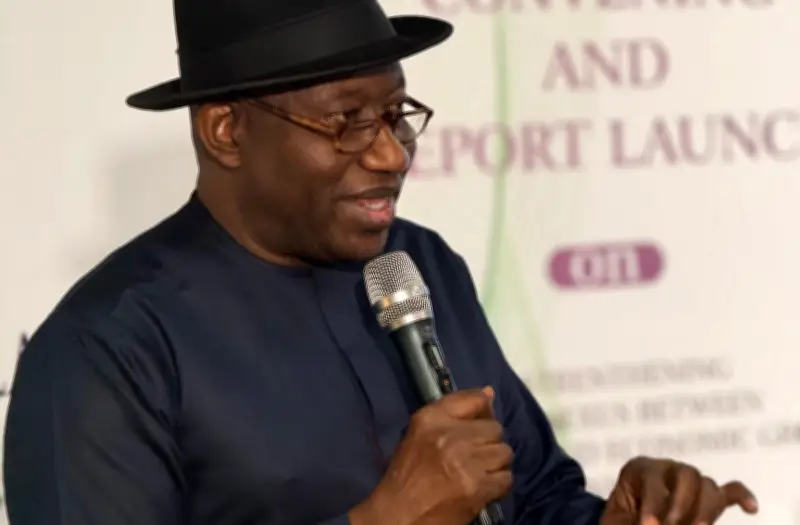
The adoption of former President Goodluck Jonathan as the presidential candidate of the Taminu Turaki faction of the opposition Peoples Democratic Party (PDP) has become a major issue in Nigeria’s evolving 2027 political conversation. Babangida Aliyu, chairman of the Screening Committee and former governor of Niger State, told journalists on 19 May that the party had granted Jonathan a waiver, clearing him as the PDP candidate for the presidential election. Mr Jonathan’s candidacy was subsequently ratified on Saturday, 30 May, at a ceremony where a member of the House of Representatives, Fred Agbedi, received the flag on his behalf. While some Nigerians have questioned the development on constitutional grounds, others have cautioned Mr Jonathan, warning that running under a divided PDP could undermine the statesman status he has built since leaving office in 2015.
Jonathan’s Rise and Dramatic Fall in 2015
Mr Jonathan was Nigeria’s vice president between 2007 and 2010 before succeeding President Umaru Yar’Adua who died in office. He later won the 2011 presidential election under the PDP. His presidency witnessed major economic growth, banking reforms, expansion in the telecommunications sector, and improvements in agricultural financing. Under his watch, Nigeria rebased its Gross Domestic Product (GDP) in 2014 and temporarily became Africa’s largest economy. However, his administration also faced corruption allegations, insecurity, and weak political coordination. The rise of the Boko Haram insurgency in the North-east significantly damaged public confidence, while the abduction of the Chibok schoolgirls in 2014 intensified criticism. Politically, Mr Jonathan entered the 2015 election weakened by internal divisions within the PDP. Several governors and senior party leaders defected to the All Progressives Congress (APC), newly formed from a merger of three legacy parties. Mr Jonathan eventually lost to the APC candidate, former military ruler Muhammadu Buhari, in Nigeria’s first democratic transfer of power from an incumbent president to an opposition candidate. His concession before the final declaration of results was widely praised for stabilizing Nigeria’s democracy.
From Former President to African Statesman
Since leaving office in 2015, Mr Jonathan has largely stayed away from frontline partisan politics, shunned PDP’s events, and reinvented himself as a statesman and international democracy advocate. Through the Goodluck Jonathan Foundation and his involvement with regional and global organizations, he has become one of Africa’s prominent election observers and mediators. He has led or participated in election observation and peace missions in countries including The Gambia, Mali, Liberia, Zambia, and South Africa. He has also served as an ECOWAS and African Union mediator in political disputes. Many analysts argue that his international reputation improved significantly after leaving office, particularly because of his peaceful concession of defeat in 2015, which contrasted sharply with political tensions elsewhere. Mr Jonathan has consistently advocated electoral reforms, peaceful transitions, and democratic stability across Africa.
Why Some Politicians Want Jonathan Back
The move for Mr Jonathan’s return to power is driven by several political calculations. First, some politicians see him as a unifying figure capable of attracting support across regional and religious divides. Unlike many active politicians, he has maintained a relatively moderate public image since leaving office. Second, supporters believe public frustration over economic hardship, insecurity, and political instability under successive administrations has created nostalgia among Nigerians, who now view his tenure more favorably. Third, within the PDP, some stakeholders believe only a nationally recognized figure like Mr Jonathan can revive the party’s declining fortunes ahead of the 2027 election. Fourth, if he contests and wins, Mr Jonathan will only be able to spend one term in office, having served one term in his first tenure. This would ensure that power returns to northern Nigeria in 2031 to fulfill an unwritten rule among Nigeria’s political elites for power to rotate between the North and South every eight years.
The Makinde Factor and the Opposition’s Confusing Signals
The Jonathan adoption has become more complicated due to competing developments within the opposition. Oyo State Governor Seyi Makinde declared his intention to seek the presidency under a proposed alliance between the APM and the same faction of the PDP that adopted Mr Jonathan. However, the coast may now be clear for the former president following Mr Makinde’s recent emergence as the candidate of the APM. Still, the Nyesom Wike-backed faction remains a contender. The INEC-recognized faction has picked Sandy Onor, a former senator, as its flagbearer. Given INEC’s recognition of the rival PDP faction, the former president’s nomination may be a non-event.
The Constitutional Controversy over Jonathan’s Eligibility
Another big legal issue is whether Mr Jonathan is eligible to contest another presidential election. The uncertainty originated from the Fourth Alteration to the 1999 Constitution, signed into law in 2018. Section 137(3) provides that a person sworn in twice as president cannot contest again. Opponents argue that having been sworn in to complete Mr Yar’Adua’s tenure in 2010 and again after winning the 2011 election, another election would lead to a third presidential term. Supporters insist that the constitutional amendment cannot apply retroactively, as it came into force three years after Mr Jonathan left office. The issue reached the courts in 2022 when the Federal High Court in Yenagoa ruled in favor of Mr Jonathan’s eligibility. Last Tuesday, the Federal High Court in Abuja again affirmed that decision. Despite that ruling, legal concerns persist as the case has moved to the Appeal Court. Solu Bakare, a senior constitutional lawyer, agrees with the lower court’s decision, arguing that Mr Jonathan has not exhausted his allowable time in office under the law. He noted that Mr Jonathan did not contest the presidency initially but only completed the term of the former president. However, Mr Bakare agreed that only the court has the ultimate authority to interpret the Constitution.
Zoning Politics and Jonathan’s Possible Advantage
If the court rules in favor of Mr Jonathan again, the discussion will shift to whether the zoning arrangement will favor him. Mr Jonathan is from Bayelsa, south-south Nigeria. Since President Bola Tinubu, a southerner, will be contesting for a second term, many politicians, even within the PDP, believe the presidency should remain in the South until 2031, in line with the country’s informal power rotation principle. Within the PDP, zoning became controversial after the party fielded former Vice President Atiku Abubakar, a northerner, as its presidential candidate in the 2023 election, despite calls for the ticket to be ceded to the South after President Buhari’s eight-year tenure. The decision triggered internal rebellion and contributed to the crisis that weakened the PDP. Some PDP stakeholders now see Mr Jonathan as a potentially acceptable southern candidate capable of attracting wider support.
Jonathan’s Electoral Strength
Mr Jonathan’s actual electoral strength, more than a decade after leaving office, is a subject of debate. Although his public image has improved since 2015, popularity alone may not translate into electoral victory in Nigeria’s increasingly competitive political environment. One concern is whether he still possesses grassroots political structures required for a nationwide campaign. Since leaving office, he has distanced himself from active partisan politics and has not maintained visible political machinery. Unlike in 2011 and 2015, he currently lacks a clearly defined political base within the fragmented opposition. Political observers question whether he can command support in northern Nigeria, where dissatisfaction with his handling of insecurity contributed to his 2015 defeat. There are also concerns about generational politics. Nigeria’s voting population has changed significantly, with younger voters becoming increasingly influential. Mr Jonathan may struggle to connect with younger voters demanding political reforms and economic opportunities. Another challenge is the financial and organizational strength of the ruling APC. Some analysts argue that even if Mr Jonathan secures support from sections of the PDP, building a strong coalition capable of confronting the APC’s national structure would remain a major hurdle.
Could Jonathan’s Candidacy Split the Southern Vote?
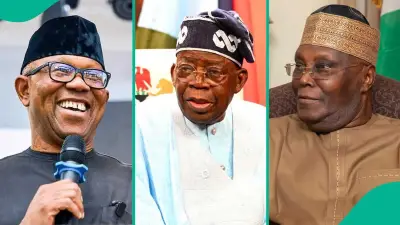
Another concern is the potential impact on voting patterns in southern Nigeria. Should Mr Jonathan accept the nomination, he would enter a political space crowded with southern aspirants, including President Tinubu (APC), Peter Obi (NDC), Adewole Adebayo (SDP), Donald Duke (PRP), Dan Nwanyanwu (ZLP), Esther Okereke (NRM), Omoyele Sowore (AAC), Chibuzor Okereke (LP), and Mr Makinde (APM). Political analysts warn that multiple southern candidates could divide opposition votes across the South-west, South-east, and South-south, making it more difficult for any single candidate to emerge as the dominant challenger to the ruling party. Such a scenario could indirectly benefit a northern candidate should one emerge as the principal opposition contender.
Implications of a Jonathan Candidacy
If Mr Jonathan accepts the PDP faction’s nomination and contests the 2027 election, the implications could be significant for both the PDP and Nigeria’s political landscape. For the PDP, his candidacy could temporarily unite some factions and restore national visibility. However, it could also deepen divisions within the opposition, as other aspirants may reject the process if it lacks broad party consensus. Mr Jonathan’s candidacy may also affect the political future of key opposition figures, particularly Atiku. Some political observers believe the APC may not view a Jonathan candidacy as a major threat compared to younger or more aggressive opposition figures. At the same time, his candidacy could revive political consciousness in the Niger Delta, where many supporters view his 2015 defeat as a major political setback. Critics may question whether returning former leaders represents political recycling rather than democratic renewal. Supporters argue that his experience, international network, and conciliatory image could help calm political tensions in an increasingly polarized country.
Public Views
The President of the Campaign for Democracy (CD), Ifeanyi Odili, told PREMIUM TIMES that the former president is entering the race at a politically unfavorable time, given current dynamics within his party and the broader national political environment. He said, “He wants to contest at a time that is not favorable for him. Even while he was in power, he was defeated. Is it now that he’s no longer in power that he wants to win the election? I believe he’s being used by some people and unfortunately, at his age, he didn’t realize that.” On his part, the Archbishop Metropolitan and Primate of the Church of Nigeria, Henry Ndukuba, urged Mr Jonathan to resist the temptation to contest the 2027 presidential election, warning that a return to partisan politics could diminish the statesmanlike reputation and global respect he currently enjoys.