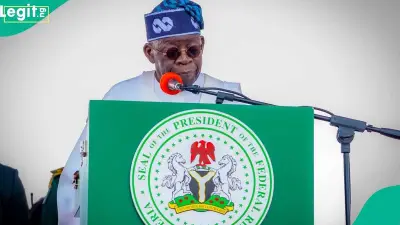
On May 27, 1967, the then Head of State, General Yakubu Dan-Yumma Gowon (91) GCFR, said “the main obstacle to future stability in this country is the present structural imbalance in the Nigeria Federation”. No doubt, the General’s statement is as true today as when he made the broadcast. It was in that broadcast that he created 12 states out of the four regions in existence at that time. The instability keeps widening daily in the country, and its impact varies depending on the area. The main focus now is on the coming general elections, and all other issues are secondary. In fact, the only job in town now is party politics. There are no factories, no industries. To survive in present-day Nigeria is to be a politician, and that is why sycophancy and party fanaticism have become rampant. Governance seems suspended. In spite of flattering words of hope by government, nothing has changed. No improvement; the poor citizens are still lamenting. Life generally is becoming unbearable. The killings continue on innocent ones, and nobody knows when it will end. We have carried democracy to the extreme to the extent that it has more or less crippled the country. But the issue of restructuring and the creation of new states, along with other issues, will not go away. They will be addressed after the election. President Bola Tinubu GCFR or anyone elected President in the next year’s Presidential election will have no other choice but to address these outstanding issues. The issue before us is the creation of states.
Historical Background of State Creation
Between 1960 and 1966, Nigeria operated the regional arrangement. However, between 1967 and 1996, the country was split into 36 states. The first state creation exercise was undertaken by the regime of General Yakubu Gowon in 1967. Prior to General Gowon’s ascension to power, General Aguiyi Ironsi GCFR was Nigeria’s first military Head of State, but following his assassination in July 1966, General Gowon became the new military ruler. He dissolved the four regions and subsequently created 12 states on May 5, 1967. Six states were carved out from the former Northern Region: the North-Western State, the North-Eastern State, Kano State, North Central State, Benue-Plateau State, and Kwara State. The former Western Region was split into two states: the Western State and Lagos State. The former Mid-Western Region became the Mid-Western State, while the former Eastern Region had three new states carved out: East Central State, Rivers State, and the South-Eastern State.
Further State Creation Exercises
Another state creation exercise took place in 1976 following the ouster of General Gowon in a military coup led by General Murtala Mohammed. On assumption of office, General Mohammed created the following states: Anambra, Bauchi, Benue, Imo, Niger, Ogun, and Ondo, bringing the total number of states to 19 from the original 12. It took another 11 years (1987) for the next state creation exercise, under the regime of General Ibrahim Babangida GCFR (1985–1993). In 1987, General Babangida created two states: Akwa Ibom and Katsina. He also created nine additional states in 1991: Abia, Enugu, Delta, Jigawa, Kebbi, Osun, Kogi, Taraba, and Yobe. Notably, Akwa Ibom State was carved out from Cross River State, while Katsina State was created from Kaduna State. Similarly, Adamawa and Taraba states were carved out from the former Gongola State, and Enugu State from Anambra State, while Edo and Delta states replaced the old Bendel State. Also, Yobe State was created from Borno State, and Jigawa from Kano State, while Kebbi and Osun states were carved out from Sokoto and Oyo states respectively. Kogi State came from Kwara and Benue states. Altogether, there were 30 states by 1991.
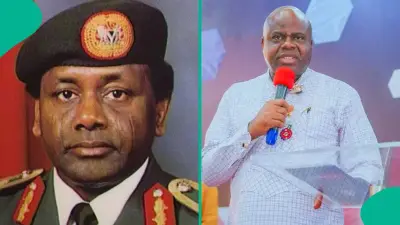
General Sani Abacha GCFR (20 September 1943 – 8 June 1998) became Nigeria’s next military Head of State in 1993 after ousting the Chief Ernest Shonekan-led Interim National Government. Due to stringent agitations for more states, General Sani Abacha set up the National Constitutional Conference (NCC), which recommended, among other things, the creation of new states. Thus, on October 1, 1996, he created six additional states: Ebonyi (from Abia and Enugu states), Bayelsa (from Rivers State), Nasarawa (from Plateau State), Gombe (from Bauchi), and Ekiti (from Ondo).
Agitations for State Creation
The movements for the creation of states in Nigeria can be traced back to 1937 when Dr. Nnamdi Azikiwe (born November 16, 1904, Zungeru, Nigeria—died May 11, 1996, Enugu) advocated in his book The Political Blueprint of Nigeria a federal form of government and the division of the country into eight constituent units based on geographical configuration. Dr. Azikiwe was later joined by Chief Obafemi Awolowo (6 March 1909 – 9 May 1987), who, in a book Path to Nigeria Freedom published in 1947, proposed a redivision of Nigeria into ten federating units with ethnic, linguistic, and cultural affinity as the basis of division. However, Chief Awolowo, writing in 1966, seemed to have modified his stand when he shifted ground and advocated a redivision of the country into 18 states—nine in the North and nine in the South—based on linguistic and cultural affinity as well as economic viability. Awolowo’s submission at that time was that the COR state (Calabar, Ogoja, Rivers) with a population of 717,000 Ibibio; 435,000 Annang; 428,000 Ibo; 251,000 Ijaw; 156,000 Ogoni; and 75,000 Efik should be created. He alerted that the genuine cause of the minorities in the then Eastern Region should be addressed. Awolowo re-echoed this demand on May 1, 1967, in Ibadan at a meeting of Western Region Leaders of Thought on the need for the creation of more states, especially the COR state. He told the meeting: “We have been told that an act of secession on the part of the East would be a signal in the first instance for the creation of the COR state by decree which would be backed, if need be, by use of force.”
In 1963, as a result of the 1962 Western Region Crisis, the pressure for state creation resulted in the subsequent declaration of a state of emergency in the former Western Region, and the Mid-West Region (now Edo and Delta states) was created out of the then Western Region. The creation of the new region tended to intensify and encourage demands for the creation of more new states in other parts of the country, as we have witnessed over the years.
Conclusion
Further in his May 27, 1967 broadcast, General Gowon declared: “This is why the first item in the political and administrative programme adopted by the Supreme Military Council last month is the creation of states for stability. This must be done first so as to remove the fear of domination. Representatives drawn from the new states will be more able to work out the future constitution for this country which can contain provisions to protect power of the states to the fullest extent desired by the Nigerian people.” Although there is no magic formula for determining the optimum number of states in any federation, certain specific criteria must be spelt out if the entire exercise of state creation is to be conducted in a rational and fair manner. Teniola, a former director in the Presidency, wrote from Lagos.