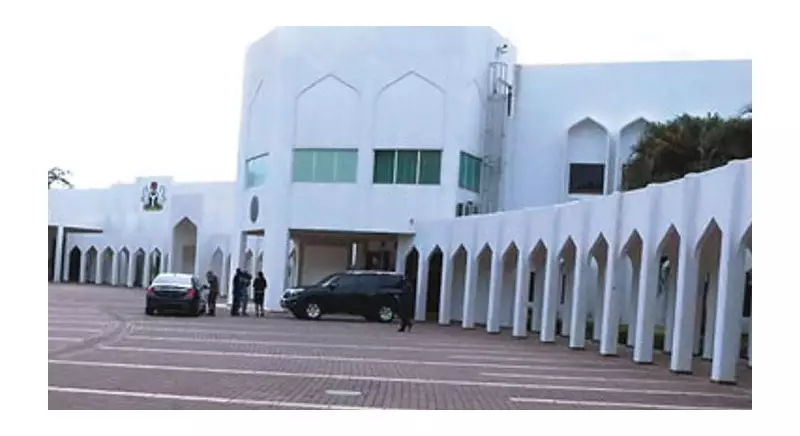
The Presidency has revealed plans to allocate a staggering N1.98 billion for fuelling generators at the State House, Aso Rock Villa, in the 2026 fiscal year. This substantial expenditure underscores that the seat of power is not immune to the nationwide electricity supply crisis plaguing Nigeria.
Soaring Costs and a Stalled Solar Project
The budgeted amount for diesel this year is identical to the sum set aside in 2025, indicating a sustained reliance on expensive backup power. This marks a dramatic escalation from previous years. From 2021 to 2023, the annual budget for State House generator fuel was a constant N67.95 million. It then jumped to N148.26 million in 2024 before ballooning to the current figure of nearly two billion naira.
This reliance on generators persists despite a major N7 billion solarisation project underway at the Villa. Interestingly, the government had initially budgeted N10 billion for the same solar project in 2025, suggesting potential cost revisions or implementation delays.
Massive Power Sector Investment Fails to Yield Stability
The situation at Aso Rock reflects a broader national despair regarding the power sector. Nigeria continues to grapple with chronic instability, despite significant government investment over recent years. An analysis of sector budgets reveals:
- Funding grew by 129.42%, from N133.479 billion in 2020 to N306.23 billion in 2022, with a focus on capital expenditure for infrastructure.
- In 2023, N258.49 billion was allocated, with N251.609 billion for capital projects.
- The figure rose to N418.37 billion in 2024, with N411.15 billion for capital projects.
- A bold step was taken in 2025, with a N2.08 trillion allocation to the Ministry of Power, of which N2.07 trillion was earmarked for capital expenditure.
Despite these enormous financial commitments, reliable electricity remains elusive, crippling the real economy.
Devastating Impact on Businesses and National Ranking
The consequences of the power crisis are severe and widespread. Many businesses are shutting down operations, while others are relocating out of Nigeria entirely, unable to bear the exorbitant cost of providing their own electricity.
The Manufacturers Association of Nigeria (MAN) consistently highlights how poor power supply devastates its members. The association reported that members spent N676.6 billion on alternative energy in just the first half of 2025. While this was an improvement from the over N1 trillion spent in the full year of 2024, it remains a crippling overhead.
Nigeria's plight is recognized internationally. In its energy progress report last year, the World Bank ranked Nigeria as the top African country with the worst power supply. The sector is plagued by unreliable infrastructure, inadequate generation, and high electricity tariffs, creating a perfect storm that stifles growth and investment.
The Federal Government's own budget for generator fuel is a stark symbol of a national emergency that continues to drain public and private resources, demanding urgent and effective solutions.